
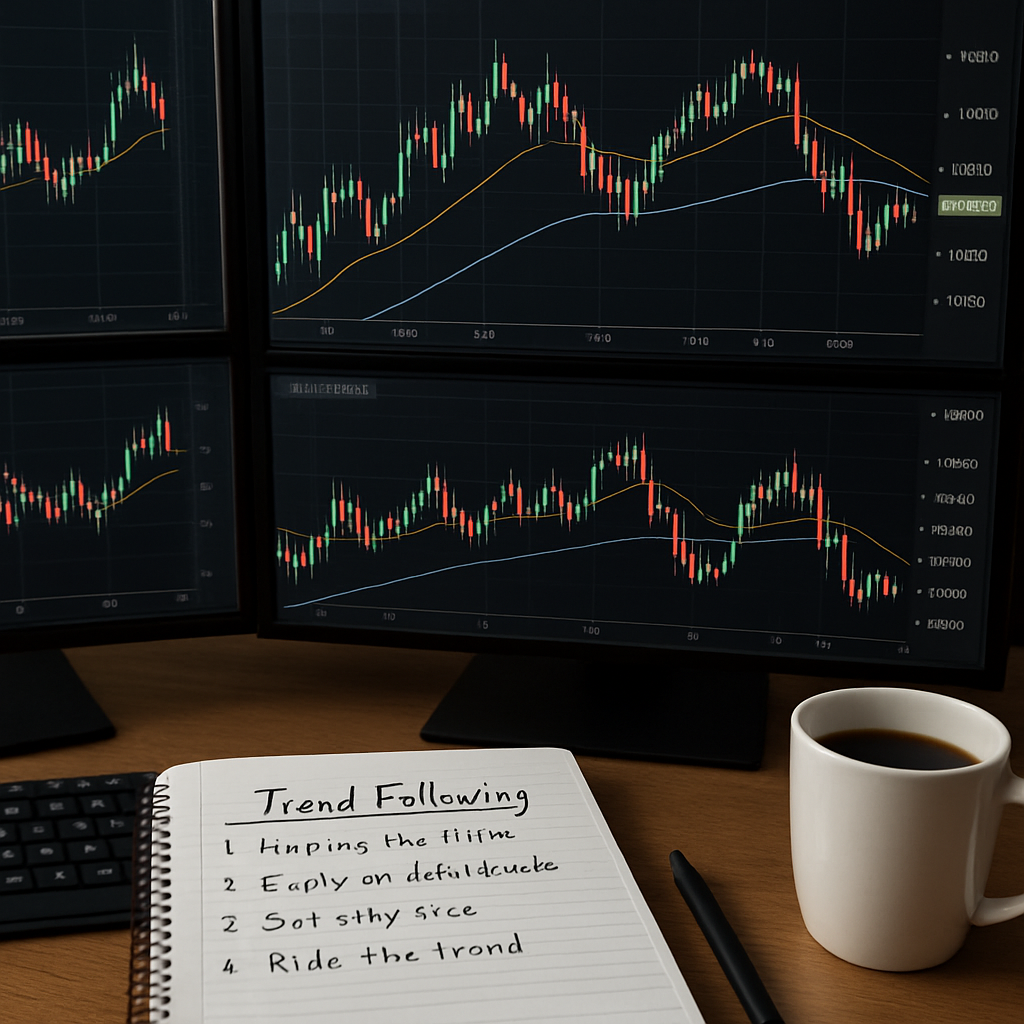
Ever sat in front of your screen, watching the EUR/USD candle flicker, and thought, “There has to be a smarter way to catch those moves?”
You’re not alone. Many aspiring traders feel that buzz of possibility mixed with the frustration of not knowing which path to follow.
That’s exactly why we dive into forex day trading strategies – the toolbox that lets you spot entry points, manage risk, and stay disciplined within a single trading session.
In our experience at FX Doctor, the biggest breakthrough comes when you stop treating each trade as a gamble and start treating it as a repeatable process.
So, what does that look like? Imagine you’re a morning commuter, hopping on a train that arrives every 15 minutes. If you know the schedule, you can plan your route efficiently. Forex day trading strategies work the same way: they give you a schedule for the market, helping you decide when to hop on and when to step off.
We’ll walk through the core ideas that underpin every solid strategy – from identifying breakout zones to riding momentum waves, and even how news events can shape short‑term price action.
But before we get into the nitty‑gritty, let’s acknowledge a common pitfall: trying to master every technique at once. It’s like trying to learn every instrument in an orchestra before you can play a single note.
Instead, focus on one or two foundational approaches, test them on a demo account, and refine them based on what the charts actually show you.
Think about it this way: a good strategy is like a reliable coffee routine. You know the beans, the grind, the brew time – and you get consistent results day after day.
In the sections that follow, we’ll break down the most effective forex day trading strategies, explain the logic behind each, and give you practical checkpoints to apply right now.
Ready to move from “just watching the market” to “actively engaging with a plan”? Let’s dive in and start building the habits that turn uncertainty into opportunity.
TL;DR
Forex day trading strategies let you turn short‑term price swings into opportunities by following entry, exit, and risk‑management rules. Focus on one or two core approaches—like breakout or momentum—test them on a demo account, and refine your plan as the charts dictate, so you trade with confidence instead of guesswork.
Strategy 1: Trend Following
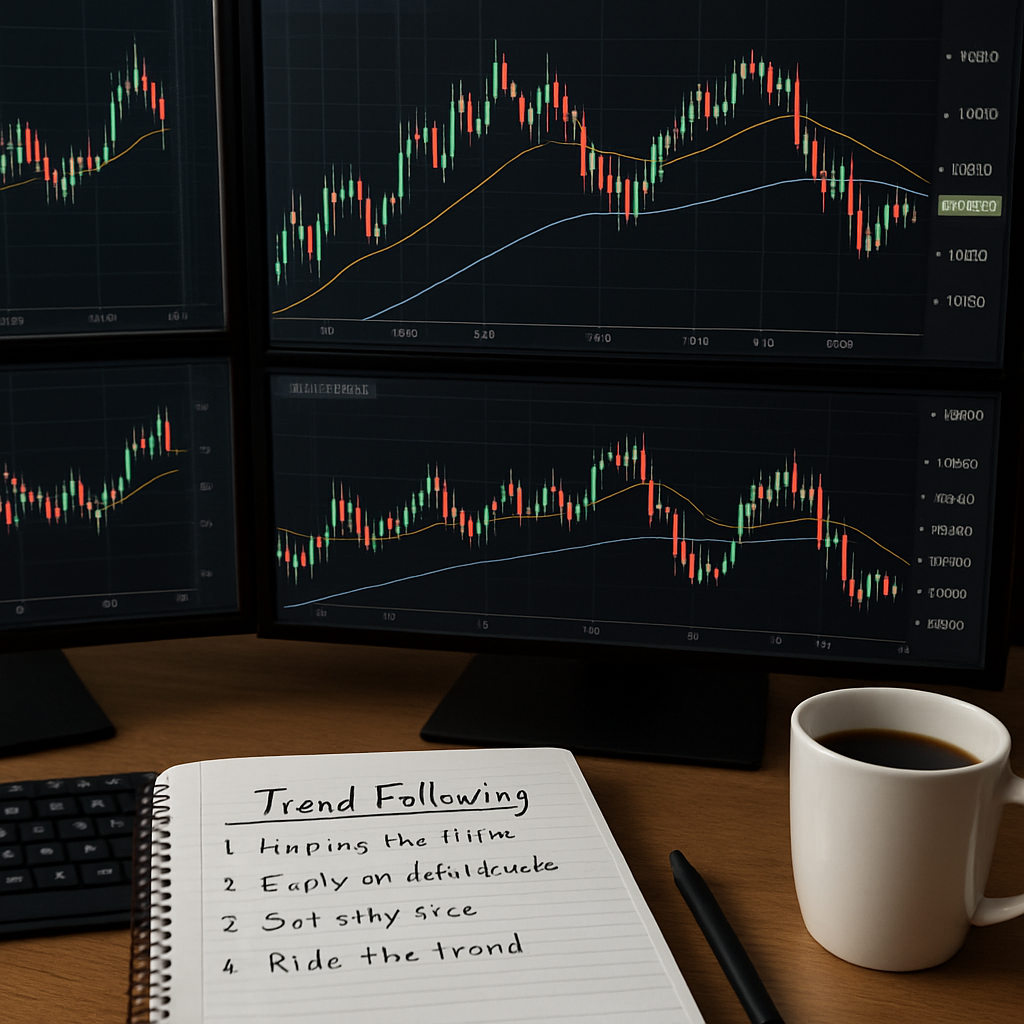
If you’ve ever felt the market’s rhythm like a steady drumbeat, trend following is the simplest way to move with that pulse instead of fighting it. It’s the forex day trading strategy that lets you ride a wave rather than trying to surf against the current.
1. Identify the prevailing direction
First, look at a higher‑timeframe chart – say the 1‑hour or 4‑hour – and ask yourself: is the price generally climbing, falling, or drifting sideways? A quick visual scan of swing highs and lows usually tells you. When the market is in a clear uptrend, higher highs and higher lows line up like stepping stones; in a downtrend, the pattern flips.
2. Align every trade with the trend
Once you know the direction, only take entries that go with it. If the market is bullish, you’d look for long entries on pull‑backs; if bearish, you’d look for shorts on rally‑backs. This mindset cuts down on whiplash and helps keep your win‑rate healthier.
3. Use moving averages as trend filters
Simple moving averages (SMA) or exponential moving averages (EMA) act like a trend‑detector on autopilot. A common combo is the 20‑period EMA crossing above the 50‑period EMA for an uptrend, and the reverse for a downtrend. When the price sits above both lines, you’ve got a visual cue to stay long; below both, you stay short. This filter is especially useful on fast‑moving pairs like EUR/USD during the London‑New York overlap.
4. Look for pull‑backs as entry windows
Trends don’t move in straight lines – they wobble. Those wobble moments, or pull‑backs, are your chance to hop on. A popular method is to wait for the price to dip toward a short‑term support (in an uptrend) or resistance (in a downtrend) and then confirm with a momentum indicator like the RSI or Stochastic. When the oscillator climbs out of oversold territory, that’s often a green light.
Risk management stays front‑and‑center. Place your stop just beyond the most recent swing point, and size your position so that a single loss never wipes more than 1‑2 % of your account. That rule keeps the emotional roller‑coaster at bay.
After watching the short video, you’ll see a live chart where the trend‑following logic is applied step‑by‑step. Notice how the moving averages stay in sync with the price, and how each pull‑back entry respects the underlying direction.
For traders who want a bit of extra automation, some platforms let you set alerts when the 20‑EMA crosses the 50‑EMA. That way you’re not glued to the screen all day, yet you still catch the moment the trend shifts. It’s a small tech boost that can free up mental bandwidth for analysis.
Also, if you’re looking for a reliable partner to handle the backend of your trading journal or to get a second pair of eyes on your strategy, check out XL R8 Well. They specialize in data‑driven performance reviews that fit nicely with a trend‑following workflow.
And when it comes to keeping your legal footing solid – especially if you ever decide to turn your hobby into a registered business – it never hurts to consult a professional. Neos Legal offers straightforward guidance for traders navigating licensing and compliance.
Bottom line: trend following strips away the noise, lets you focus on the big picture, and gives you clear entry and exit rules that are easy to test on a demo account. Start by charting the 1‑hour EUR/USD, add a 20/50 EMA pair, and watch how the market tells you where to go.
When you feel comfortable with the basic setup, experiment with tighter stop placements or combine the approach with a second indicator for extra confirmation. The goal isn’t to be perfect on the first try, but to build a repeatable process that feels as natural as your morning coffee routine.
Ready to give it a spin? Grab a demo, draw those moving averages, and let the trend guide you.
Strategy 2: Breakout Trading
Breakout trading is all about catching price moves when the market clears a defined range. It isn’t a guess; it’s about spotting genuine momentum and riding it while sticking to a plan that protects your capital. The trick is to minimize false signals and stay with the move once price confirms the breakout.
For a deeper dive, Mastering Breakout Trading in Forex walks you through a practical, rules-based path from identifying consolidation to entering and managing the breakout.
If you’re wondering how to stay fresh during long sessions, quick resets matter. Best Break Activities Between Work Sessions to Boost Productivity offers ideas to refresh without losing your edge.
- 1) Define breakout zones with precision
Start by marking swing highs and lows on a relevant timeframe (think 15-minute to 1-hour for intraday). The tighter your consolidation, the clearer the breakout signal. Strong breakouts often show immediate follow‑through and rising volume as price clears resistance or support.
- 2) Seek multi-timeframe confluence
Don’t rely on a breakout in isolation. If the longer-term trend (daily or 4-hour) is clearly bullish or bearish and the shorter frame confirms, you gain confidence in the setup. This reduces whipsaws and improves your odds of a sustainable move.
- 3) Refine entry rules to avoid false breakouts
One practical rule: wait for a close beyond the breakout level, then look for a clean retest. Enter on a second, decisive close in the breakout direction. This aligns entry with momentum and helps you ride the breakout rather than chase it.
- 4) Nail risk management from the start
Risk a small percentage of your capital per trade (0.5%–1%). Use a stop just beyond the opposite side of the breakout range or an ATR-based distance to adapt to volatility. Define a realistic reward target, typically 1.5–2R for intraday moves.
- 5) Manage exits with discipline
After a solid move, consider moving stops to break-even and then trailing with a moving average or a fixed distance. The aim is to stay in when momentum remains intact and to exit cleanly if the market loses conviction.
- 6) Handle false breakouts methodically
If price reverses after a breakout, you’ll want predefined rules to cut losses quickly. False breakouts often stall on light volume or reverse with little warning—protect capital and prepare for the next setup.
- 7) Real-world illustrations
Example A: EURUSD breaks above 1.1050 on strong volume. Enter on the close above the breakout candle, place a stop just below 1.1050, and target a 1.5–2R if momentum sustains. Example B: If price breaks below a support level with a clean retest, a similar plan applies to the downside with symmetrical risk controls.
Breakout trading rewards structure and patience. It’s not about chasing every move; it’s about waiting for setups where price confirms and then riding the wave with a clear plan.
If you want a broader framework, consider how breakout signals can combine with momentum checks—this kind of confluence often yields more reliable opportunities than breakout alone. And remember: sustained performance comes from a repeatable process, not one-off wins.
On the topic of staying sharp, XLR8well offers practical wellness guidance that complements a disciplined trading routine, helping you manage stress and sustain focus during London and New York sessions.
Strategy 3: Scalping with Moving Averages
Moving averages aren’t magic. They give you a clean frame to read fast price action, especially when you’re scalping. The key is using a tight MA cluster to spot micro‑trends and quick reversals. When used correctly, this approach adds structure to rapid intraday moves without turning your screen into noise.
Below is a practical, no‑fluff path to scalping with moving averages. You’ll see how a small cluster can guide entries, exits, and risk in real time. And yes, this is all about discipline and tiny wins, not big bets on each candle.
1) Start with a tight MA cluster
The classic 5-, 8-, and 13-period simple moving averages create a compact band that helps you spot where momentum is forming. This cluster acts as dynamic support and resistance on intraday charts, making it easier to gauge when a move may sustain. Investopedia’s discussion of the 5-8-13 SMA cluster reinforces how this setup highlights momentum shifts while filtering out some whipsaws.
2) Align with the trend, then time the pullback
Even in scalping, direction matters. Check a higher‑frequency view to confirm the dominant intraday momentum, then let price pull back toward the MA cluster. A shallow retracement to or just past the cluster often provides the cleanest entry without fighting the trend.
Think of it like jumping onto a moving sidewalk — you want to hop when momentum is already carrying you forward.
3) Enter on a decisive close beyond the cluster
Look for a candle close beyond the MA cluster in the direction of the trend. This helps you avoid chasing false breakouts and aligns your entry with momentum. In practice, you might wait for a second confirming close or a clean touch plus close through the cluster.
Keep your risk small and defined, so you’re not punished if the move fades quickly.
4) Use disciplined risk management
Limit risk per trade to a small percentage of your account—often 0.5% to 1%. Place stops just beyond the cluster’s outer edge or at a measured ATR distance to accommodate volatility. A tight risk cup keeps you in the game for many small wins instead of a few big losses.
Target 1R to 2R on a favorable setup, then let price breathe. The aim isn’t to double your account in one move—it’s to stack reliable, repeatable edges over time.
5) Confirm with refinement tools (quietly)
To avoid overloading the setup, use a single confirming signal such as price action around the cluster, rather than juggling multiple indicators. If you do add a filter, keep it minimal—volume spikes or a brief momentum check can help confirm the move without muddying the signal.
For a quick visual reference, you can explore a practical walkthrough in this video. See how short moving-average clusters interact with price action.
6) Stay out of choppy or range‑bound markets
If price is weaving around the cluster with no clear directional bias, step back. Scalping works best in clean, liquid bursts, not in a vacuum of sideways motion. Your future self will thank you for not forcing trades you can’t justify.
FX Doctor emphasizes building a repeatable routine. This approach fits that philosophy: you trade with the trend, you respect risk, and you practice on a demo to steadily improve your timing and composure.
7) Practice, then scale mindfully
Start with small positions, track results, and refine your rules. The point of moving averages in scalping is to supply a reliable framework, not a magic wand. With patience, you’ll turn these tiny edges into steady, teachable habits that compound over time.
Strategy 4: Range Trading with Support/Resistance
Range trading with support and resistance is a straightforward, disciplined way to work forex day trading strategies when the market isn’t clearly trending. You’re aiming to buy near the floor of a range and sell near the ceiling, repeating as long as price stays within boundaries. It’s not flashy, but it’s a reliable framework for patient traders.
So, what makes this approach work for aspiring traders learning market fundamentals? It centers on concrete levels the price has repeatedly interacted with. When price respects these levels, your entries become more predictable and your risk controls stay intact. Let’s walk through a practical, no-nonsense path to range trade effectively.
-
1) Define the range
Start by identifying a clear support zone and a parallel resistance zone on a timeframe that matches your day‑to‑day trading window (often 15‑minute to 1‑hour). Look for multiple touches on each boundary without a decisive breakout. A tidy range is your playground—when price breaches it decisively, you switch gears.
In our experience at FX Doctor, patience pays here. If the market refuses to test a boundary, you don’t force a trade—wait for a clean touch and a reaction. Does the range feel stable, or is it thinning out as you watch?
-
2) Identify key SR levels and confluence
Support and resistance aren’t just lines; they’re zones formed by repeated tests. The more times price respects a level, the stronger it becomes as a boundary. Look for price action confirmations near these levels—like a small reversal candle or a pin bar—before you commit.
For a solid framework on support and resistance, you can review PriceAction’s guide here: PriceAction: Support and Resistance Levels.
-
3) Plan your entries around the boundary touch
The basic play is simple: wait for a touch of the boundary, then look for a close back toward the middle of the range. A candle close near the boundary adds a layer of confirmation without overcomplicating your setup. Keep risk tight—0.5% to 1% of your account per trade is a sensible starting point, with stops just beyond the opposite boundary.
Want a tighter trigger? Consider a second confirming candle or a small pullback that keeps you inside the range. Is your current setup giving you a clean entry with minimal guesswork?
-
4) Manage risk within a defined range
Your risk management anchors your ability to trade multiple range plays. Place stops just beyond the opposite boundary or at a measured ATR distance to accommodate volatility. Aiming for a modest 1R–2R where the range allows helps you compound small, repeatable wins over time.
As price oscillates, you can tighten stops toward the middle if momentum fades, safeguarding profits without prematurely exiting a legitimate bounce. Are you comfortable with a fixed risk framework that survives choppy days?
-
5) Confirmations and exits—keep it lean
Use a single credible confirming signal to validate entries—volume dry spells and ambiguous candles can ruin a range play. Exits should be straightforward: target the opposite boundary or the range midpoint if price shows signs of stalling. Time-based exits can also be a prudent fallback during slower sessions.
Remember: simplicity beats overthinking. Does your current routine allow you to stay disciplined across several sessions?
-
6) Real‑world example to anchor the idea
Suppose EURUSD is trading between 1.0900 support and 1.0950 resistance. A touch of 1.0900 followed by a close back inside could cue a long, with a stop just below 1.0880 and a target near 1.0950. If price breaks above 1.0950 with momentum, you either re‑assess or switch to a breakout approach. This is the kind of concrete, repeatable setup that builds confidence over time.
So, what’s next for you? Start by mapping a few recent ranges on your charts and test these rules on a demo account before risking real capital.
| Feature | Range Trading with SR | Notes |
|---|---|---|
| Definition | Trading between clearly defined support and resistance boundaries | Boundaries must be tested multiple times to be reliable. |
| Entry trigger | Touch of boundary with candle close back toward the range interior | Avoid chasing breakouts; look for confirmation. |
| Risk management | Stop beyond boundary; ATR-based distance | Limit risk per trade to 0.5%–1% initially. |
| exits | Target opposite boundary or middle of range | If momentum fades, consider time-based exit as a fallback. |
Strategy 5: News‑Driven Momentum
News moves the market fast. If you’re chasing momentum, you need a calm framework so you don’t get whipsawed. This isn’t about predicting headlines; it’s about reacting to how price behaves once the news hits the tape.
Here’s a practical, no-fluff path to trading forex day trading strategies when the headlines start buzzing. You’ll learn to stay context-aware, enter with discipline, and protect capital even in fast-moving sessions.
- 1) Understand the news calendar and expected volatility
Major data releases, central-bank statements, and geopolitical headlines create bursts of activity. You don’t trade every headline; you trade the clean price reaction. Check a reliable calendar, note the release time, and plan your first 15 minutes after the event.
Think of it like going to a concert: you know the time doors open, so you’re ready for when the energy peaks. If the setup looks noisy or reactive rather than directional, you skip or reduce size.
- 2) Frame the move with market context
News can be the spark, not the entire fire. Before you attempt a trade, assess the broader trend on higher timeframes. If price is already trending, your best chance is a continuation setup after the initial spike, not a counter-trend reversal.
This keeps you aligned with the market’s bigger story and helps you avoid trading the shock itself.
- 3) Define triggers based on price action, not rumor
Look for a clear price reaction after the initial move: a decisive close beyond a key level, or a clean retest of that breakout level. Enter on the second confirming close or a controlled pullback that shows the breakout is real, not a false blip.
Think in terms of evidence: does the market keep moving after the spike, or does it stall and reverse? Your entry should reflect that decision, not the headline alone.
- 4) Manage risk with disciplined sizing
Volatility can widen quickly, so distance stops using a volatility measure and keep risk per trade at a small percentage of your account (0.5%–1%). If volatility spikes, scale down your position size or widen the stop distance to avoid getting stopped out by normal noise.
In practice, you’re aiming for a predictable risk footprint even when the tape is jumping around. That predictability is your edge.
- 5) Seek momentum confluence, not a single signal
News alone won’t do it. Look for momentum cues in the price action—rapid candles, sustained directional thrust, and a clean follow-through after the initial reaction. Avoid overloading with indicators; use a simple, confirmatory signal that resonates with the chart’s rhythm.
This is where your discipline pays off: you trade with the flow, not against it, and you don’t overreact to every headline swing.
- 6) Exit with structure
Move your stop to break-even after a modest move (about 1R), then trail or tighten as momentum persists. If the move stalls or reverses, exit promptly rather than hoping for a bigger retrace. Consider a time-based exit during extremely volatile sessions if price action loses conviction.
Remember, winners aren’t about heroic holds; they’re about controlled risk and clean exits when the narrative changes.
- 7) Practice and build your routine
Map two upcoming news days, note the likely volatility, and test your rules on a demo. Keep a trade journal to learn what setups actually produce repeatable results. Our emphasis is on a repeatable routine, not magical wins.
In our experience at FX Doctor, sticking to a tested process builds real confidence. This isn’t about luck; it’s about disciplined preparation and measured action.
So, what’s your next move? Start by charting the next two major news events and practice the entry–exit rules on a demo account before risking real capital.

Conclusion
We’ve walked through five core forex day trading strategies, from trend‑following to news‑driven momentum. Each one is a tool, not a magic bullet, and the real edge comes from the habits you build around them.
So, what’s the next step for you? Grab a demo account, pick the strategy that feels most natural, and run a two‑day test around the upcoming economic releases. Track every entry, stop, and exit in a simple journal – that’s where the learning sticks.
Remember, consistency beats excitement. A modest 1R‑to‑2R win on a handful of well‑executed trades adds up far more reliably than chasing big spikes that never materialize.
And if you ever feel stuck, revisit the basics: clear entry rules, defined risk, and a disciplined exit plan. Those pillars keep your capital safe while you refine your edge.
In the end, forex day trading strategies work best when they serve a repeatable routine, not a fleeting hype. Treat each session like a practice run, and let the results speak for themselves.
Ready to put theory into practice? Start charting the next news window, apply the rules you’ve just learned, and let the process do the heavy lifting.
Stick with it, and over weeks you’ll see confidence grow.
FAQ
What are the most common forex day trading strategies for beginners?
Most beginners start with a handful of tried‑and‑tested approaches that keep things simple and measurable. The core ones are trend‑following, breakout trading, scalping with moving averages, range trading using clear support‑resistance zones, and news‑driven momentum.
Each of these strategies gives you a concrete entry rule, a stop‑loss guideline, and a realistic profit target, which is exactly what you need while you’re still learning how price behaves on a 15‑minute to 1‑hour chart.
How do I choose the right forex day trading strategy for my personality?
Your personality determines how much time you can watch the screen, how comfortable you are with volatility, and whether you prefer a few high‑conviction moves or many small wins.
If you thrive on fast‑paced action, scalping or news‑driven setups fit well; if you like a steadier rhythm, trend‑following or range trading will feel less stressful. Test each style on a demo account for at least a week, note how often you feel nervous, and let that emotional feedback guide your choice. When you log the results, compare win rates, average R‑multiple, and how many times you had to step away because the market felt too noisy.
What risk management rules should I apply to any forex day trading strategy?
Regardless of the strategy you pick, risk control is the non‑negotiable backbone of every successful forex day trader.
A solid rule of thumb is to risk no more than 1 % of your account on a single trade, set your stop loss a few pips beyond a clear technical barrier, and calculate position size so that the dollar loss matches that 1 % threshold. Keep a journal of every trade, and review whether your actual loss stayed within the planned range.
How often should I review and adjust my forex day trading strategy?
A forex day trading strategy isn’t a set‑and‑forget gadget; it needs regular check‑ins to stay aligned with market conditions and your own performance.
Aim to do a quick post‑session review after each trading day, noting the number of setups you took, the win‑rate, and any emotional spikes. Then schedule a deeper weekly audit where you compare the day‑to‑day stats, adjust entry filters if the market has shifted, and tighten stop‑loss distances if you notice more whipsaws than usual.
Can I combine multiple forex day trading strategies in the same session?
Mixing strategies can give you more trading opportunities, but it also adds complexity that beginners often overlook.
If you decide to combine, keep the rules separate: use trend‑following only when the higher‑timeframe shows a clear direction, switch to breakout or range trading when the market is consolidating, and reserve news‑driven entries for scheduled economic releases. Treat each block as its own mini‑system and track performance per block; if one piece consistently underperforms, drop it before it drags the whole portfolio down.
What tools or resources can help me practice forex day trading strategies without risking real money?
The safest way to test any forex day trading strategy is on a risk‑free platform that mirrors live market prices.
Most brokers offer a free demo account with real‑time quotes; open one, load your charting software, and replay the past week’s price action while you apply your entry and exit rules. Keep a simple spreadsheet to log trade‑date, pair, entry, stop, target, and outcome – that paper‑trading log becomes the foundation for refining your approach before you ever risk real capital.
Additional Resources
Now that you’ve got a toolbox of forex day trading strategies, you might be wondering where to go next.
First off, a solid demo platform is priceless. Pick a broker that offers free, real‑time quotes and lets you replay the last few weeks of price action. That way you can test each strategy without any capital at risk.
Second, consider a simple spreadsheet or a free journaling app. Log the pair, time frame, entry rule, stop‑loss, and outcome. Over a handful of sessions you’ll start to see which approach clicks for you and where you need tweaks.
Third, join a community of like‑minded traders. Forums, Discord channels, or even a subreddit dedicated to forex day trading can give you fresh ideas, quick feedback on your setups, and a reminder that everyone hits a few dead‑ends before finding a rhythm.
Finally, keep a reference guide handy—think of it as your cheat sheet. A one‑page summary of the five core strategies, key entry signals, and risk‑management checkpoints can save you from scrolling back through the article every time you open a chart.
So, what’s your next step? Grab a demo account, set up that trade log, and start iterating. The resources are there; the real work is in the practice.