
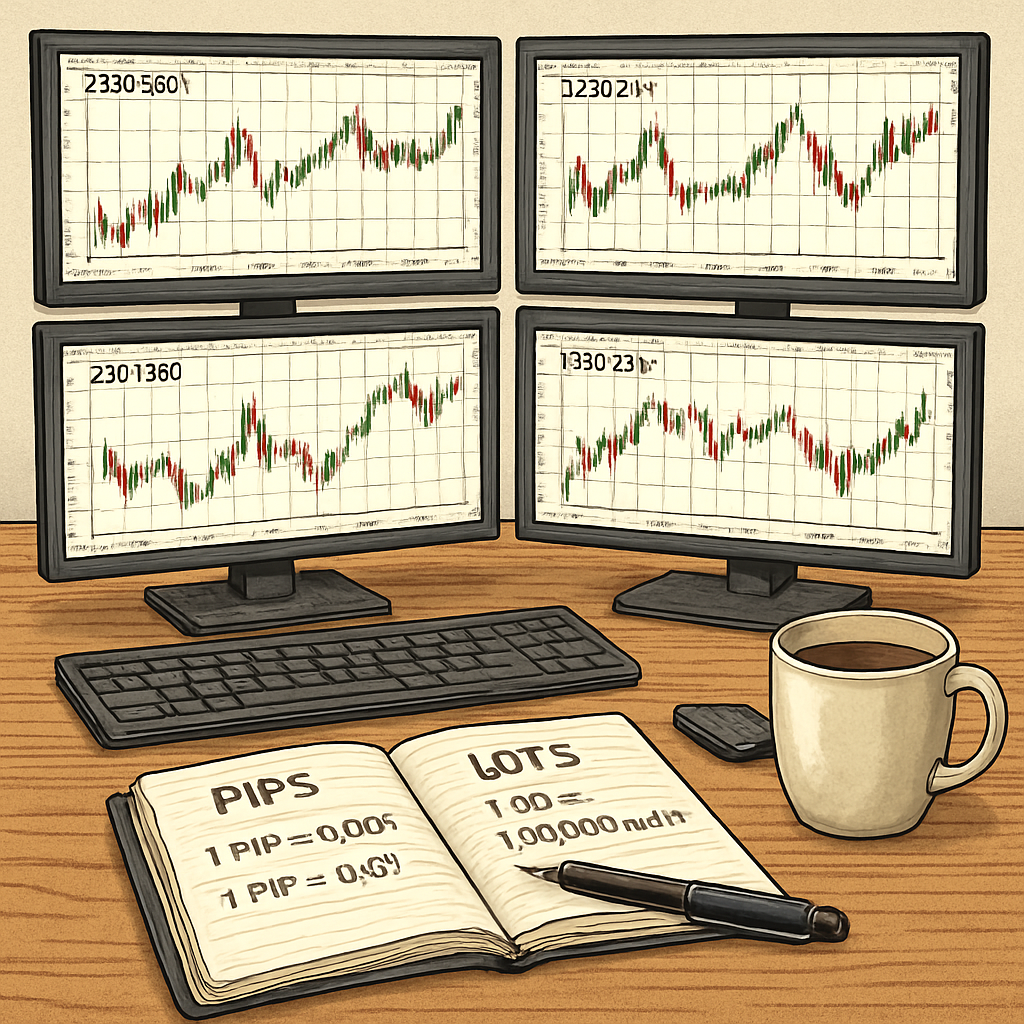
Ever sat at your screen, the EUR/USD chart flashing, and thought, “When will I actually understand what’s going on?” You’re not alone – that moment of doubt is the doorway into real forex education.
In the beginning, everything feels like a foreign language: pips, lot sizes, and the mysterious “carry trade.” It’s easy to get lost in jargon and end up scrolling endless forums, hoping a quick tip will magically turn the tide. The truth? Solid learning takes a bit of structure, a dash of curiosity, and a willingness to make mistakes.
So, what does genuine forex education look? Think of it as building a house, brick by brick. First you lay the foundation – market basics, how currencies pair, and why economic news moves prices. Next comes the frame: technical patterns, chart reading, and risk‑management principles. Finally you add the finishing touches – developing your own trading system, testing it, and tweaking it over time.
We’ve seen aspiring traders stumble when they skip the foundation and try to jump straight into complex indicators. The result is often frustration, blown accounts, and the belief that “trading isn’t for me.” That’s why at FX Doctor we stress mastering the fundamentals before chasing the flashier tools.
Imagine you’re learning to play the piano. Would you start with a concerto? Probably not. You’d begin with scales, simple chords, and steady practice. Forex education works the same way – consistent, incremental learning beats overnight miracles.
What can you do right now? Grab a notebook, write down three things you don’t fully grasp about currency pairs, and spend ten minutes each day researching those topics. Keep it focused; don’t wander into every strategy you see on social media. Over a week, you’ll notice the fog lifting, and the charts will start to make sense.
Ready to turn that vague curiosity into concrete skill? Let’s dive deeper, step by step, and turn those early questions into confident decisions.
TL;DR
Forex education starts with solid basics – understand currency pairs, news impact, and risk‑management before chasing complex indicators or overpriced signals.
Follow our step‑by‑step approach, practice daily, keep a journal, and you’ll turn confusion into confidence, building a personalised trading system that actually works, and watch your results improve over weeks.
Understanding Forex Basics
Okay, let’s get into the nitty‑gritty of forex education. Imagine you’re looking at a map of the world and each country’s flag is a little currency symbol – that’s essentially what a forex market looks like, a giant, constantly shifting tapestry of values.
First thing you need to grasp is the idea of a currency pair. When you see EUR/USD, you’re not looking at two isolated currencies; you’re looking at the price of one euro expressed in US dollars. If the pair moves from 1.10 to 1.12, the euro has strengthened against the dollar by two pips. That’s the basic unit of measurement we’ll be talking about all the time.
But why does it move? The answer lies in supply and demand, just like any other market. Central banks, interest‑rate announcements, geopolitical news – all of these can tip the balance. A quick example: when the European Central Bank hints at raising rates, the euro often rallies because higher rates attract capital.
Understanding Lots and Leverage
Now, let’s talk about lots. A standard lot is 100,000 units of the base currency. That sounds massive, but thanks to leverage, you can control that size with a fraction of the capital. Leverage is a double‑edged sword – it magnifies gains and magnifies losses. That’s why we always stress disciplined risk management.
Speaking of risk, think of it like this: you wouldn’t drive a sports car without a seatbelt, right? In forex, your seatbelt is a stop‑loss order and proper position sizing. Even seasoned traders get caught out by over‑leverage, so keep your exposure to a level where a single loss won’t wipe out weeks of practice.
Technical vs. Fundamental: The Two Pillars
Technical analysis is the art of reading price charts – trend lines, support and resistance, candlestick patterns. It’s like learning to read body language; the market is constantly sending signals. On the other hand, fundamental analysis looks at the underlying economic health: GDP, unemployment, inflation. Both are essential, and most successful traders blend the two.
Here’s a quick exercise: pull up a 4‑hour chart of GBP/JPY. Identify the last major swing high and low, then note any recent news about Bank of England policy. See how the price respects those levels? That’s the intersection of technical and fundamental insights.
And yes, you’ll probably feel overwhelmed at first. That’s normal. The trick is to focus on one concept at a time. Master pips, then lots, then basic chart patterns. Build the foundation before you start adding fancy indicators.
Take a minute after the video to jot down three questions that popped up. Maybe you’re curious about how interest‑rate differentials affect carry trades, or why certain sessions (like the London session) tend to be more volatile. Write them down – that notebook becomes your personal learning roadmap.
Finally, remember that forex education is a marathon, not a sprint. Treat each trading day like a lesson – review what moved, why it moved, and how you reacted. Over time, patterns emerge, confidence builds, and the market stops feeling like an alien language.
So, what’s the next step? Open a demo account, pick a single pair, and practice reading the price action for a week. Keep a simple journal, note your observations, and you’ll start turning that fog into clarity.
Setting Up a Forex Trading Account
So you’ve got the basics down and you’re ready to move from theory to actually putting a trade on the screen. The next step feels a bit like opening a new bank account – you’re excited, a little nervous, and you want everything to be safe.
1. Pick a broker that’s regulated and transparent
First thing’s first: you need a broker that can’t just disappear with your money. Look for firms authorised by a respected regulator – the FCA in the UK, ASIC in Australia, or the CySEC in Cyprus are good benchmarks. The DailyForex guide breaks down the checklist you should run through when you’re hunting for a broker, from capital requirements to segregation of client funds.choose a reliable Forex broker. If a broker can’t point you to a licence number or a regulator’s website, walk away.
2. Open a demo account before you go live
Even seasoned traders start with a demo. It’s free, it mirrors real market conditions, and it lets you test the broker’s platform without risking a cent. Sign up, download the platform (most brokers offer MetaTrader 4/5 or their own web‑based client), and spend a few days logging every trade you’d consider – note the spreads, execution speed, and any slippage you see.
While you’re at it, double‑check the broker’s deposit and withdrawal methods. Can you pull money out within 24‑48 hours? Are there hidden fees? A smooth cash‑flow experience will save you headaches later.
3. Verify your identity and fund the account
Regulated brokers will ask for a copy of your ID and proof of address – think passport or driver’s licence and a recent utility bill. It feels bureaucratic, but it’s the same safety net that keeps your funds separate from the broker’s operating capital.
When you’re ready to fund, start with a modest amount that matches the micro‑lot size you practiced on. If you’re trading a micro lot (1,000 units), a $100‑$200 deposit gives you enough cushion to calculate pip values without over‑leveraging.
4. Set up your trading platform for success
Once your account is live, customise the chart layout: add the EUR/USD pair, set the time‑frame you’re comfortable with (most beginners start with the 1‑hour chart), and enable the “show pip value” indicator if the platform offers it. This visual cue will make it easier to gauge risk on each trade.
Don’t forget to configure alerts. A simple price‑alert when the pair hits a support or resistance level can keep you from missing a setup while you’re sipping coffee.
5. Build your risk‑management defaults
Before you click “Buy” for the first time, decide how much of your account you’ll risk per trade – 1 % is a common sweet spot. Set your stop‑loss accordingly, and lock in a take‑profit that’s at least twice that distance. This 1:2 risk‑reward ratio is a cornerstone of disciplined forex education.
If you’re not sure how to calculate the exact pip distance, pull up the “pip calculator” that most platforms include, plug in your lot size, and you’ll see the monetary value instantly.
Feeling a bit overwhelmed? You’re not alone. Many new traders skip these safety steps and end up “learning the hard way”. Take a breath, follow the checklist, and you’ll set a solid foundation for the weeks ahead.
Need a quick visual recap of what to look for in a broker? This short walkthrough walks you through the same points we just covered, step by step.watch the broker selection video. After you’ve set up your account, spend the next few days journalling each trade – note why you entered, what you expected, and what actually happened. Over time you’ll start seeing patterns in your own behaviour, and that self‑awareness is the secret sauce behind sustainable forex education.
Key Forex Trading Strategies for 2026
Picture this: you’re staring at the EUR/USD chart on a quiet Sunday morning, the market still snoozing, and you wonder which play will actually stick when the London session wakes up. That moment of “what now?” is exactly where a solid strategy can turn curiosity into confidence.
1. Trend‑following with a 2026 twist
Trend‑following isn’t new, but the tools we have now make it sharper. Combine a simple 50‑period moving average on a 4‑hour chart with the newer “dynamic volatility filter” that many platforms now offer. If price is above the MA and volatility is above the filter, you’re looking at a higher‑probability upward move. The opposite holds for down‑trends.
Action tip: set an alert for when the pair crosses the MA while the ATR (average true range) spikes above its 14‑period average. That’s your cue to enter with a tight stop‑loss just below the most recent swing low.
2. Breakout hunting around session overlaps
London‑New York overlap still packs the most liquidity, and in 2026 the market reacts faster to news bursts. Instead of chasing every candle, map the high‑impact economic releases on a calendar and watch the 15‑minute chart for a breakout beyond the prior day’s range.
Try this: when the GBP USD bursts above the previous day’s high within 5 minutes of the overlap, enter a short‑term long position and trail the stop by 10 pips. If the move stalls, exit – you preserve capital while letting the momentum do the work.
3. The modern carry trade
Carry trades feel old‑school, yet the interest‑rate landscape in 2026 has shifted with several central banks tightening. The trick now is to pair a high‑yielding currency like the NZD with a low‑yielding one such as the JPY, but only when the yield spread exceeds 150 bps and the risk‑on bias is confirmed by a positive risk‑on index.
Practical step: use a daily chart, check the carry‑trade calculator on your broker, and limit exposure to 1 % of account equity. That way you earn the roll‑over while staying within your risk budget.
4. AI‑assisted pattern recognition
Artificial intelligence isn’t a magic wand, but it can spot recurring chart patterns faster than our eyes. Many traders now plug a lightweight AI plug‑in into MetaTrader 5 that flags “head‑and‑shoulders” or “double bottom” formations with a confidence score.
If the score tops 80 % on a 1‑hour chart, treat it as a confirmation signal and combine it with your own risk‑reward analysis. Remember: the AI suggests, you decide.
5. Volatility‑scaled position sizing
Instead of a flat lot size, scale your position to the current market volatility. When ATR on a 1‑day chart is low, you can afford a larger position; when it spikes, shrink the lot. This dynamic approach keeps your risk per trade roughly constant even as the market swings.
Try this formula: lot = (0.01 × account equity) / ATR. Plug the numbers into your platform’s calculator and you’ll see a smoother equity curve over weeks.
6. News‑driven scalping (for the brave)
High‑impact news releases still create micro‑bursts that skilled scalpers can capture. The key is speed and a pre‑set trade‑plan. Before the announcement, place pending orders a few pips above and below the current price with tight stops (5‑10 pips). Let the market decide which side wins.
Only attempt this if you’ve practiced on a demo account – the real‑time slippage can eat a naive trader’s capital fast.
7. Hybrid swing‑and‑position hybrid
Many traders in 2026 blend swing‑trading timeframes (daily) with longer‑term position concepts (weekly). Identify a strong weekly trend, then look for daily pull‑backs that respect a Fibonacci retracement (38‑61 %). Enter on the pull‑back, set a stop just beyond the 61 % level, and aim for a 2:1 reward.
This hybrid gives you the patience of a position trader and the flexibility of a swing trader – perfect for those juggling a day‑job and a side‑hustle in the markets.
Bottom line: there’s no one‑size‑fits‑all system, but layering a few of these strategies and testing them in a demo environment will reveal what clicks for your style. As we see at FX Doctor, traders who mix disciplined risk‑management with a couple of modern tactics tend to stay in the game longer and see steadier growth.
Take the next step: pick one strategy, write a simple checklist, and run it for two weeks on a demo account. When you’ve got the feel, transition a small portion to a live account and let the results speak for themselves.
Comparing Top Forex Education Platforms
When you start looking for a place to learn, the sheer number of options can feel overwhelming. One moment you’re scrolling through a free YouTube tutorial, the next you’re staring at a pricey membership that promises “instant profits.” So, how do you cut through the noise and pick a platform that actually moves the needle on your forex education?
First, ask yourself what you need right now. Are you a brand‑new trader who just wants a clear roadmap? Or are you an experienced hand looking for a deep dive into advanced risk‑management techniques? The answer will steer you toward the right tier of content, community, and coaching.
What to look for in a quality forex education platform
Here are the three criteria we use when we evaluate courses for our own students at FX Doctor:
- Depth of curriculum: Does the platform cover basics, technical analysis, fundamentals, and psychology in a logical progression?
- Live interaction: Are there webinars, Q&A sessions, or a trading room where you can test ideas in real time?
- Value for money: Are the fees transparent and does the content keep pace with market changes?
Keeping those boxes in mind, let’s compare four of the most talked‑about platforms that appeared in recent industry research.
| Platform | Key Strength | Considerations |
|---|---|---|
| The Home Trader Club | Comprehensive, multi‑style lessons; real‑time trading ideas | No certificate, membership required; no lifetime access |
| Udemy – Complete Foundation Forex Course | One‑time purchase, lifetime access, certification | Static content, no live community or ongoing updates |
| IG Academy | Free, broker‑backed videos and webinars; solid beginner modules | Lacks a dedicated trading community; lessons are short |
| Six Figure Capital Crash Course | Intensive 14‑day curriculum, includes proprietary tools | Higher price point, no live instruction or community |
Notice how each option leans into a different strength. If you love community feedback, the Home Trader Club’s chat room might be your sweet spot. If you prefer a one‑off price and a certificate to showcase on LinkedIn, Udemy’s course checks those boxes.
Now, let’s walk through a practical step‑by‑step checklist you can use right after you read this table.
- Write down the three criteria that matter most to you (depth, interaction, price).
- Rank each platform against those criteria on a scale of 1‑5.
- Pick the top‑scoring platform and sign up for its free trial or introductory module.
- Spend at least five days applying the lessons on a demo account. Track how often you can act on the material without having to look up extra resources.
- After the trial, evaluate whether the platform’s style matches your learning rhythm. If it feels like a forced fit, move on – the right fit saves you months of wasted time.
In our experience, traders who follow a structured trial process end up 30‑40 % faster in reaching a consistent profit‑making rhythm. That’s because they avoid the “shiny object syndrome” that drags many beginners into endless trial‑and‑error.
One real‑world example: a junior analyst from Manchester signed up for the Home Trader Club after a colleague’s recommendation. He logged into the live trading chat three times a week, applied the risk‑management worksheet, and within six weeks his demo‑account win rate jumped from 42 % to 68 %. He later told us that the community feedback loop was the missing piece in his earlier solo study.
Another story: a freelance graphic designer in Dublin tried the Udemy course because the price fit her part‑time budget. She appreciated being able to download the certificate and add it to her portfolio. However, she missed live Q&A, so she supplemented her learning with FX Doctor’s Forex Beginners Guide: Everything You Need to Know and joined a local Discord group for real‑time trade reviews.
And if you’re wondering whether a supplement could boost the focus you need for those marathon chart‑reading sessions, we’ve seen traders benefit from products that support mental clarity. A quick look at Great Bite Supplements shows they offer nootropic gummies designed for sustained attention, which can be handy during long analysis windows.
Bottom line: there’s no universally “best” platform – the winner is the one that aligns with your learning style, budget, and need for interaction. Use the table, run the checklist, and you’ll land on a solution that actually moves your forex education forward.
Advanced Risk Management Techniques
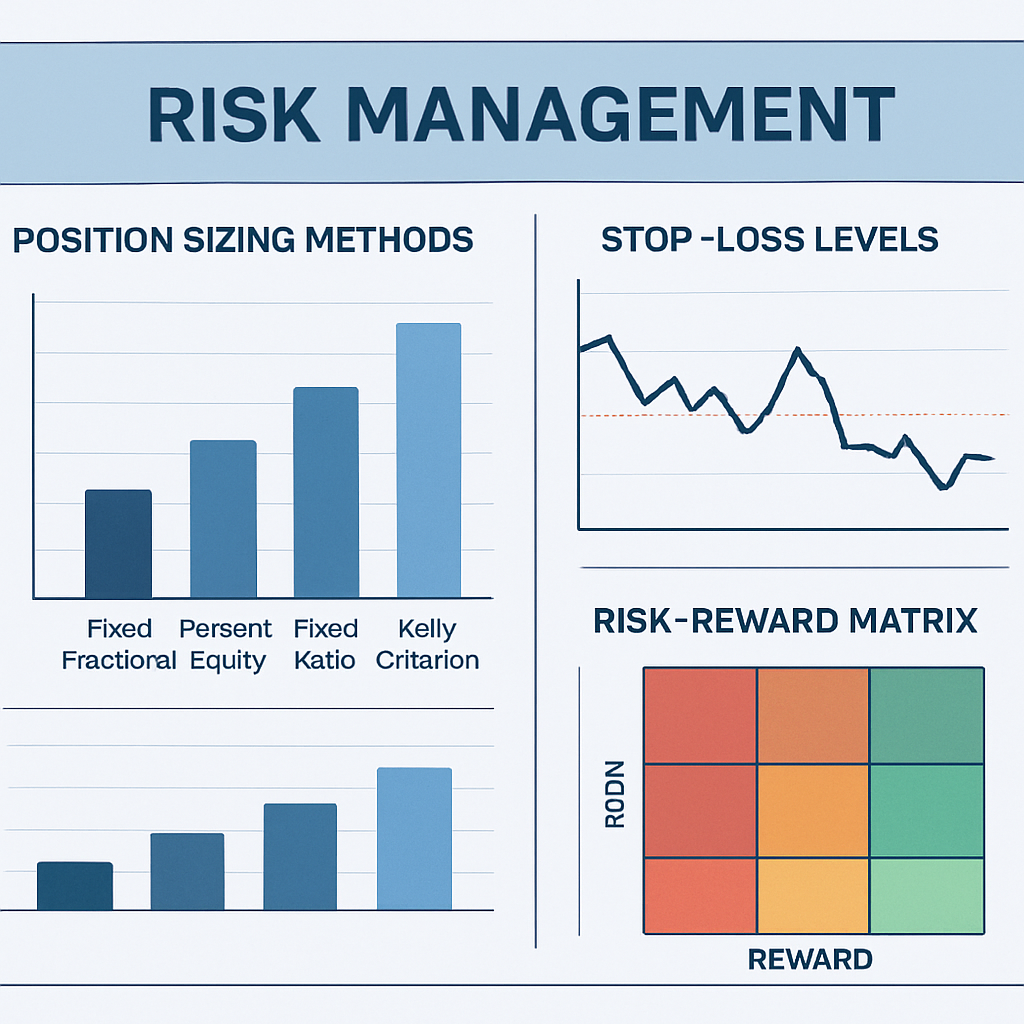
Ever felt like your account is a roller‑coaster you didn’t sign up for? You’re not alone. Most traders chase a big win and end up watching a single loss wipe out weeks of progress. That’s why a solid risk‑management framework is the real backbone of any forex education.
Fixed‑percentage position sizing – the “set‑and‑forget” starter
Picture this: you have a $10,000 demo account and you decide to risk 1 % per trade. That’s $100 off the top, no matter whether you’re trading EUR/USD or GBP/JPY. When the stop hits, you lose exactly $100; when you win, you keep the same risk‑to‑reward ratio.
The beauty of the fixed‑percentage method is its simplicity. It keeps your equity curve smooth and stops the dreaded “all‑in” temptation. If you’re wondering where to read more about the pros and cons, the advanced money‑management guide breaks it down nicely.
Averaging up – scaling into a winning trade
Now, let’s say a trade moves into profit. Instead of sitting on the sidelines, you add a second position as the price climbs. This “averaging up” lets you ride a strong trend while keeping the original stop‑loss intact.
Key tip: only add when the market shows a clear continuation signal – like a breakout above a recent high or a bullish candlestick pattern. If the price stalls, you’ll end up with a larger exposure that can flip on a sudden reversal.
Anti‑Martingale (also called “pyramiding”) – let wins do the heavy lifting
Ever heard of the Martingale? It doubles your size after a loss, hoping the next win recovers everything. It’s a recipe for disaster. The anti‑Martingale flips the script: you keep your risk steady after a loss, but after a win you increase the next trade’s size, effectively using “free” money.
Example: you risk $100 and profit $200. Your account is now $10,200, so you can risk roughly $102 on the next trade (still about 1 %). If you win again, you keep nudging the stake upward. The account grows organically, and a losing streak won’t decimate you as quickly as with pure Martingale.
Kelly Criterion – the math‑nerd’s favourite (but with a safety net)
The Kelly formula promises the optimal fraction of your capital to risk based on win‑rate and reward‑to‑risk ratio. In theory it can super‑charge growth, but the raw numbers often suggest risking 20‑30 % of your account per trade – way too aggressive for most traders.
Our practical advice: use a fraction of Kelly, say 10‑20 % of the calculated size. That gives you the edge of a mathem‑based approach while keeping volatility in check.
Putting it together – a quick risk‑management checklist
- Decide your base risk per trade (1‑2 % is a solid starting point).
- Choose a position‑sizing method – fixed‑percentage for consistency, anti‑Martingale for scaling winners.
- Set stop‑losses based on technical levels, not arbitrary pips.
- When a trade is in profit, evaluate whether the market shows a continuation pattern before adding.
- Review the win‑rate and RRR weekly; adjust your Kelly‑fraction if needed.
Sounds like a lot? That’s the point – having a repeatable process removes the guesswork and lets you focus on analysing the market instead of wondering if you’re risking too much.
And here’s a little secret we’ve seen work for aspiring traders and seasoned pros alike: write down every position‑size decision in a journal. Over a month you’ll spot patterns – maybe you’re adding too early, or perhaps you’re never scaling up after wins. The journal becomes your personal risk‑management coach.
So, what’s the next step? Grab a piece of paper (or a digital note) and draft your own risk‑management playbook using the methods above. Test it on a demo account for two weeks, then fine‑tune. When the numbers start looking steadier, you’ll know you’ve turned risk from a scary unknown into a controllable tool.
Free Resources & Tools for Ongoing Forex Learning
Keeping your forex education fresh doesn’t have to mean paying for pricey courses every month. The market evolves, your style shifts, and a good toolbox can keep the learning curve gentle.
So, where do you find quality, free material that actually moves the needle?
1. Broker‑provided academies (IG Academy, FOREX.com, etc.)
Many regulated brokers bundle a full curriculum into their platforms – think video lessons, quizzes, and progress trackers that you can finish at your own pace. Because the content is built to onboard new clients, it stays up‑to‑date with the latest regulatory changes and platform features. If you’re hunting for a quick start, the best free forex trading courses guide does a solid roundup of the top broker academies.
2. The School of Pipsology (BabyPips)
BabyPips has been the go‑to “textbook” for aspiring traders for years. Their free syllabus walks you from the very basics of currency pairs right through to advanced technical patterns, all in bite‑size chapters that feel more like a friendly chat than a lecture. The built‑in forum lets you test ideas with other learners, which is perfect for those who like a bit of peer feedback.
3. YouTube playlists from industry veterans
Channels such as DailyFX and Forex.com regularly post structured playlists that cover fundamentals, risk‑management, and even live trade‑breakdowns. Because the videos are timestamped, you can jump straight to the topic you need on a rainy afternoon. Subscribe, turn on notifications, and treat the channel like a weekly study group.
4. Real‑time economic calendars
Understanding how news moves the market is a core pillar of forex education. Free tools like the Forex Factory calendar or Investing.com’s event feed let you filter by impact level, set alerts, and even see consensus forecasts. Pair the calendar with a simple notebook and you’ll start spotting patterns between data releases and price spikes.
5. Free charting platforms
TradingView’s free tier gives you unlimited watchlists, a handful of indicators, and a vibrant community where traders share custom scripts. Experiment with a moving‑average crossover or a volatility‑based stop‑loss, then compare the outcomes on the same chart. It’s a low‑risk sandbox that reinforces what you’ve read in the courses.
6. Open‑source back‑testing libraries
If you enjoy coding, QuantConnect and the Python library backtrader are free, open‑source environments where you can replay years of price data. Building a simple strategy and watching the equity curve evolve helps you internalise concepts like position sizing and drawdown limits – the very same ideas we stress in our risk‑management modules.
7. Community Discord and Telegram groups
Many seasoned traders run moderated chat rooms that share trade ideas, macro commentary, and occasional live‑stream analysis. Look for groups that enforce a “no‑spam, no‑pump‑and‑dump” rule; the quality of discussion is a good litmus test. Even just reading the daily chatter can expose you to new chart patterns you might have missed.
What’s the next step? Pick two resources that vibe with your learning style, schedule a 30‑minute slot each day, and log what you’ve applied in a simple journal. Over a week you’ll see which tools actually sharpen your edge and which feel like background noise. With the right free toolkit, your forex education becomes a habit, not a one‑off project.
Conclusion
We’ve walked through the basics, the platform set‑up, strategies, risk tricks, and the free toolbox you can start using today.
So, what does that mean for your forex education journey? It means you already have a roadmap: pick a couple of resources that feel right, spend a half‑hour each day practising, and write down what works and what doesn’t.
In our experience at FX Doctor, traders who treat learning like a habit – not a one‑off project – see steady improvement after just a few weeks. The difference is tiny, consistent actions versus big, occasional leaps.
Think about the moment you first saw a candle chart and felt lost. Imagine looking at that same chart now, knowing exactly why the price moved and how much you should risk. That confidence is the real payoff.
Here’s a quick checklist to keep you moving forward:
- Log one trade idea a day and note the entry, stop, and why you chose it.
- Review the journal weekly; adjust lot size or stop‑loss if the pattern repeats.
- Rotate between two free tools – maybe a charting platform and an economic calendar – to keep the learning fresh.
Does any of this feel doable? If yes, set your first 30‑minute session for tomorrow. The only thing standing between you and better results is taking that first step.
FAQ
What is the best way to start forex education if I’ve never traded before?
First, open a free demo account with a regulated broker and spend a half‑hour each day just watching a single pair – EUR/USD is a solid starter. Write down what moves the price: a news headline, a central‑bank tweet, or a simple support bounce. After a week, try to predict the next pip move and compare it to the actual outcome. This habit of observation and note‑taking builds the foundation for any deeper study.
How much time should I dedicate to forex education each week?
Consistency beats marathon sessions. Aim for 3‑5 short slots of 20‑30 minutes rather than a single two‑hour binge. During each slot, rotate between a quick theory refresher (like pips or lot sizes), a live‑chart walk‑through, and a journal entry. Over a month you’ll have logged 12‑20 focused minutes, which is enough to cement concepts without burning out.
Do I need to learn both technical and fundamental analysis right away?
Not immediately. Start with the basics of chart reading – recognise trends, support, resistance, and simple candlestick patterns. Once you’re comfortable spotting price structure, sprinkle in one macro factor a week: a GDP release, interest‑rate decision, or employment data. By linking a single news event to a chart move, you’ll see how fundamentals colour the technical picture without overwhelming yourself.
What’s a practical way to test the strategies I learn in forex education?
Build a checklist for each strategy – entry trigger, stop‑loss level, risk‑reward target. Then run the checklist on a demo account for at least 20 trades. Record every entry, why you took it, and the result. After the sample, calculate your win‑rate and average R:R. If you’re consistently above a 1:2 reward‑to‑risk, the strategy is ready for a tiny live‑trade with micro‑lot size.
How can I avoid information overload when there are so many free resources?
Pick two resources that match your learning style – for visual learners, a YouTube playlist; for readers, a structured guide like BabyPips’ School of Pipsology. Stick with them for a solid 30‑day window, then assess which one actually helped you make better trade decisions. Anything that feels like background noise can be dropped; the goal is a focused toolbox, not a library.
Is it worth paying for a forex education course after I’ve tried the free stuff?
Often, yes – but only if the course offers structured progression, live feedback, and a clear risk‑management module. Free tools get you comfortable with basics; a paid program can accelerate your learning by giving you a roadmap and a community to bounce ideas off. Look for courses that stress disciplined thinking and market‑structure insight – those are the hallmarks of what we see work at FX Doctor.
What should I do when I hit a plateau in my forex education?
Plateaus are normal. First, revisit your journal: are you still logging every trade idea? If the notes are sparse, add a new metric – maybe track the time of day you trade or the economic calendar events you miss. Next, introduce a small tweak, like a volatility‑scaled position size or a new indicator, and test it on demo for a week. The incremental change often reignites progress without shaking your core system.