
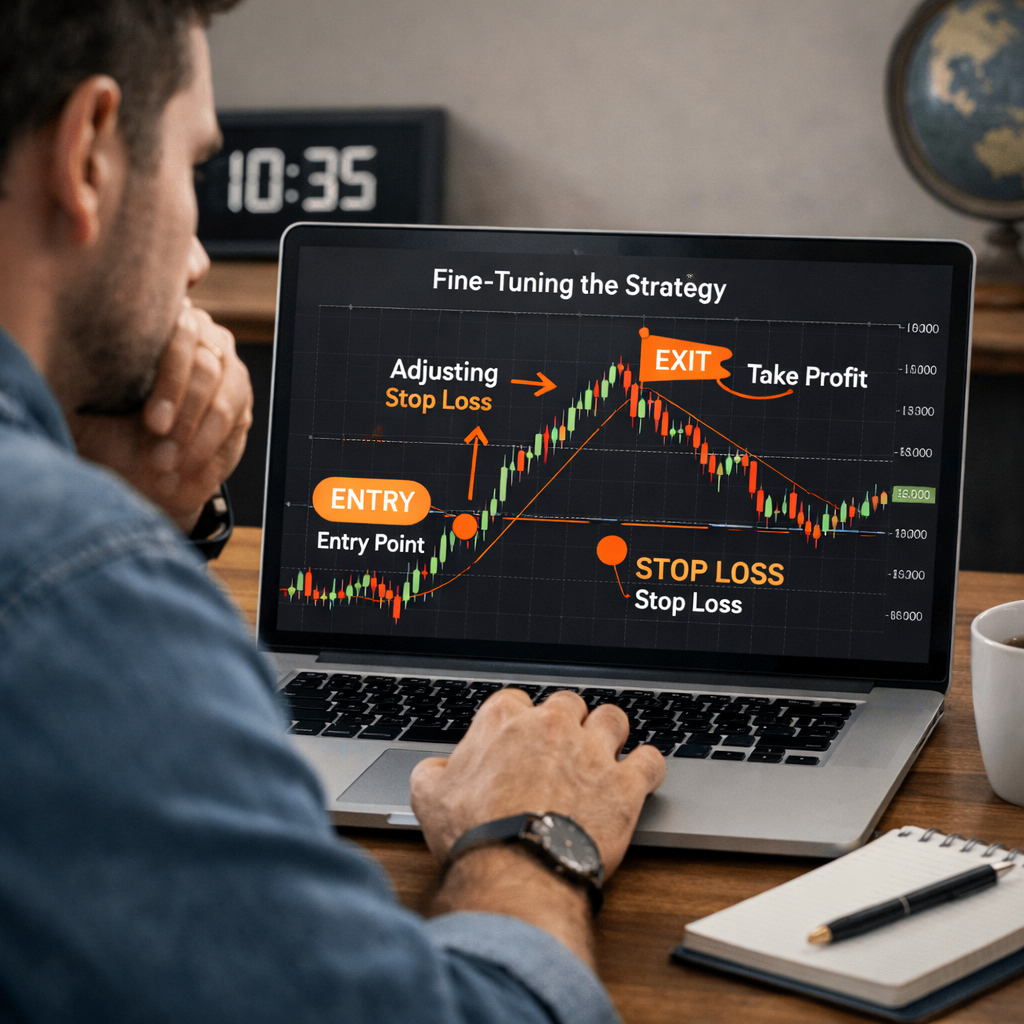
Most traders get stuck on the demo platform. They trade well there, but the moment they put real money on the line their confidence fades. This guide shows you how to transition from demo to live forex trading without losing your edge. You’ll learn how to review your demo results, sharpen your system, set rock‑solid risk rules, open a funded account, scale up gradually and keep improving once you’re live.
Step 1: Assess Your Demo Performance and Set Goals
Start by pulling the numbers from your demo account. Look at win‑rate, average reward‑to‑risk, largest drawdown and how many trades you took each day. Write those metrics down in a simple spreadsheet. If you see a pattern , for example, you only win when you trade EUR/USD in the London session , note it.
Next, decide what you want to achieve with a live account. A realistic goal might be “maintain a 1:2 risk‑reward ratio and keep daily drawdown under 2% of equity”. Write the goal in plain language, not in vague terms like “be more disciplined”.
Ask yourself three questions:
- Did I trade consistently for at least 3 months?
- Did my strategy produce a positive expectancy after accounting for slippage?
- Can I explain every losing trade with a rule breach rather than luck?
If the answer is yes, you’re ready for the next step. If not, keep polishing your demo record until you meet the criteria.
Remember the advice from forexcrunch.com: accept that losses happen and treat them as learning tools. That mindset will keep you from getting discouraged when a real trade goes against you.
Step 2: Fine‑Tune Your Strategy on the Demo Platform
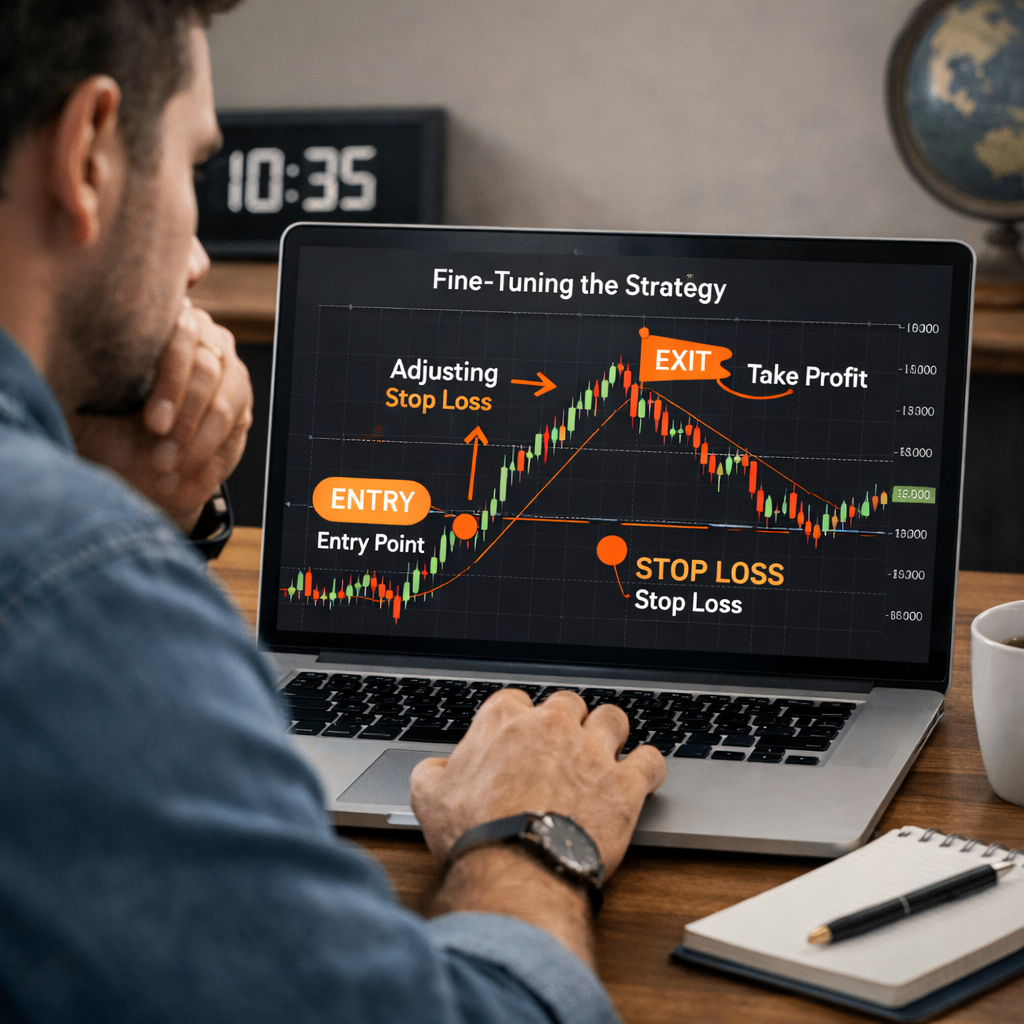
Even a winning demo system can break when you add real money. The goal here is to tighten entry timing, exit rules and stop‑loss placement so the system works across market types.
Start with a backtest. Load your last 6 months of price data into a charting tool and run your rules automatically. Nick Goold explains that backtesting reveals whether a strategy thrives in trending markets but falters in ranges. TitanFX’s strategy‑optimization guide walks you through the process step by step.
After backtesting, switch back to live‑time demo trading. Watch for two signals that your tweaks are working:
- Fewer early exits , your stop‑loss should fire only when the market truly turns against you.
- Higher reward‑to‑risk , aim for at least 1:2 on each trade.
Make tiny adjustments. For example, if you usually enter on the first candle break, try waiting for a second candle confirmation. That single extra candle can cut false breakouts by a noticeable margin.
Keep a log of every change and its effect. If a tweak hurts performance, roll it back. Optimization is an ongoing loop, not a one‑off event.
When you feel the system is strong, note the final rule set in a plain‑text document. That document will become the core of your live trading plan.
Step 3: Establish Strong Risk Management Rules
Risk rules are the safety net that keeps a single loss from wiping out your account. The IG guide on risk management stresses three pillars: position size, stop‑loss placement and risk‑reward ratio.
First, decide what percent of your capital you’ll risk per trade. Most pros stick to 1‑2% of account equity. If you have $5,000, a 1% risk means you’d never lose more than $50 on any one trade.
Second, set stop‑loss levels based on market volatility, not on a fixed pip count. IG suggests measuring the average true range (ATR) over the last 14 periods and placing the stop a multiple of that value away from entry. This approach adapts to both calm and choppy markets.
Third, enforce a minimum risk‑reward ratio of 1:2. That means for every dollar you risk, you aim to make at least two dollars. Even if you win only 30% of the time, the math works out in your favor.
Write these rules in a checklist and treat the checklist like a pre‑flight safety routine. Never start a trade without ticking every box.
Finally, remember to set a daily loss limit. If you hit it, stop trading for the day. This prevents emotional chasing after a bad streak.
For more on official risk‑management standards, see the U.S. SEC’s investor guide. It outlines why diversification and disciplined sizing matter for any market, including forex.
Step 4: Open a Live Account and Fund It
Choosing the right broker is the first real decision you’ll make after the demo phase. Look for a regulated firm that offers transparent pricing, low spreads and a reliable platform.
OANDA checks all those boxes. Their website lists competitive spreads, two clear pricing models and a simple deposit process. OANDA’s official forex page explains how to create an account in minutes and fund it via debit card, wire or ACH.
When you open the account, set the same risk parameters you practiced on demo. Most platforms let you pre‑define stop‑loss and take‑profit levels before you place a trade, which helps you stick to the plan.
Fund the account with only the money you can afford to lose. A common starting size is $1,000 to $2,000, which lets you trade micro lots while still respecting the 1% risk rule.
Once the funds are in, do a short “smoke test”. Place a tiny market order, watch the execution speed, check the spread and verify that the stop‑loss triggers as expected. If anything feels off, contact support before you trade larger positions.
Now you’re technically live, but you’ll still treat each trade like a demo trade , follow the checklist, log the trade, and review the outcome.
“The moment you trade with real money, discipline becomes the difference between profit and loss.”
Step 5: Transition Trades Gradually with a Scaling Plan
Going from micro lots to full‑size positions too fast is a common pitfall. A scaling plan lets you increase exposure only after you’ve proved consistency under live conditions.
Here’s a simple 4‑stage ladder:
Each stage should be reviewed weekly. If you break a rule, drop back to the previous stage and re‑establish discipline before moving up again.
Audacity Capital’s guide notes that many traders over‑scale because they chase the thrill of larger profits. By sticking to the ladder, you let confidence grow naturally.
Also consider a hybrid approach: keep a small portion of your capital on demo while you scale live. This lets you test new ideas without risking the bulk of your funded account.
Step 6: Monitor, Review, and Adjust Your Live Routine
Once you’re trading live, the work doesn’t stop. Continuous review closes the gap between knowing what to do and actually doing it.
FX Replay stresses that a trade journal is the single most effective tool for this phase. Record entry time, reason, stop‑loss, take‑profit, result and, crucially, your emotional state.
At the end of each day, skim the journal for patterns. Do you tend to increase lot size after a win? Do you cut profits short when you feel nervous? Highlight any recurring bias.
Weekly, pull a summary: total trades, win‑rate, average reward‑to‑risk, biggest loss, biggest win. Compare these numbers to your original demo benchmarks. If the live win‑rate is lower, ask why. Is slippage hurting you? Are you trading different sessions?
When you spot a weakness, create a small experiment. For example, if you notice you exit too early on trend trades, add a trailing stop rule and test it for a week. Record the outcome and decide whether to adopt it.
Remember the mindset shift: live losses feel personal, but each loss is data. Treat every trade as a lab result, not a personal verdict.
By keeping the review loop tight, you turn experience into actionable improvement rather than vague frustration.

FAQ
What is the minimum amount of money I should start with in a live forex account?
Start with an amount you can afford to lose completely. Many educators suggest $1,000‑$2,000 as a usable range for micro‑lot trading. This size lets you keep risk per trade at 1% while still having enough capital to absorb normal drawdowns. Using disposable capital protects your personal finances and helps you stay emotionally neutral.
How many demo trades should I complete before going live?
A solid rule of thumb is at least 100 trades that meet your strategy’s entry criteria, with a consistent positive expectancy. Aim for at least three months of continuous trading so you’ve experienced different market conditions , trending, ranging and high‑volatility periods. The longer the record, the more confidence you’ll have in the system.
Should I use the same broker for demo and live trading?
Using the same broker reduces platform‑learning friction. It lets you keep the same charting tools, order types and execution speed, which minimizes surprises when you switch to real money. However, ensure the broker is regulated, offers transparent spreads and provides a reliable deposit method before you open the live account.
What risk‑reward ratio is realistic for a beginner?
Most educators recommend a minimum 1:2 ratio. That means you aim to gain at least two dollars for every dollar you risk. Even if you win only 30% of the time, a 1:2 ratio yields a positive expectancy over the long run. Adjust the ratio only after you have proven the system works across several market cycles.
How can I avoid over‑trading when I start with real money?
Set a daily trade limit , for example, no more than three trades per day , and stick to it. Use a pre‑trade checklist that includes a rule about not trading after a loss. If you feel the urge to chase, step away for a break. Over‑trading often stems from emotional reaction, not from the strategy itself.
Is it worth keeping a demo account open after I go live?
Yes. Keep a small demo balance to test new ideas without risking your live capital. Treat the demo as a sandbox where you can experiment with fresh setups, different time‑frames or alternative risk parameters. When a new idea proves profitable in demo, you can consider adding it to your live routine after proper validation.
What should I look for in a broker’s regulation and safety?
Check that the broker is authorized by a reputable financial authority such as the U.S. Commodity Futures Trading Commission (CFTC) or the UK Financial Conduct Authority (FCA). Look for client fund segregation, negative‑balance protection and transparent reporting. Regulated brokers must meet capital‑adequacy standards, which reduces the risk of sudden insolvency.
How often should I review my trading performance?
Do a quick daily review , note any rule breaches, emotional spikes or market conditions that differed from your plan. Conduct a dee that aggregates win‑rate, average reward‑to‑risk, max drawdown and any pattern in losses. Monthly, compare live metrics against your original demo benchmarks to see if you’re staying on track.
Conclusion
Moving from a demo forex account to live trading is a big step, but it doesn’t have to be a leap into the unknown. By first measuring your demo performance, fine‑tuning your system, locking in strict risk rules, opening a regulated live account, scaling gradually and keeping a disciplined review habit, you build a bridge that lets you cross safely.
The process is incremental. Each step adds a layer of confidence and protects your capital. If you follow the checklist, you’ll avoid the common traps of over‑trading, emotional chasing and under‑sized stops. And because you’ll keep a journal, every win and loss becomes a data point that sharpens your edge.
FX Doctor offers more resources to help you build a strong trading plan, including templates and detailed tutorials. Start with the steps above, stay patient, and let disciplined practice turn your demo success into real‑world results.