
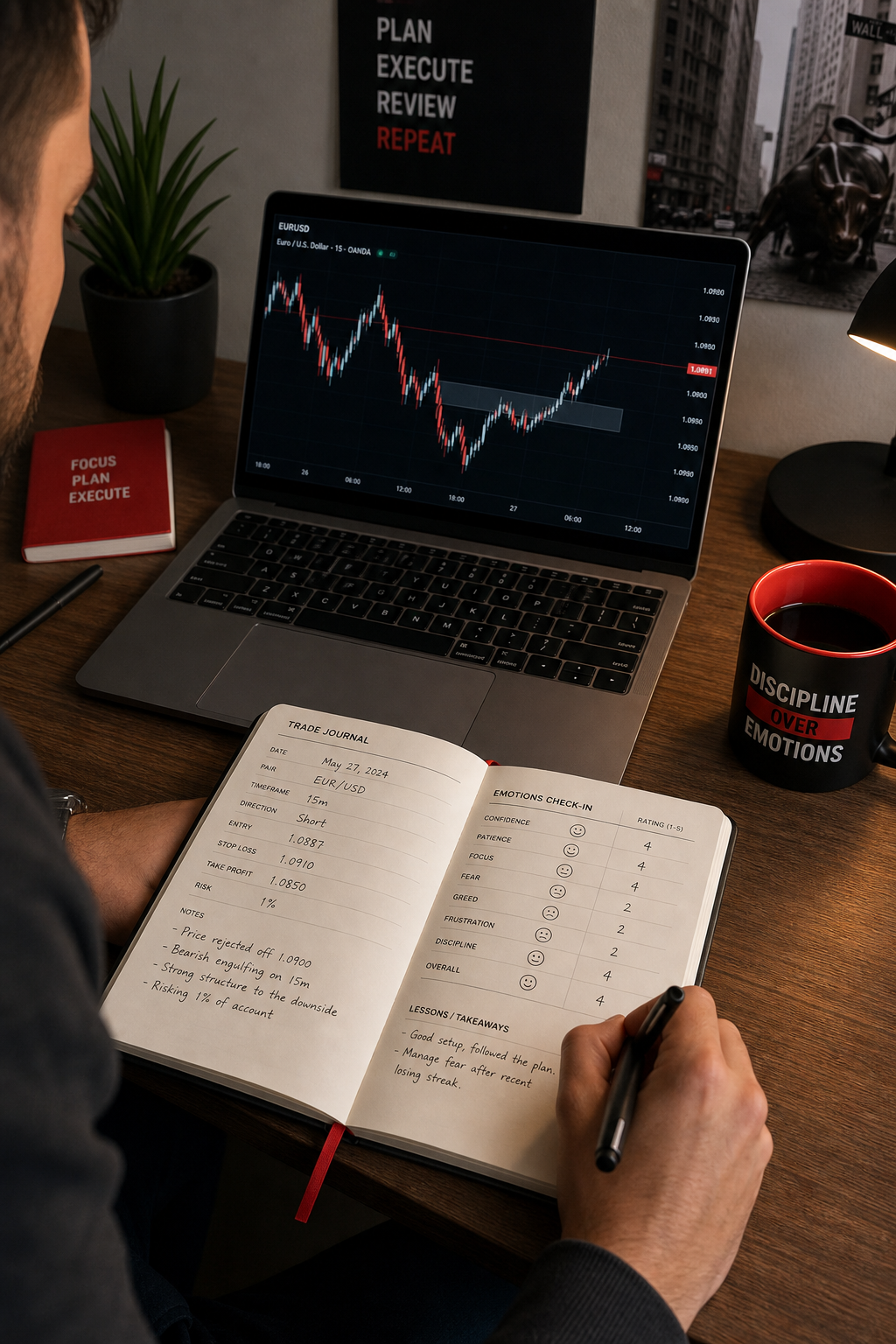
Even seasoned forex traders admit the biggest profit‑killer isn’t market volatility , it’s the hidden emotional habits that slip into every trade. In this guide you’ll walk through six clear steps that let you spot, tame, and out‑think those urges so your strategy can actually work.
We’ll cover how to spot triggers, build a plan that forces logic, use risk buffers, practice calm, log every feeling, and keep sharpening your mindset. Follow each step and you’ll turn emotion from a hidden enemy into a manageable part of your routine.
Step 1: Recognize the Emotional Triggers in Forex Trading
Before you can fix anything you need to know what sets you off. Common triggers are fear of loss, greed after a win, and the urge to prove yourself after a mistake. The first sign shows up as a gut feeling before you even click “buy.” If you pause and name the feeling, you give yourself a chance to choose a rational response.
Research shows that cognitive shortcuts like anchoring, overconfidence, and loss aversion shape those moments. Wikipedia explains cognitive bias as a mental shortcut that often sacrifices accuracy. In trading that means you might cling to a price level you saw last week (anchoring) or double your size after a streak of wins (overconfidence).
Here’s how to catch them in the wild:
- Before each session, ask yourself: Am I feeling bored, angry, or over‑excited?
- Write down any physical signs , a racing heart, sweaty hands, shallow breath.
- Rate the intensity on a 1‑5 scale. That number becomes a data point you can track later.
When you notice the pattern, you can intervene. For example, if you see a 4‑level anxiety rating before a EUR/USD trade, you might skip that entry or add a tighter stop.
Keep a simple log of these trigger checks. Over weeks you’ll see if certain news events, market times, or personal stressors repeatedly push your rating up. That insight lets you design a schedule that avoids your weakest moments.
Step 2: Build a Trading Plan to Remove Emotional Decision‑Making
A solid plan is a contract you sign with yourself. It spells out what you will trade, when you will trade, and how you will exit. When the rules are written down, you no longer have to decide on the fly, and that removes a lot of emotional sway.
The plan should include three core blocks: market analysis, entry criteria, and exit rules. For market analysis, decide if you’ll use trend‑following on the daily chart, a swing‑trade setup on the 4‑hour chart, or a scalping rule on the 15‑minute chart. Pick one style and stick to it.
Entry criteria need specific signals. For instance, “Enter long when price breaks above the daily 20‑period moving average, and the RSI is below 30.” That way you don’t have to guess if the price looks “good” in the moment.
Exit rules are equally vital. Define a stop‑loss distance (e.g., 50 pips) and a profit target (e.g., 100 pips). You can also add a trailing stop that moves with the market, which helps lock in gains without second‑guessing.
Once you have a draft, test it on a demo account. Record win‑rate, average loss, and average gain. If the numbers look weak, tweak the rules before you risk real money.
Remember to keep the plan visible. Print it out and tape it to your monitor, or save it as a PDF that opens with a single click. The visual cue reminds you to stay on track even when the market gets noisy.
For a deeper dive on how a trading plan can curb emotional swings, see Forex Trading Psychology: A Usable Guide to Learning Your Mindset. That article walks through the same steps with examples from real traders.
Step 3: Implement Risk Management as an Emotional Buffer
Risk rules act like a seat belt. They keep a bad trade from turning into a panic‑inducing disaster. The most common rule is the 1‑2% rule , never risk more than 2% of your account on a single trade.
Here’s the simple formula:
Let’s say you have $10,000, you risk 1% ($100), and you set a 50‑pip stop‑loss with a $1 pip value. Your position size works out to 2 mini‑lots. That math keeps a losing streak from wiping you out, and it lowers the emotional spike when a trade goes wrong.
Another buffer is a daily loss limit. Decide, for example, that you will stop trading if you lose more than 3% of your account in a day. When that limit hits, you walk away, reset, and avoid revenge trading.
Risk management also includes proper use. Using too much use amplifies both profit and loss, which fuels fear and greed. Keep use low enough that a single swing doesn’t force you to make a snap decision.
When you respect these limits, you train your brain to treat each trade as a small experiment rather than a life‑or‑death gamble.
Step 4: Use Mindfulness and Detachment Techniques
Mindfulness is simply paying attention to the present moment without judgment. In trading that means watching your breath, noticing tension, and labeling the feeling , “I am anxious” , without acting on it.
A study published in the National Institutes of Health shows that regular mindfulness practice reduces amygdala activity, the part of the brain that triggers fight‑or‑flight responses (NIH, 2024). That translates to fewer impulse trades when the market spikes.
Start with a 5‑minute breath box before each session:
- Inhale for 4 seconds.
- Hold for 4 seconds.
- Exhale for 4 seconds.
- Pause for 4 seconds.
Do it three times, then open your platform. You’ll notice a calmer mind and steadier hands.
If you feel a surge of fear mid‑trade, pause the chart, take a deep breath, and remind yourself that the loss is limited by your stop‑loss. That tiny break can stop a cascade of bad decisions.
Detachment also means accepting that any single trade is a data point, not a verdict on your skill. Treat wins and losses alike as information you can learn from.
Step 5: Keep a Trading Journal to Track Emotional Patterns
Journaling turns vague feelings into specific data. Write down the trade entry, the reason you entered, the emotional state you rated, and the outcome. Over time you’ll see which emotions cost you money.
The TradesViz blog explains why a simple mood meter isn’t enough. It suggests adding custom tags like “FOMO” or “Overconfidence” and then using a pivot grid to see how much each tag hurts your P&L (TradesViz). That level of detail lets you spot, for example, that “FOMO” cost you $2,800 in the last month.
Set up your journal with these columns:
- Date and time
- Currency pair and timeframe
- Entry price, stop‑loss, target
- Emotion rating (1‑5) and tag (e.g., fear, greed)
- Result (win/loss, P&L)
- Brief reflection , what you learned
Review the journal weekly. Look for patterns such as “I lose most when my rating is 4 or higher.” Then create a rule: if rating ≥ 4, skip the trade.
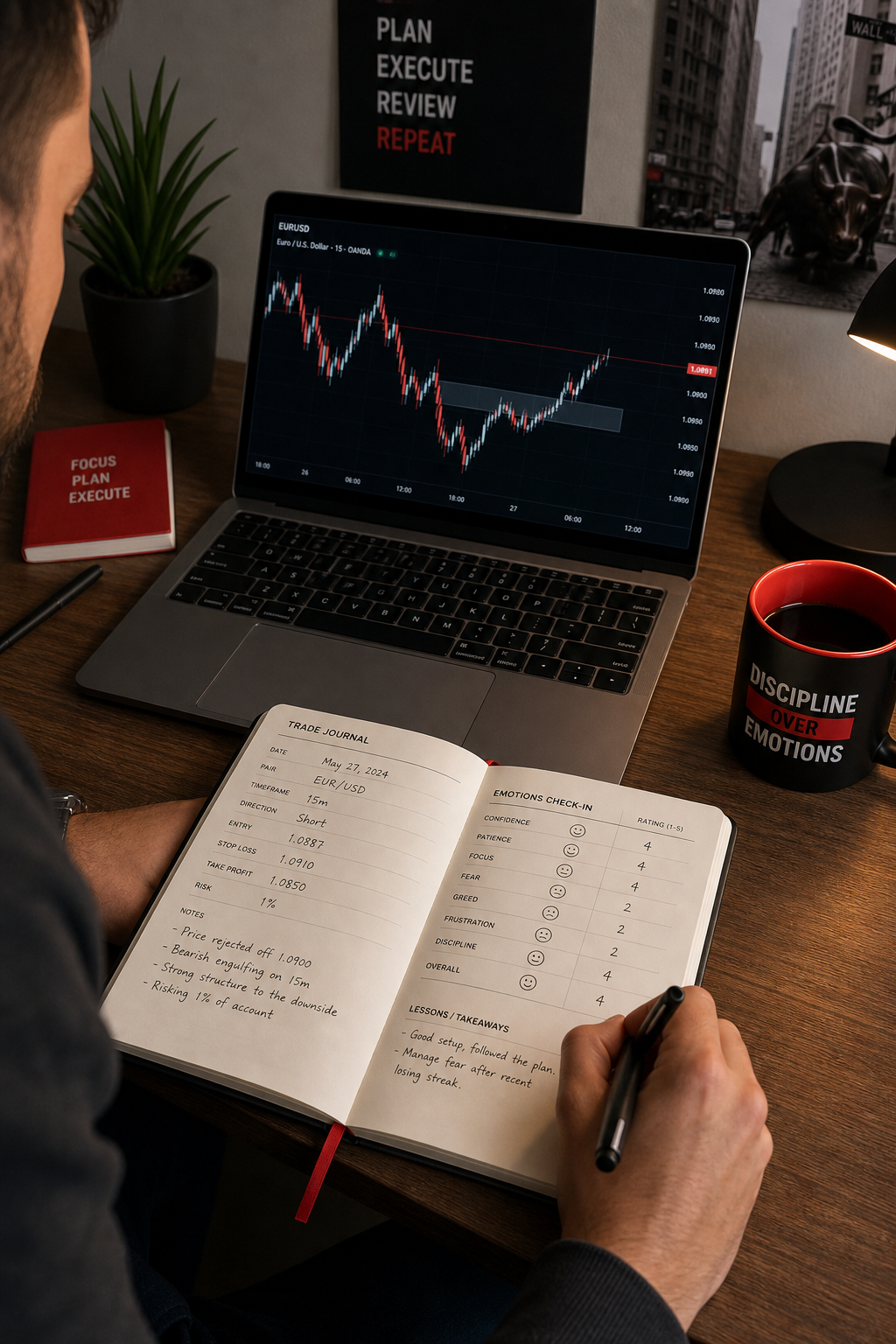
To make analysis easier, export the CSV and use a spreadsheet to pivot by emotion tag. The numbers will speak louder than any feeling you have during the trade.
When you see the cost of a bad habit, you can act on it. That’s why a journal is more powerful than any “mindset tip” you read elsewhere.
Step 6: Continuously Refine Your Mental Framework
Your mind is a muscle. It gets stronger when you train it, weaker when you ignore it. The key is to treat the framework as a living document, not a static checklist.
Start each month with a “mental audit.” Pull your journal data, calculate the total loss linked to each emotion, and rank them. Then pick the top two emotions to focus on for the next 30 days.
For the chosen emotions, add a specific habit. If “overconfidence” shows up after a winning streak, set a rule that after three consecutive wins you must take a mandatory break of at least 30 minutes before the next trade.
Another habit is to schedule a weekly review session. During that hour, you not only look at the numbers but also ask yourself: Did I follow my plan? Did I respect my risk limits? Did I react to any emotional cue?
Automation can help. An Expert Advisor (EA) can execute your entry and exit rules without you feeling the pressure. That removes the emotional tug‑of‑war at the moment of decision. You still need to set the EA’s parameters, but once they’re set the system runs on logic alone.
Finally, keep learning. on cognitive bias each week, practice a new mindfulness exercise, or watch a webinar on risk management. Each new tool adds a layer of protection around your psyche.
By looping through audit → habit → automation → learning, you create a self‑reinforcing cycle that steadily raises your emotional resilience.
Frequently Asked Questions
What is the quickest way to spot an emotional trigger before a trade?
Use a three‑step pause: look at your heart rate, give a one‑sentence label to the feeling (e.g., “I feel nervous”), and rate it 1‑5. If the rating is 3 or higher, step back and re‑evaluate the trade against your written plan. This quick check turns a vague urge into a measurable signal you can act on.
How often should I update my trading plan?
Review the plan after every 20‑trade batch or at least once a month. Compare actual outcomes to the rules you set. If you find you’re constantly breaking a particular rule, tighten that rule or add a new safeguard. The goal is a plan that reflects what you actually do, not what you think you should do.
Can mindfulness really improve my trading results?
Yes. Studies from the National Institutes of Health show that a regular mindfulness routine reduces the brain’s stress response, which in turn cuts impulsive trade entries. Even a 5‑minute breathing exercise before the market opens can lower anxiety scores and improve decision clarity.
What should I include in my trading journal besides numbers?
Record the emotional rating, any tags you assign (like FOMO or revenge), and a short note on why you felt that way. Also capture market context , news events, time of day, and liquidity conditions. Over time you’ll see how external factors interact with internal states.
How do I prevent revenge trading after a loss?
Set a hard daily loss limit, such as 2% of your account. When you hit that limit, shut down the platform for at least 30 minutes. During the break, do a grounding exercise , count breaths, stretch, or walk. The pause breaks the urge to chase losses and protects your capital.
Is using an Expert Advisor (EA) safe for a beginner?
Yes, if the EA follows a well‑tested plan you already trust. Start on a demo account, watch how the EA reacts to market spikes, and adjust the parameters before moving to real money. The EA handles the mechanical side, leaving you to focus on mindset and risk.
How can I measure the cost of a specific emotion?
Tag each trade with the dominant emotion and run a simple pivot in your journal (or use a tool like TradesViz). Sum the profit and loss for each tag. The resulting figure tells you, for example, that “greed” cost $1,200 last month, giving you a specific target for improvement.
What’s a good daily routine to keep emotions in check?
Start with a 5‑minute breath box, review your pre‑trade checklist, trade only when all conditions match, and end with a 10‑minute journal review. Add a short walk or stretch after each trade block to reset your nervous system.
Conclusion
Managing emotions while trading forex isn’t a one‑time fix. It’s a series of habits that you build, test, and refine. By recognizing triggers, writing a solid plan, protecting yourself with risk limits, practicing mindfulness, logging every feeling, and looping through regular audits, you turn emotional chaos into a predictable part of your process.
Remember that the market will always be noisy. Your job is to keep the noise from drowning out the signal. Use the tools in this guide, stay honest with your journal, and keep tweaking your mental framework. Over time the emotional fog lifts, and your strategy finally gets the clear runway it needs to fly.
Ready to take the next step? Dive deeper into the psychology of forex with FX Doctor’s complete guide and start turning emotions into an advantage, not a liability.