

Starting forex trading is exciting. But picking the right broker can feel like a maze. You want a broker that’s safe, cheap, and easy to use. That’s where this guide comes in. I’ve dug into the data and tested dozens of brokers to find the best options for new traders. The key is to balance regulation, low costs, and good education. Let’s look at the top picks for beginners.
1. IG , Best All-Round Broker for Beginners
IG is often called the best broker for beginners. And for good reason. It’s regulated by top authorities like the FCA and ASIC. That means your money is safe. IG offers low spreads on major pairs, around 0.6 pips for EUR/USD. Their platform is powerful yet easy to handle. Plus, they provide loads of educational content, from webinars to articles. Beginners can open a demo account to practice risk-free. The minimum deposit is $0 for bank transfer, though card deposits have a fee. IG also has a great mobile app, so you can trade on the go. According to Wikipedia’s foreign exchange market page, IG is one of the largest CFD providers. That speaks to their reliability.

One thing to watch out for: IG’s CFD fees can be higher than some competitors. But for a beginner, the education and support are worth it. If you trade frequently, their active trader program offers rebates. Overall, IG is a solid start.
2. OANDA , Best for Transparent Pricing
OANDA is famous for its clear and fair pricing. They use a pricing engine that shows live spreads based on market data. No hidden markups. For EUR/USD, spreads average around 1.0 pip. That’s competitive. OANDA is regulated in major jurisdictions including the US, UK, and Canada. Their platform is clean and simple, perfect for new traders. They also have a strong forex calculator and currency converter tools. For learning, they offer a complete forex trading guide. The minimum deposit is $1 for their standard account, but their Core Pricing Tier requires $10,000. That’s a big jump. Beginners can start small and later upgrade. OANDA’s execution is fast and reliable.
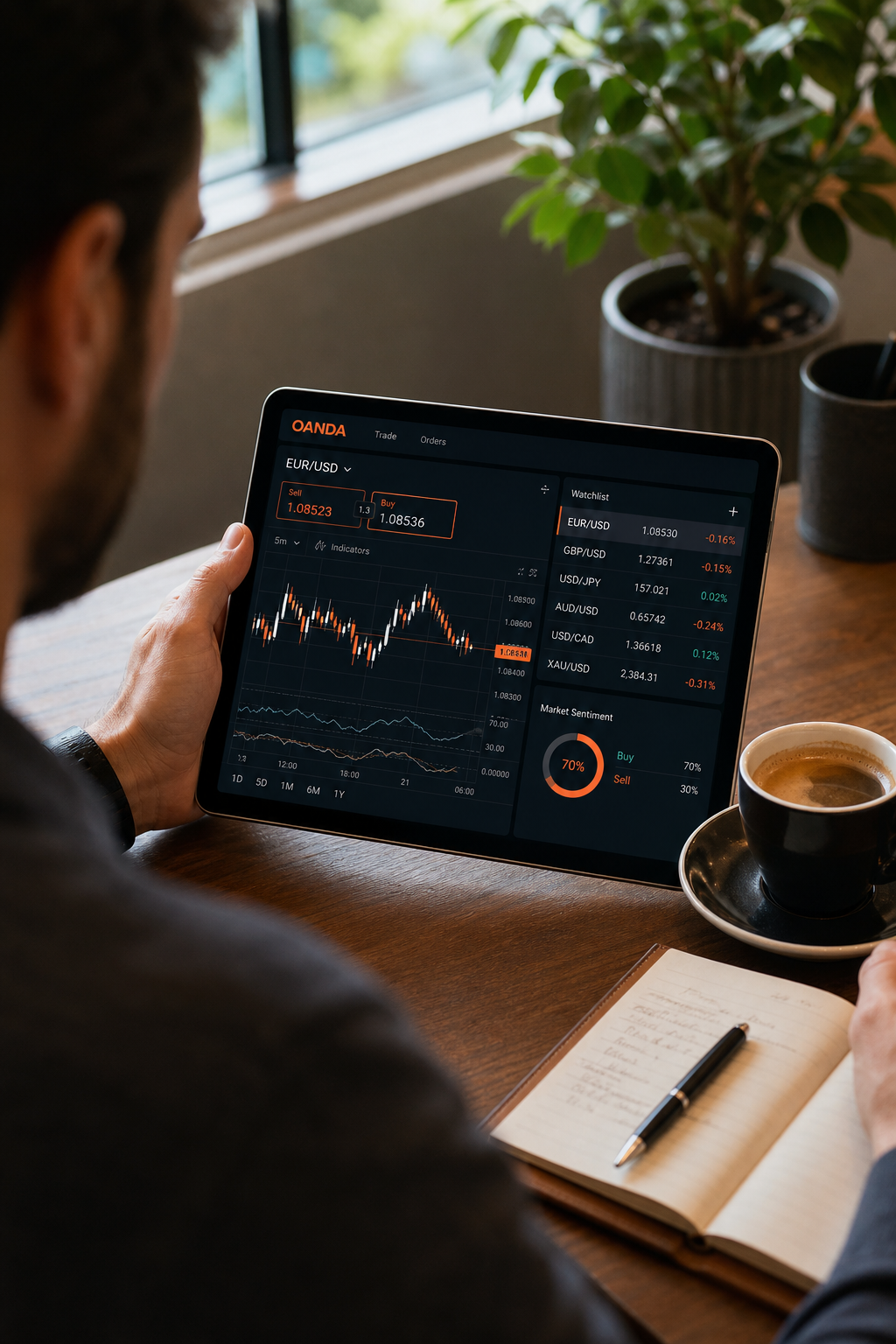
However, OANDA doesn’t offer MetaTrader 4. They have their own platform and allow third-party apps via API. For beginners who want MT4, that could be a downside. But their mobile app is excellent. Overall, OANDA is great for those who value transparency and low spreads.
3. Forex.com , Best for US Traders
Forex.com is one of the few brokers that accepts US clients with full regulation. They are registered with the CFTC and NFA. That’s important for Americans. Their spreads are tight: around 1.2 pips for EUR/USD. They offer MetaTrader 4 and their own web platform. Education includes videos, webinars, and market analysis. Minimum deposit is $50. Forex.com also provides a demo account. Their customer support is available 24/7. For US beginners, this is often the best choice because of the regulatory protection. They also have a strong mobile app with charting tools. One downside: use is limited to 1:50 for retail clients. That’s fine for most beginners. If you want higher use, you’d need an offshore broker. But for safety, Forex.com is top-notch.
4. TD Ameritrade , Best for Educational Resources
TD Ameritrade is a giant in the brokerage world. They offer a huge library of educational content. From courses to live workshops, they cover everything. Their thinkorswim platform is advanced but can be learned. For beginners, it might be overwhelming. But the education section alone makes them worth considering. They are regulated by the SEC and FINRA. Spreads on forex are not the tightest (around 1.4 pips for EUR/USD). But there is no commission on forex trades. Minimum deposit is $0 for a brokerage account, but forex requires separate approval. Their customer service is excellent. If you want to learn deeply before trading, TD Ameritrade is a great fit.
5. Saxo Bank , Best for Advanced Traders
Saxo Bank might seem odd for a beginner list. But hear me out. They offer an amazing platform with professional tools. Beginners can grow into it. They are regulated by the Danish FSA and other top bodies. Spreads are very tight, starting from 0.6 pips. However, the minimum deposit is high: $2,000 (or equivalent). That’s a barrier. But if you have capital, Saxo gives you a premium experience. They have excellent research and news. Their mobile app is one of the best. For beginners who are serious and have some money, Saxo is a long-term partner. Watch out: their fee structure can be complex. But transparency is good. They publish all charges upfront.
6. Interactive Brokers , Best for Low Costs
Interactive Brokers is known for low fees and vast market access. They offer forex trading with spreads as low as 0.1 pips + commission. Their IBKR platform is powerful, but the learning curve is steep. For beginners, it may be tough. However, their education section has improved. They are regulated by the SEC, FINRA, and FCA. Minimum deposit is $0 for IBKR Lite (US only) but $10,000 for IBKR Pro (but often waived for beginners). They have a demo account. Customer support is mixed. If you are cost-conscious and willing to learn, Interactive Brokers can save you money in the long run. But most beginners should start elsewhere and migrate later.
7. eToro , Best for Social Trading
eToro pioneered social trading. You can see and copy other traders’ moves. That’s fantastic for beginners who want to learn by doing. eToro is regulated by CySEC, FCA, and others. Spreads are variable, often around 1 pip for majors. They have commission-free stock and ETF trading, but forex has spreads. Minimum deposit is $10 (varies by country). eToro offers a demo account with $100,000 virtual funds. Their platform is very user-friendly. One risk: eToro’s pricing might be slightly higher than pure forex brokers. Also, withdrawals have a $5 fee. But the social aspect is unique. Many beginners find it easier to start with eToro.
8. Plus500 , Best for CFD Trading
Plus500 is a top CFD broker. They offer a simplified platform that’s great for beginners. Regulation includes FCA, ASIC, and others. Spreads on EUR/USD average around 1.3 pips. That’s okay but not the tightest. Minimum deposit is $100. Plus500 has a risk management feature called “Guaranteed Stop Loss” (paid). They also provide a demo account. Their mobile app is highly rated for ease of use. However, they do not offer MetaTrader. Education is limited. For a complete beginner who wants a simple CFD trading experience, Plus500 works. But active traders may want more tools.
9. AvaTrade , Best for MT4/MT5
AvaTrade supports both MetaTrader 4 and 5. That’s a big plus for many beginners who want to use automated strategies or indicators. They are regulated in multiple jurisdictions including the FCA, ASIC, and Irish Central Bank. Spreads are competitive, around 1.0 pip for EUR/USD. AvaTrade offers a demo account and educational webinars. Their own platform, AvaOptions, is good for options trading. Minimum deposit is $100. They also have a swap-free Islamic account. Customer support is available 24/5. One drawback: they charge an inactivity fee after 3 months. For beginners who plan to trade actively, this isn’t a problem. Overall, AvaTrade is a solid MT4/MT5 broker.
10. FXCM , Best for Fixed Spreads
FXCM is known for its fixed spreads on certain accounts. That means your trading costs are predictable. For scalpers and beginners, that’s helpful. They are regulated by the FCA, ASIC, and others. Spreads start from 0.2 pips on Mini accounts with a commission. Their standard account has spreads around 1.4 pips with no commission. FXCM offers a demo account and strong educational resources. Their Trading Station platform is good. Minimum deposit is $50. FXCM also supports TradingView and MetaTrader 4. One issue: they have had regulatory issues in the past but are now compliant. For beginners who want fixed spreads, FXCM is a solid choice.
11. XM , Best for Low Minimum Deposit
XM is popular for its low barrier to entry. Minimum deposit is just $5. That makes it accessible to almost anyone. They are regulated by the FCA, ASIC, and CySEC. Spreads are competitive: from 0.6 pips on Micro accounts. XM offers both MT4 and MT5. They have a demo account, and new clients can get a 30-day free premium signal service. Education is decent with webinars and videos. XM also provides up to $500 in credit for new accounts. Customer support is 24/5. One con: they have an inactivity fee after 12 months. But for a small starter account, XM is hard to beat.
12. Pepperstone , Best for ECN Trading
Pepperstone is an ECN broker, meaning they aggregate prices from many providers. That leads to very low spreads: from 0.0 pips on their Razor account with a commission of $3.50 per lot. They are regulated by the FCA, ASIC, and others. Pepperstone offers MT4, MT5, cTrader, and TradingView. Their execution speed is extremely fast. Minimum deposit is $200. They have a demo account and good customer support. Education is above average with regular market analysis. For beginners who want to trade actively with tight spreads, Pepperstone is excellent. The only downside is the $200 minimum might be high for some, but it’s manageable.
13. Swissquote , Best for Bank-Grade Security
Swissquote is a Swiss bank. That gives you a higher level of security. They are regulated by FINMA. Your funds are held in a bank account and eligible for Swiss deposit protection. Spreads are average, around 1.2 pips. They offer MT4 and their own platform. Minimum deposit is $1,000. That’s high for beginners. But if you value safety above all, Swissquote is a great choice. They also offer a wide range of assets, from forex to crypto. Education is limited. Customer support is good. For a beginner with a decent budget, Swissquote provides peace of mind.
14. CMC Markets , Best for Platform Variety
CMC Markets offers its own platform called “Next Generation”. It’s highly customizable and packed with features. They also offer MT4. Regulated by the FCA, ASIC, and others. Spreads are competitive: from 0.7 pips. Minimum deposit is $0 (or no minimum for some regions). They have a demo account and educational webinars. CMC Markets also provides excellent market analysis. Their mobile app is strong. For beginners who want to try different platforms, CMC Markets is versatile. One con: forex spreads can be wider during volatile times. But overall, it’s a reliable broker.
15. City Index , Best for UK Traders
City Index is a well-established UK broker. They are regulated by the FCA. Spreads are competitive: from 0.8 pips on EUR/USD. They offer MT4 and their own web platform. Minimum deposit is £100 (or $100). City Index provides a demo account, webinars, and trading guides. Their customer support is UK-based. For UK traders, they have a good reputation. One downside: they have limited product range compared to some competitors. But for forex focus, they are solid. They also offer negative balance protection.
16. Capital.com , Best for AI Tools
Capital.com uses AI to help you understand market sentiment and risk. Their platform has “Investmate” education app. They are regulated by the FCA, ASIC, and CySEC. Spreads start from 0.6 pips. Minimum deposit is $20. They offer a demo account and webinars. Capital.com also has a clean interface that’s easy for beginners. Their mobile app is excellent. The AI feature gives you insights on price movements. For tech-savvy beginners, this is a good choice. However, customer support can be slow at times. Still, a modern broker with good educational tools.
17. Admiral Markets , Best for Regulated Broker
Admiral Markets is regulated by the FCA, ASIC, and the Estonian FSA. They are part of the publicly traded Admirals Group. Spreads are competitive: from 0.5 pips on their Zero account with a commission. They offer MT4, MT5, and their own platform. Minimum deposit is €100 (or $100). Education is complete with webinars, articles, and courses. They have a demo account and offer a $30 no-deposit bonus for new clients (conditions apply). Customer support is good. For beginners who want a well-regulated broker with solid education, Admiral Markets is a strong choice.
18. Exness , Best for Flexible Use
Exness offers very high use, up to 1:2000 for some accounts. That’s attractive for beginners with small capital. But high use is risky. They are regulated by the FCA, CySEC, and other bodies. Spreads are low: from 0.1 pips on Raw accounts. Minimum deposit is $10. They offer MT4 and MT5. Exness has a demo account and 24/7 customer support. Education is limited. They also have an Android app. One big plus: they have no withdrawal fees and instant withdrawals. For beginners who want flexibility, Exness works, but use use cautiously.
19. FP Markets , Best for Raw Spread Accounts
FP Markets is known for its Raw account with spreads from 0.0 pips and a commission of $3 per lot per side. That’s among the cheapest. They are regulated by ASIC and CySEC. They offer MT4, MT5, and IRESS. Minimum deposit is $100. Education is decent with webinars and market analysis. Customer support is responsive. They have a demo account. For beginners who want the lowest trading costs, FP Markets is excellent. Their execution is fast. The only downside is limited regulatory coverage compared to some. But for cost-efficiency, it’s a top pick.
20. Vantage FX , Best for Multi-Asset Trading
Vantage FX allows you to trade forex, indices, commodities, shares, and crypto. They provide MT4, MT5, and WebTrader. Regulation includes ASIC and the FCA. Spreads start from 1.0 pip on standard accounts. For Raw accounts, spreads from 0.0 pips with a commission. Minimum deposit is $200. They offer a demo account and educational videos. Customer support is 24/5. For beginners wanting to try different markets, Vantage FX is a good fit. They have competitive pricing and reliable executions. One minor issue: withdrawal processing can take up to 24 hours.
How to Choose the Right Forex Broker for Your Needs
Picking the best broker from this list depends on your situation. Here’s a simple checklist:
- Regulation: Check if the broker is regulated by a top-tier authority like FCA, ASIC, CFTC, or others. This protects your money.
- Deposit: Look at the minimum deposit. Some brokers allow $5, others $1,000. Choose one that matches your budget.
- Spreads & Fees: Compare spreads for the pairs you want to trade. Lower spreads save you money. Watch out for hidden fees.
- Platform: Make sure the broker supports a platform you like: MT4, MT5, TradingView, or their own. Test with a demo account.
- Education: If you’re new, pick a broker with good educational resources: webinars, courses, articles.
- Support: 24/5 support is ideal. Check response times.
- Withdrawals: Look for no withdrawal fees and fast processing.
- Use: Understand use limits. Beginners should start with low use.
You can also use our How to Choose a Forex Broker: A Step‑by‑Step Guide for a deeper dive. For more on broker comparison, to best forex brokers.
Frequently Asked Questions
What is the best forex broker for beginners with a small account?
For very small accounts, XM is a great choice with a $5 minimum deposit. Exness also allows $10 minimum and high use. Both offer demo accounts and are regulated. However, always check the regulatory status in your country. For US residents, Forex.com has a $50 minimum and strong regulation.
Are demo accounts free?
Yes, most brokers offer free demo accounts. They usually come with virtual money, often $10,000 to $100,000. A demo account lets you practice trading without risk. You can test the platform and your strategies. It’s highly recommended for beginners to use a demo for at least a month before going live.
How much money do I need to start forex trading?
It depends on the broker and account type. Some brokers allow as low as $5, like XM. Others require $100 or $200 for standard accounts. However, to trade effectively and manage risk, a starting capital of at least $100 is advisable. This gives you room to trade mini lots and maintain proper risk management.
Is it safe to use an unregulated broker?
Unregulated brokers carry higher risk. Your money may not be protected if the broker goes bankrupt or disappears. For beginners, it’s strongly recommended to choose a broker regulated by a reputable authority like the FCA, ASIC, or CFTC. Regulation ensures the broker follows strict rules regarding client fund segregation and reporting.
What is the difference between fixed and variable spreads?
Fixed spreads stay constant regardless of market conditions. They are good for planning costs but may be wider. Variable spreads change with market volatility. They are often tighter during calm periods but widen during news events. Variable spreads are common with ECN brokers. Beginners might prefer fixed spreads for predictability.
Can I trade forex on my phone?
Yes, most brokers have mobile apps for iOS and Android. These apps allow you to trade, view charts, and manage your account. Some apps are quite advanced with indicators and order types. For example, IG, OANDA, and eToro have highly rated mobile apps. Always test the mobile app with a demo account first.
What is use in forex trading?
Use lets you control a large position with a small amount of capital. For example, with 1:100 use, you can trade $10,000 with only $100. Use amplifies both profits and losses. Beginners should use low use, like 1:10 or 1:20, to avoid losing more than their deposit. Brokers offer different use limits based on regulation.
How do I choose between MT4 and MT5?
MT4 is the classic forex platform, known for its simplicity and wide support of Expert Advisors. MT5 is its successor, with more timeframes, indicators, and asset classes. For forex trading, MT4 is often sufficient. MT5 is better for multi-asset trading and advanced analytics. Both are free. Try both on a demo account to see which you prefer.
Conclusion
Choosing the right forex broker as a beginner doesn’t have to be hard. Focus on regulation, cost, and education. Start with a demo account to test the waters. Then pick a broker that matches your deposit and trading style. From this list, IG and OANDA are excellent all-rounders. For US traders, Forex.com is a safe bet. If you want social trading, try eToro. For the lowest costs, consider FP Markets or Pepperstone. Remember, the best broker for you is the one that helps you learn and trade comfortably. Use the checklist above to make your choice. Happy trading!