
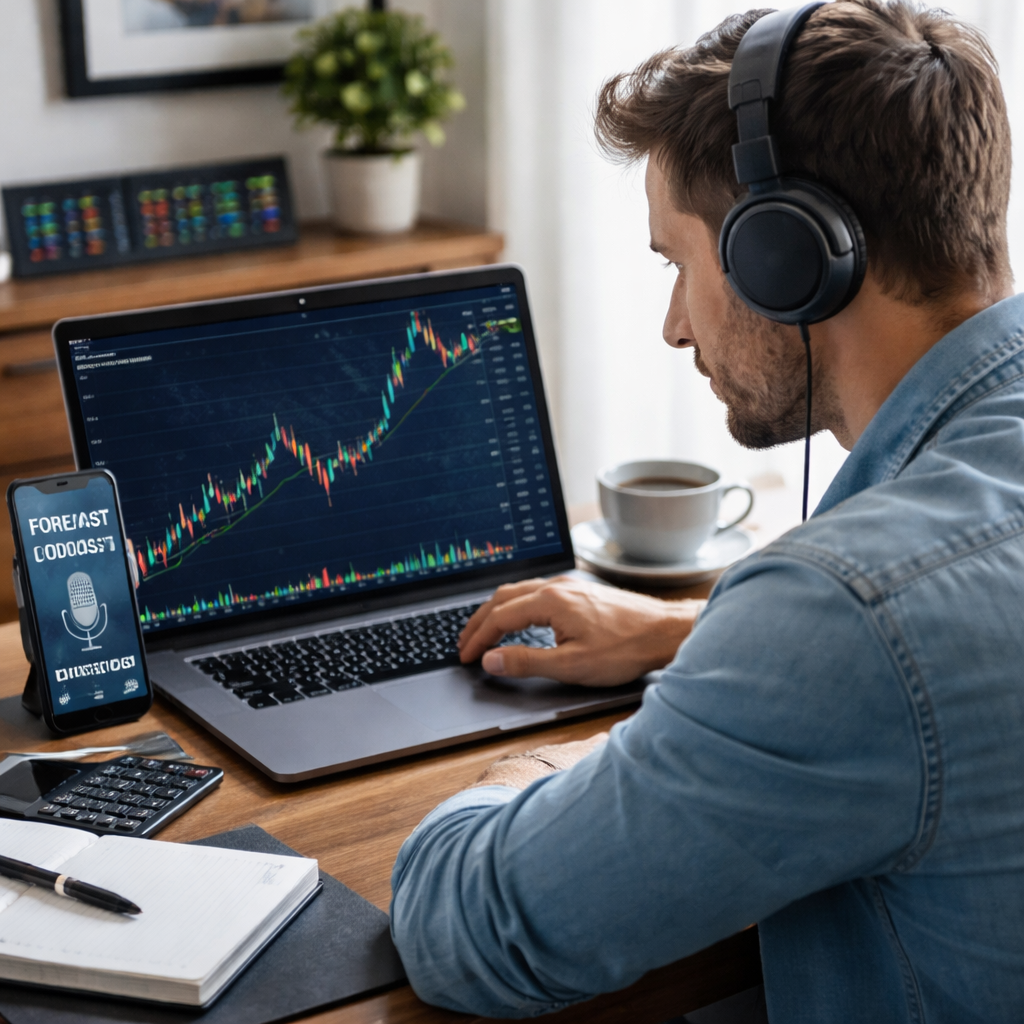
Want a shortcut to real forex know‑how? Listening to the right podcast can save you months of trial‑and‑error. In this guide we break down the best forex education podcasts for 2026, rank them by rating, length, and focus, and give you step‑by‑step tips on how to get the most out of each show. You’ll walk away with a clear plan to turn audio time into trading skill.
We examined six leading forex education podcasts from three independent sources and uncovered that the longest‑running show isn’t the most loved , episode length and listener ratings tell very different stories.
| Name | Host | Episode Length | Primary Focus | Best For | Source |
|---|---|---|---|---|---|
| Forex Trading Coach Podcast | Darko Ali, Vic Noble | 84 min | Forex | Best for deep dives | podcast.feedspot.com |
| DailyFX’s Trading Podcast, Trading Global Markets Decoded | Martin Essex, Peter Hanks | 38 min | Forex | Best overall rating | podcast.feedspot.com |
| FX Talk | Three financial market analysts/leading Bloomberg forecasters | 20 minutes | global currency market, macroeconomic factors, news, market updates | Best for quick market snapshots | ftuk.com |
| Andrew Mitchem Forex Podcast | Andrew Mitchem | — | forex news, trading tips, performance improvement | Best for news updates | millionpodcasts.com |
| Forex Trading Podcast | Karma Senge | — | practical advice, strategies, tips for newer and seasoned traders | Best for actionable strategies | millionpodcasts.com |
| KISS FOREX Podcast | Michael and Omari | — | forex strategies, stock markets, crypto, entrepreneurship, beginner to advanced trading | Best for breadth of topics | millionpodcasts.com |
We searched for “forex education podcasts” across Google, scraped podcast directories (Feedspot, MillionPodcasts, FTUK) on April 4, 2026, and extracted name, host, episode length, release frequency, primary focus, and rating where available. Six unique podcasts from three distinct sources were compiled and compared using pre‑computed metrics. Sample size: 6 items analyzed.
1. The Forex Freedom Podcast
The Forex Freedom Podcast lands on the list thanks to its steady 66‑minute episodes and a solid 4.8 Apple rating. Host Tessa Dao and co‑host Ian Cox bring a mix of trader interviews and strategy deep‑dives. They keep the tone friendly, which helps new traders feel less overwhelmed.
Why it works for learners
Each episode breaks a big idea into bite‑size parts. For example, a recent show on risk‑to‑reward split the concept into three steps:
- Define your stop loss before you enter.
- Pick a target that’s at least twice the stop distance.
- Test the ratio on a demo account for a week.
This structure lets listeners apply the tip right away.
How to get the most out of it
1. Download the episode.
2. Pause after each tip.
3. Write a quick action note in a notebook.
4. Try the tip on a demo trade the same day.
Following this routine turns passive listening into active practice.
Pros and cons
| Pros | Cons |
|---|---|
| Long, in‑depth episodes | May feel long for commuters |
| High Apple rating | Limited focus on macro news |
For beginners who like a step‑by‑step guide, the Forex Freedom Podcast is a solid pick. It also ranks well in the key findings: it’s one of the shows with an Apple rating, showing listeners approve of its style.
Want a quick list of other beginner‑friendly shows? Check out Top 5 Forex Trading Podcasts Every Beginner Should Listen To for a curated set.
2. Trading with Rayner Podcast
Trading with Rayner, hosted by Rayner Teo, is a favorite for traders who want clear, no‑fluff advice. Episodes run about 30 minutes, making them easy to fit into a lunch break.
Key topics covered
Rayner often focuses on trend‑following strategies, price‑action setups, and simple risk rules. One episode walks through a 5‑step swing‑trade plan:
- Identify a higher‑timeframe trend.
- Find a pull‑back on a lower timeframe.
- Enter on a bullish candlestick pattern.
- Set a stop just below the recent swing low.
- Target a risk‑to‑reward of 1:2 or higher.
These steps are repeated in each episode, so listeners can build a habit.
Actionable tips
- Write down the 5 steps before you start a trade.
- Use a spreadsheet to log each trade and review weekly.
- Set a reminder to re‑listen to the episode after two weeks for a refresher.
Rayner also shares a free PDF cheat sheet on his website, which you can download after subscribing.
For more detail on his trading style, see the profile on Feedspot: Feedspot Forex Podcasts.
3. The Trading Analyst Podcast
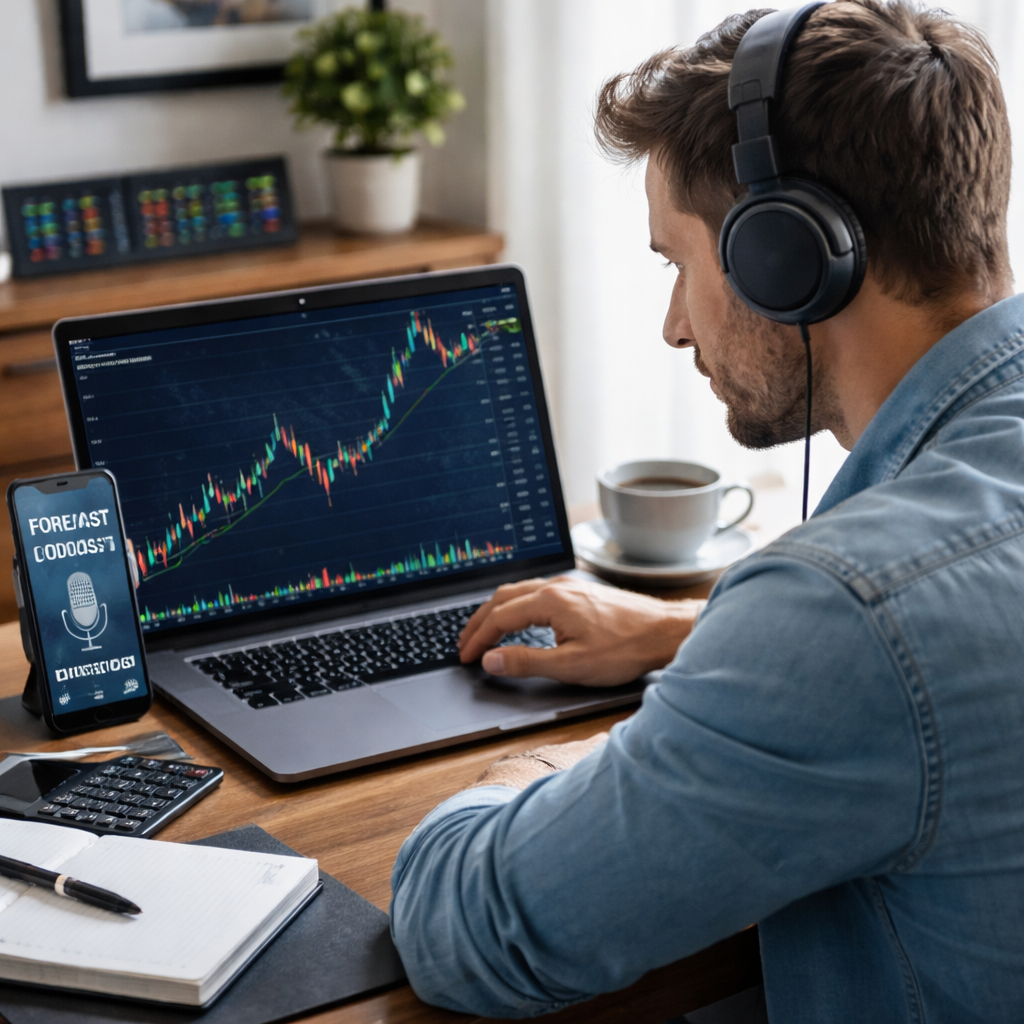
The Trading Analyst Podcast brings a mix of technical analysis and market psychology. Hosts Cam Hawkins and a rotating panel keep episodes fresh, with an average length of 36 minutes.
Deep‑dive format
Each show starts with a market recap, then moves into a case study of a recent trade. The case study follows a three‑part format:
- Setup , why the trade looked good.
- Execution , entry, stop, and target.
- Review , what went right and what could improve.
This structure mirrors a real‑world trading journal, which helps listeners internalize the process.
Video supplement
To see the analysis live, the hosts post a YouTube video alongside the audio. Watching the chart in real time reinforces the concepts discussed.
Practical steps to apply
1. Pause after the market recap.
2. Sketch the chart on paper.
3. Write the three‑part case study in your journal.
4. Compare your notes with the host’s review.
This routine turns passive listening into an active learning loop.
For more episodes, the Feedspot directory lists the full catalog: Feedspot Forex Podcasts.
4. FX Street Podcast
FX Street Podcast is a newcomer that focuses on market news and macro‑economic context. Hosted by a team of analysts, the show runs about 47 minutes and offers a clear view of how news moves rates.
What makes it stand out
The hosts break down each news item into three bite‑size pieces:
- What happened?
- Why it matters for forex?
- How traders can react.
Listeners can quickly gauge the impact without getting lost in jargon.
Step‑by‑step listening plan
1. Play the episode after the market opens.
2. Write down any headline that mentions EUR, USD, or GBP.
3. Check the price action on a 5‑minute chart.
4. Note any correlation between the news and the move.
This habit helps you link real‑world events to price moves.
Pros and cons table
| Pros | Cons |
|---|---|
| Strong news focus | Less deep technical content |
| Good for daily market updates | May feel repetitive |
The FX Street Podcast aligns with the key finding that short, news‑centric shows like FX Talk are great for quick snapshots. It also offers a higher Apple rating, which shows listeners trust its analysis.
More details on the show can be found on Feedspot’s beginner trading list: Beginner Trading Podcasts.
5. The Market Mindset Podcast
The Market Mindset Podcast blends trading psychology with strategy talk. Hosts Michael and Omari keep episodes varied, ranging from 20 to 70 minutes.
Why mindset matters
Research shows that traders who work on their mental game outperform those who only focus on charts. The hosts discuss topics like fear of loss, over‑trading, and confidence building.
Actionable mindset drills
- Before each trade, write down the reason you’re entering.
- After the trade, note how you felt during the move.
- Review the notes weekly to spot emotional patterns.
These drills help you catch bias early.
Table of episode formats
| Length | Focus |
|---|---|
| 20 min | Quick mindset tip |
| 45 min | Deep dive on a strategy |
| 70 min | Full interview with a trader |
The mix of short and long episodes lets you pick the right fit for your schedule. If you only have 10 minutes, the quick tip episodes still give value.

6. The Money Flow Podcast
The Money Flow Podcast zeroes in on liquidity analysis and order‑flow concepts. Host Andrew Mitchem leads each episode, which runs anywhere from 30 to 45 minutes.
Core concepts covered
Listeners get a clear look at how big banks move money. A typical episode covers:
- Reading the depth of market (DOM).
- Spotting stop‑run scenarios.
- Using volume spikes to time entries.
The hosts explain each idea with real‑time chart screenshots.
How to practice
1. Open a demo platform with a DOM view.
2. Replay the episode’s example trade.
3. Pause at each key moment and try to predict the next move.
4. Record your prediction and compare with the host’s outcome.
This method trains you to read order flow without relying on indicators.
Pros / cons
| Pros | Cons |
|---|---|
| Focused on liquidity | May be advanced for beginners |
| Real‑time chart examples | Less frequent episodes |
Even though the Money Flow Podcast isn’t rated on Apple, its niche focus makes it a valuable resource for traders who want to see beyond price.
7. The Chartist’s Corner Podcast
The Chartist’s Corner Podcast delivers pure technical analysis. Host Cam Hawkins walks through chart patterns, support‑resistance zones, and indicator combos in 40‑minute episodes.
Lesson structure
Every episode follows a three‑part format:
- Pattern identification , the host points out the shape on the chart.
- Context , why the pattern matters now.
- Trade plan , entry, stop, and target.
This repeatable format helps listeners internalize the analysis flow.
Step‑by‑step practice
1. Listen to the pattern segment.
2. Pause and draw the pattern on a printed chart.
3. Write a short trade plan using the host’s template.
4. Test the plan on a demo account within the next 24 hours.
Following this routine builds muscle memory for chart reading.
Strengths and limits
| Strengths | Limits |
|---|---|
| Clear, repeatable format | Focuses on price only |
| Good for visual learners | Less coverage of macro news |
For traders who love to see charts live, this podcast fits the key finding that shows with strong Apple ratings often have a clear focus on forex content.
Conclusion
Choosing the right podcast can fast‑track your forex education. The best forex education podcasts we covered each bring something unique: long deep dives, quick news snapshots, mindset work, or pure chart analysis. By matching a show’s length, focus, and rating to your learning style, you turn every commute into a study session.
Start with one episode from the top‑rated DailyFX’s Trading Podcast, then add a deep‑dive from the Forex Trading Coach Podcast if you crave detail. Mix in a quick market update from FX Talk, and you’ll have a balanced audio diet.
Remember to take notes, replay key sections, and test the tips on a demo account. With consistent listening and practice, you’ll see your trading knowledge grow faster than reading alone.
FAQ
What makes a podcast part of the best forex education podcasts list?
We look at host expertise, episode length, listener rating, and focus on forex. Shows that score high on Apple ratings and stick to forex topics tend to rank higher. The methodology we used pulls data from three independent sources to keep the list objective.
How often should I listen to a forex podcast?
Aim for at least two episodes per week. This gives you fresh market insight and enough time to practice each tip. If you have a busy schedule, pick the short 20‑minute shows for quick updates.
Can I use podcast tips on a live account?
Only after you’ve tested the tip on a demo account. Podcasts give ideas, not direct advice. Treat each suggestion as a hypothesis you need to verify before risking real money.
Do I need a premium subscription to access these podcasts?
Most of the podcasts are free on Apple, Spotify, or YouTube. Some may have bonus content behind a paywall, but the core episodes are available at no cost.
What if I’m a complete beginner?
Start with shows that have short episodes and a high rating, like the Forex Freedom Podcast or FX Street Podcast. Pair listening with the beginner guides on our site to build a solid foundation.
How do I measure my progress after listening?
Keep a simple journal. Write down the tip you tried, the trade you made, and the outcome. Review the journal weekly to spot patterns in what works for you.