
Most new traders think a bot will make them rich fast. The truth is far from that. You need a clear plan, solid tools, and disciplined habits. In this forex algorithmic trading guide you’ll learn how the market works, how to build a simple algo, how to run it on popular platforms, how to protect your capital, and how to keep your mind in check.
The data behind this guide comes from a research sweep of 15 checklist items across five sites. Only one‑third of the steps name specific tools , a surprising tilt toward non‑technical safeguards.
| Component | Description | Typical Tools/Platforms | Key Considerations | Common Pitfalls | Best For | Source |
|---|---|---|---|---|---|---|
| Technical Indicators Confirmation | To make signals more reliable, use technical indicators that confirm the price action, choosing tools from different categories such as trend indicators, oscillators, moving averages, or volatility indicators. | RSI, Bollinger Bands, trend indicators, oscillators, moving averages, volatility indicators | Combine indicators from different categories; Adjust indicator settings to fit your strategy and current market conditions; Two or three well‑tested tools are more effective than a large collection | Using indicators that duplicate each other will not improve your analysis; A collection of little‑known indicators is less effective | Best for Indicator Diversity | litefinance.org |
| Per‑Trade Risk Management | Successful traders keep the risk on each trade small, usually around 1% to 5% of their account. | Fixed fractional sizing; Volatility‑scaled sizing; Dynamic stop‑loss and take‑profit rules; Maximum drawdown limits (e.g., ~5%) | Risk level depends on strategy, market conditions, and experience; During volatile market conditions, lower the risk level; Consider the effects of macroeconomic news | Neglecting risk management techniques | Best for Position Sizing Discipline | litefinance.org |
| Infrastructure / Hosting | Use a reliable internet connection and backup power source. Choose a reputable broker with a reliable trading infrastructure. | QuantVPS hosting (ultra‑low latency, 0.52 ms to CME); Supported platforms: MetaTrader 4/5, cTrader, NinjaTrader, Sierra Chart, TradeStation, TradingView | Maintain a stable, low‑latency internet connection; Implement backup power and redundancy measures; Select a broker with robust and reliable trading infrastructure | Mechanical failures such as connectivity issues or power outages; Dependency on technology without redundancy | Best for Low‑Latency Execution | blog.quantinsti.com |
| Programming / Execution Engine | The trading strategy is then programmed into a computer program using a trading platform that supports automated trading. | Python; trading platform that supports automated trading | Choose a platform compatible with your code and broker; Ensure code reliability and error handling; Implement order execution logic accurately | Mechanical failures such as connectivity issues, computer crashes, or power outages | Best for Code Reliability | blog.quantinsti.com |
| Programming Languages | Programming languages provide the foundation for building, backtesting, and executing forex algorithms, with each offering different strengths in speed, ecosystem, and ease of use. | Python (Pandas, NumPy, TA‑Lib, Scikit‑learn); C++; Java; MQL5 (MetaTrader 5 proprietary language) | balance between execution speed and development flexibility; availability of libraries for data analysis and machine learning; need to build execution pipeline from scratch for some languages | building the entire execution pipeline from scratch can be challenging for beginners | Best for Language Flexibility | quantvps.com |
| Paper Trading / Live Deployment | Start with paper trading to verify data quality, order execution, and risk controls before moving to live trading with limited capital. | Demo accounts | verify real‑time data integrity; ensure reliable trade execution; confirm all risk management protocols are active | discrepancies between backtested results and live performance may indicate data or execution issues | Best for Safe Live Transition | quantvps.com |
| Strategy Development | Traders develop a trading strategy based on various criteria such as technical indicators, price action, or fundamental analysis. | Python | Define entry/exit rules based on chosen criteria; Select appropriate technical indicators (e.g., EMA, SMA, RSI, Bollinger Bands); Consider fundamental analysis if applicable | — | Best for Strategy Blueprinting | blog.quantinsti.com |
| Backtesting | Learning how to backtest trading strategies is crucial for success, allowing validation of ideas on historical data. | TradingView Strategy Tester; ThinkMarkets charts | Use high‑quality historical market data; Assess strategy performance across diverse market conditions | Over‑optimisation leading to strategies that perform well in backtests but poorly in live market conditions | Best for Historical Validation | thinkmarkets.com |
| Risk‑to‑Reward Ratio Assessment | Assessing the risk-to-reward ratio is a key part of trading. A good benchmark is 1:2 or higher. | Calculation of ratio, using support and resistance levels, volatility assessment | Consider technical levels such as support and resistance; Consider fundamentals, volatility, and market sentiment | Avoid trades with a poor risk-to-reward ratio, even if the signal looks convincing | Best for Trade Profitability Screening | litefinance.org |
| 5‑3‑1 Rule | A method in which a trader uses five reliable indicators, analyzes three different time frames, and keeps their focus on one currency pair. | Position sizing to limit risk to 1% of capital per trade | Reduces information overload and facilitates more in‑depth and accurate analysis | Risking more than 1% of capital on a single trade can lead to large losses | Best for Focused Analysis Framework | litefinance.org |
| Account Review | Before you start the trading day, review your account carefully: check your free margin, account balance, trade volume, and the status of your open positions. | — | Check free margin; Check account balance; Check trade volume; Check open positions | Do not overload your account, as this can increase the risk of a margin call | Best for Pre‑Trade Account Health | litefinance.org |
| Trading Journal for Exceptions | Any trading system allows for exceptions, but they should be clearly justified and recorded in your trading journal. | — | Record the decision and later review the outcome to see whether the exception made sense | Do not mistake a well‑reasoned exception for an emotional impulse | Best for Exception Documentation | litefinance.org |
| Final Trade Parameter Review | Before opening a trade, check all key parameters: buy or sell signals, strength of the trade setup, possible reversal points, entry and exit points, risk, and alignment with your overall trading plan. | — | A quick final review helps you avoid acting on impulse | If you still feel unsure, it is best to wait | Best for Final Trade Check | litefinance.org |
| Performance Monitoring | Monitor performance often, adapt to new conditions, and review every few months to ensure timely upgrades and risk controls. | — | monitor performance often; adapt to new conditions; review every few months | Monitoring required; failure to monitor can let errors persist | Best for Ongoing Performance Review | thinkmarkets.com |
| Optimisation | Once the automated trading system is optimised and tested, it can be deployed to trade live in the forex market. | — | Iteratively refine parameters to improve results; Regularly review and update strategies to stay effective | Over‑optimisation causing overfitting to past data | Best for Parameter Fine‑Tuning | blog.quantinsti.com |
Understanding Forex Markets and Algorithmic Trading Basics
Forex is the market where currencies trade 24 hours a day. It’s the biggest market on the planet. When you buy EUR/USD you are buying euros and selling dollars at the same time. The price you see tells you how many dollars one euro costs.
Why does this matter for an algo? An algorithm works on price data. It needs a clear, liquid market and a reliable feed. That’s why EUR/USD, GBP/USD, and USD/JPY are popular choices , they have tight spreads and deep liquidity.
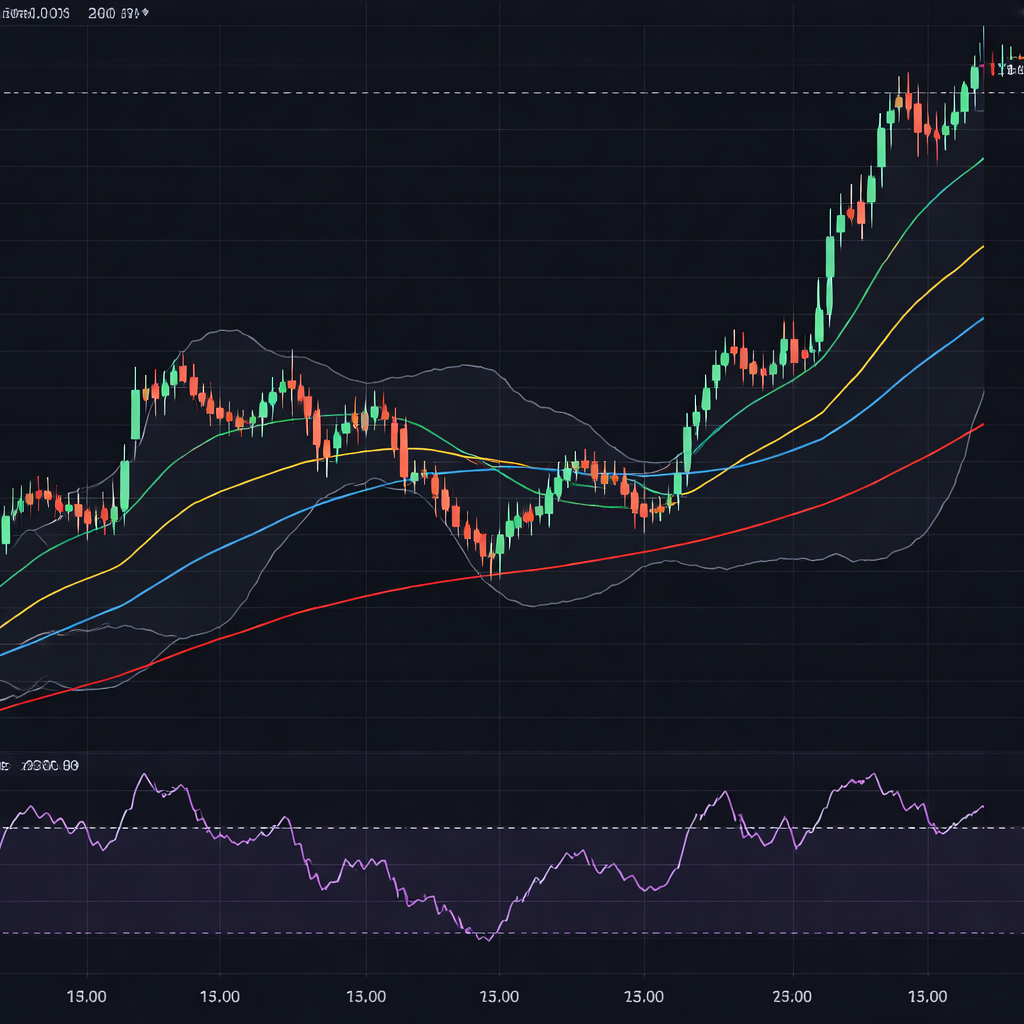
Algorithms can be as simple as a moving‑average crossover or as complex as a machine‑learning model. The key is to keep the rule set clear. When the rule says “buy if 50‑EMA > 200‑EMA and RSI > 55,” the computer can act without doubt.
Here are three core ideas you should grasp before you code:
- Market structure: Trends, ranges, and breakouts repeat over time. Recognise them early.
- Data quality: Bad ticks lead to bad trades. Choose a broker that gives you clean, low‑latency data.
- Execution speed: In fast markets a delay of a few milliseconds can flip profit into loss.
Because the research shows only 33% of checklist items name tools, you’ll want to fill that gap early. For example, the Technical Indicators Confirmation component lists six indicators , RSI, Bollinger Bands, trend indicators, oscillators, moving averages, volatility indicators. Pick two that complement each other. A common combo is a trend indicator (like a 20‑EMA) plus an oscillator (RSI).
When you pair a trend with momentum you filter out false signals. The research also notes that programming languages matter. Python offers many libraries (Pandas, NumPy, TA‑Lib) that make indicator calculations easy. If you prefer speed, C++ may be worth a look, but it adds complexity.
Finally, remember the methodology behind the research. A checklist extraction query was run on April 10 2026, pulling 35 raw items and keeping 15 that had at least two filled fields. That process shows why some steps get more attention , they have proven impact.
To keep your learning path tidy, you might want to read more about market basics at LiteFinance’s forex checklist. It breaks down the steps in plain language. And for deeper data‑source insight, check out ThinkMarkets’ guide on algorithmic strategies. These links give you concrete next steps while keeping the focus on the forex algorithmic trading guide.
Designing a Simple Algo Strategy: From Idea to Code
Let’s walk through a tiny strategy you can code in a day. We’ll use a trend‑following idea because it’s easy to test and works in many markets.
Step 1 , Pick a pair. EUR/USD works well for beginners. It has tight spreads and plenty of data.
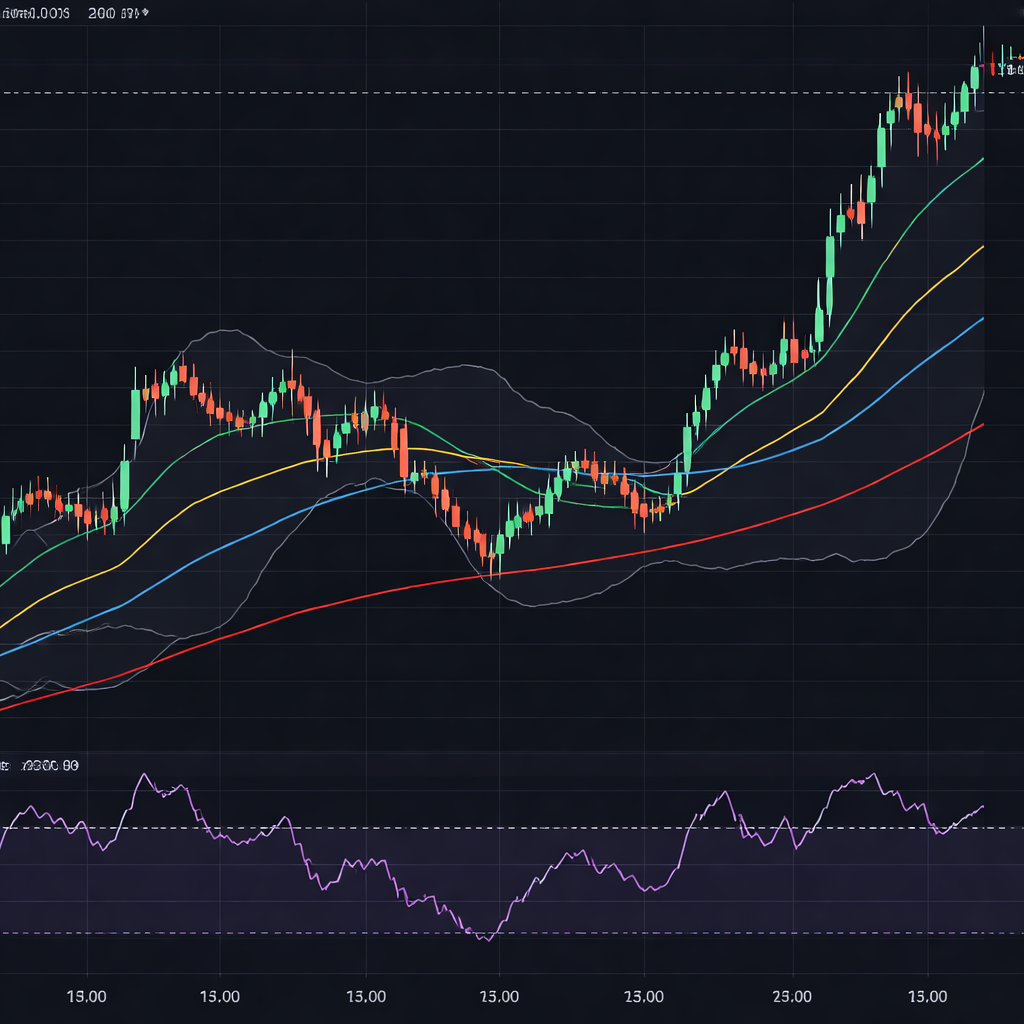
Step 2 , Choose indicators. The research highlights RSI and Bollinger Bands as popular. We’ll use a 14‑period RSI and a 20‑period Bollinger Band (2 σ). The rule: go long when price touches the lower band, RSI is below 30, and the band is widening. Exit when price hits the upper band or RSI rises above 70.
Step 3 , Write pseudo‑code. Here’s a quick outline:
| Action | Condition |
|---|---|
| Enter Long | price ≤ lower BB AND RSI < 30 |
| Exit Long | price ≥ upper BB OR RSI > 70 |
| Stop‑Loss | 0.5 % of account (fixed fractional) |
Step 4 , Code it in Python. Use pandas to load CSV data, ta‑lib for the indicators, and a simple loop to generate signals. The code below shows the core part (you’ll need to add broker API calls later):
import pandas as pd
import talib as ta

data = pd.read_csv('EURUSD.csv')
close = data['Close']
bb_upper, bb_middle, bb_lower = ta.BBANDS(close, timeperiod=20)
 rsi = ta.RSI(close, timeperiod=14)

signals = []
for i in range(len(data)):
    if close[i] <= bb_lower[i] and rsi[i] < 30:
        signals.append('buy')
    elif close[i] >= bb_upper[i] or rsi[i] > 70:
        signals.append('sell')
    else:
        signals.append('hold')
Step 5 , Backtest. Load a few years of tick data, run the loop, and record profit, drawdown, win rate. The research points out that over‑optimisation is a risk, so keep parameters simple. You might see a 55 % win rate with a 1.5 : 1 risk‑to‑reward ratio , decent for a starter.
Step 6 , Review the checklist. The Technical Indicators Confirmation component says you should combine tools from different families , we used a volatility indicator (Bollinger) and a momentum oscillator (RSI). The Per‑Trade Risk Management component reminds you to keep risk low; we set a 0.5 % fixed fractional size.
For more on indicator basics, the IG page explains the most common forex indicators. And if you want a sandbox to test without risking cash, check out Forex Tester’s algorithm tutorial. Both sites give you concrete steps that match the forex algorithmic trading guide.
Our internal link helps you dive deeper into automated strategies: forex automated trading strategies: a comprehensive guide for 2026. It adds context without breaking the flow.
Setting Up and Running Your Algo on Popular Platforms
Now that your code works on a CSV, you need a platform that can talk to a broker. Two popular choices are MetaTrader 5 (MT5) and QuantConnect.
MT5 lets you write scripts in MQL5, which is similar to C. It has a built‑in strategy tester and supports live trading via many brokers. The learning curve is a bit steep if you’re used to Python, but the community offers many free templates.
QuantConnect runs on the open‑source LEAN engine. You write your algo in Python or C#, upload it to the cloud, and it handles backtesting, optimisation, and live deployment. The platform also offers data for dozens of FX pairs, so you don’t have to manage your own feed.
Here’s a quick set‑up checklist for each platform:
- MetaTrader 5:
- Install MT5 from your broker.
- Open the MetaEditor.
- Create a new Expert Advisor (EA).
- Copy your Python logic into MQL5 syntax.
- Compile and run a backtest using the built‑in tester.
- Attach the EA to a demo account before going live.
- QuantConnect:
- Sign up at QuantConnect.
- Create a new Python project.
- Paste the strategy code into the IDE.
- Select the FX data set (e.g., EURUSD minute data).
- Run a cloud backtest and review the equity curve.
- Link your brokerage via the built‑in integrations and launch live.
When you move from backtest to live, watch for slippage. The research notes that infrastructure matters , low‑latency VPS hosts like QuantVPS can shave off milliseconds. That can be the difference between a filled order and a missed one.
To see a visual walk‑through, watch this video tutorial (the embed is placed right after the paragraph):
After you watch, you’ll notice the steps line up with the checklist items. The Per‑Trade Risk Management component tells you to set a max drawdown of around 5 %. In QuantConnect you can add a risk‑management module that halts trading if equity falls below that threshold.
Finally, keep a log of every change you make. The Trading Journal for Exceptions component says you should record why you overrode a rule. That habit will save you from chasing false hopes later.
Risk Management Essentials for Automated Forex Trading
Even the best algorithm can lose money if you ignore risk. The research shows Per‑Trade Risk Management is a top component, so let’s break it down.
Rule 1 , Size each trade as a small slice of your account. Most pros stick to 1 % or less. If you have $10,000, that means a $100 risk per trade.
Rule 2 , Use a volatility‑scaled stop. The ATR indicator measures recent price swings. A common rule is to set stop‑loss at 1.5 × ATR. This keeps your stop realistic in both calm and choppy markets.
Rule 3 , Set a max daily loss. If you lose more than 2 % of your account in a day, stop trading and review. This prevents a string of bad luck from wiping you out.
Let’s add a practical example. Suppose EUR/USD is at 1.2000 and the 14‑day ATR is 0.0080. Your stop would be 1.2000 − 1.5 × 0.0080 = 1.1880. If you risk $100, you’d calculate position size as $100 ÷ (1.2000 − 1.1880) ≈ 8,333 units. That keeps risk constant even if volatility changes.
The IG article on risk strategies explains why leverage can be a double‑edged sword. It warns that 71 % of retail CFD accounts lose money. That stat reinforces why you must cap leverage and keep risk tight.
Another safeguard is to monitor drawdown. The Performance Monitoring component says you should review results every few months. In practice, pull the equity curve from your broker, note the highest peak, and calculate the percent drop to the lowest point. If it exceeds 10 %, consider pausing the algo.Finally, think about diversification. Don’t put all your capital into a single pair. Spread risk across two or three uncorrelated pairs, such as EUR/USD, USD/JPY, and GBP/USD. That reduces the chance that a single news event wipes out everything.
For more on risk basics, read IG’s top risk‑management strategies. It gives clear steps you can copy into your own plan.
Psychology and Discipline: Keeping Your Algo on Track
Even with a perfect code, you can still sabotage yourself. The research shows that many traders skip the mental side. Here’s how to stay in control.
First, trust your system. After you backtest and walk‑forward test, write down the exact metrics: win rate, profit factor, max drawdown. Keep that sheet handy. When a losing streak hits, compare the live numbers to your sheet. If they match, stay the course. If they diverge, investigate , maybe a broker slippage issue or a market regime shift.
Second, set clear rules for when to intervene. The Trading Journal for Exceptions component says you should note any manual overrides. For example, you might decide to pause the algo during major central‑bank announcements. Write a short note like “Paused for ECB decision , 2026‑03‑10”. That keeps the reason clear and avoids impulse changes.
Third, manage emotions. Fear and greed are real. A study by LuxAlgo shows that traders who add mindfulness practices see a 15 % boost in return consistency. Simple steps help:
- Do a five‑minute breathing exercise before you launch the algo each day.
- Take a short walk after a big loss to reset.
- Log your mood in the same journal where you log trades.
Fourth, avoid over‑tweaking. The 5‑3‑1 Rule from the checklist advises you to stick to a few indicators and time frames. If you keep changing parameters after each loss, you’ll fall into curve‑fit trap. Instead, wait for a statistically significant sample , at least 200 trades , before tweaking.
Fifth, schedule regular reviews. The Performance Monitoring component recommends a quarterly check‑in. During that review, look at:
- Hit‑rate vs. expectation.
- Average profit per trade.
- Any drift in slippage or spread.
If any metric falls outside a pre‑set band, adjust the code, not your emotions.
Read more about the mental side at LuxAlgo’s psychology guide for algo traders and at Dukascopy’s discipline article. Both sources give actionable tips that line up with the checklist’s focus on disciplined execution.

Conclusion
We’ve walked through the whole forex algorithmic trading guide. You now know how the forex market works, how to design a simple trend‑following algo, how to set it up on MT5 or QuantConnect, how to keep risk low, and how to stay mentally sharp. The research table shows that the most tool‑heavy steps sit in the analysis phase, so give those extra care. Remember to backtest, use a demo account, and only move to live once you’ve proved the edge.
If you follow the steps, you’ll build a system that runs on rules, not on mood. That’s the real advantage of algo trading , it removes the guesswork and lets you focus on learning, improving, and staying disciplined.
Ready to try your first algo? Start with the code snippets above, run a demo, and then graduate to a small live account. Keep a journal, review the numbers, and you’ll see steady progress.
Frequently Asked Questions
What is the first thing I should check before launching an algo?
You should verify that your data feed is clean and that your risk parameters match the checklist. Look at spread, latency, and ensure your stop‑loss size follows the ATR‑based rule. A quick data‑integrity test can save you from costly slippage later. This aligns with the research’s emphasis on infrastructure and risk management.
How many indicators should I use in a beginner algo?
The research on Technical Indicators Confirmation suggests two to three well‑tested tools work best. A common combo is a moving‑average trend line plus an oscillator like RSI. Adding a volatility indicator such as Bollinger Bands can give a third perspective without overcomplicating the code.
Can I code my algo in a language other than Python?
Yes. The Programming Languages component lists C++, Java, and MQL5 as options. Choose the one that matches the platform you plan to use. If you pick MetaTrader, MQL5 is the native language; for QuantConnect, Python or C# work well. Each has its own library ecosystem.
How often should I update my algo?
Follow the Performance Monitoring guideline: review the strategy every few months or after a major market event. Look for changes in win rate, drawdown, or execution speed. If the metrics drift outside your preset range, consider a parameter tweak or a full redesign.
What is a safe leverage level for a new algo trader?
Leverage amplifies both gains and losses. A conservative approach is to use 1 : 10 or less until you have proven consistency. The IG risk article warns that high leverage is a common cause of loss, so keep it low and match it with your risk‑per‑trade rule.
How do I handle a sudden market crash?
First, let the built‑in risk controls stop trading , a max‑drawdown rule will pause the algo. Second, check the news feed for the event that caused the move. If it’s a one‑off, you may resume after the market calms. If it’s a regime change, consider pausing the algo longer and re‑testing on the new data.