

Imagine signing up for a forex trading education course and then realizing it doesn’t cover the basics. Or worse, it promises to make you rich overnight. That happens a lot. In fact, a recent study of 19 courses found that only 5 percent even tell you how many hours of instruction you’ll get. That’s a huge blind spot for beginners trying to plan their learning.
This guide walks you through seven steps to pick a forex trading education course that actually works. You’ll learn what to look for in a syllabus, how to judge an instructor, why demo accounts matter, and much more. By the end, you’ll have a clear checklist to evaluate any course on the market.
We’re an educational resource, so we don’t sell any courses. Our goal is to help you make an informed choice.
Step 1: Define Your Learning Goals and Trading Style
Before you even open a web page about a forex trading education course, stop and ask yourself: why are you learning? Do you want to trade part-time? Full-time? Are you aiming to swing trade or day trade? These questions matter because different courses cater to different goals.
For example, if you’re a complete beginner, a course that starts with market fundamentals, pip calculation, and risk management—like our free forex trading course—is non-negotiable. If you already know the basics, you might want an advanced course covering multi-timeframe analysis or algorithmic trading. The research shows that 42% of courses don’t specify their target level. That’s a red flag. Avoid courses that hide who they’re for.
Think about your schedule too. Some courses are self-paced; others have fixed sessions. The foreign exchange market runs 24 hours a day, but you don’t have to be online 24/7. Pick a course that fits your life.
Bottom line: Your learning goals and available time determine whether a course is worth your money and effort.
Step 2: Research Course Content and Syllabus
Now it’s time to look under the hood. A good forex trading education course lists its syllabus upfront. If it doesn’t, walk away. You need to see exactly what topics are covered and in what order.
From our research, the 14 courses that listed their content averaged exactly four core subjects: risk management, chart patterns, MT4/MT5 usage, and market fundamentals. That’s a solid baseline. But look deeper. Does the course teach price action? Does it cover trading psychology? These are critical yet often overlooked.
Here’s a table comparing typical topic coverage across course types:
| Topic | Beginner Course | Intermediate Course | Advanced Course |
|---|---|---|---|
| Forex basics (pips, lots, use) | Yes | Review only | — |
| Technical analysis (support/resistance, indicators) | Yes | Yes | Advanced |
| Risk management & position sizing | Yes | Yes | Yes |
| Trading psychology | Yes | Yes | Deep dive |
| Algorithmic trading / EAs | — | Optional | Yes |
This table helps you decide if the course matches your level. Many courses claim to be for “all levels” but actually target beginners. Check the syllabus against your goals.
Also check if the course offers downloadable resources, quizzes, or progress tracking. For instance, a major broker review site found that platforms like IG and AvaTrade provide integrated quizzes and progress bars. That’s a sign of good structure.

Bottom line: Always demand a detailed syllabus before you pay, and verify it covers the four foundational topics plus anything unique you need.
Step 3: Evaluate Instructor Credibility and Teaching Style
You could have the best syllabus in the world, but if the instructor can’t explain things clearly, you won’t learn. A forex trading education course is only as good as its teacher. So how do you vet them?
First, look for real trading experience. How many years have they traded? Do they share their track record? Be wary of anyone who claims to be a “millionaire mentor” but can’t show verified statements. Legitimate instructors often have a background with a bank, hedge fund, or as a professional trader.
Second, watch a sample lesson. Most reputable courses offer a preview. Pay attention to the teaching style. Does the instructor use simple language? Do they explain concepts step by step? Or do they rush through jargon? You want someone who can make complex topics understandable.
Third, check for external validation. Does the course have partnerships with recognized institutions? Is the instructor featured on reputable financial media? For example, the London Academy of Trading offers an advanced course, which signals a certain level of credibility. But even then, s.
“The best course isn’t the most expensive one , it’s the one that matches your learning style and skill level.”
Bottom line: Watch a sample lesson first; if the instructor can’t hold your attention or explain clearly, keep looking.
Step 4: Look for Practical Training with Demo Accounts
Reading theory is one thing. Placing a real trade (even with virtual money) is another. A good forex trading education course should include a demo account component. Ideally, the course teaches you how to use MetaTrader 4 or 5, which are the industry standard.
According to Wikipedia, demo accounts let you trade with virtual funds in real market conditions. They’re essential for building confidence. The best courses give you specific exercises to perform on the demo: backtest a strategy, practice order entry, test risk management rules.
Our research shows that nearly all brokers offer free demo accounts, but not all courses integrate them into the curriculum. A course that just tells you to “go practice” is weak. One that guides you through a structured simulation is strong.
For example, a platform like Trading.com’s guide to forex simulators emphasizes that simulators help build discipline without financial risk. Look for a course that includes at least 20-40 hours of demo practice as part of the program.
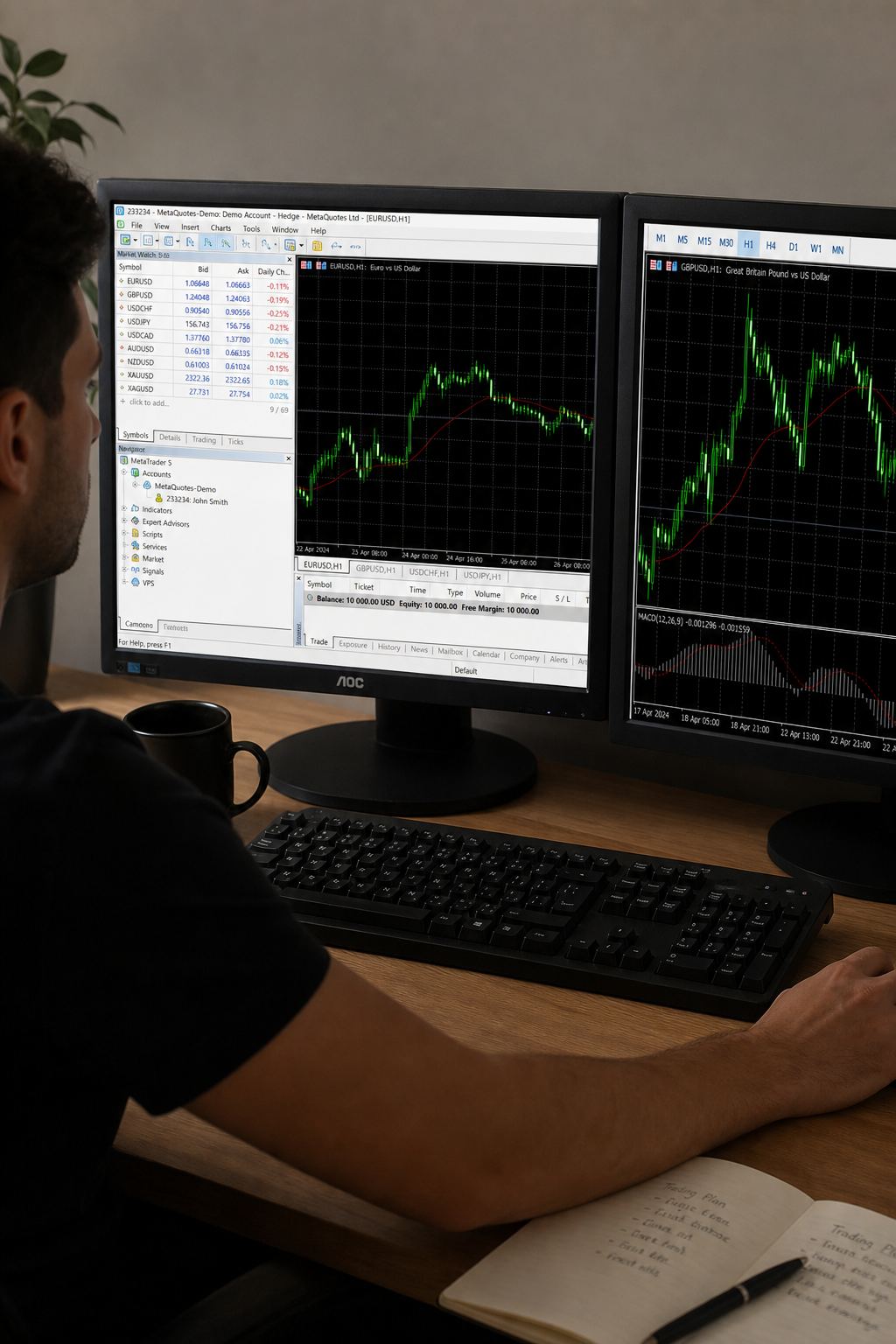
Bottom line: A quality forex trading education course integrates demo trading into the curriculum, not just as an afterthought.
Step 5: Check Community and Mentorship Support
Learning alone is hard. Most successful traders agree that mentorship and community accelerate the learning curve. When choosing a forex trading education course, see if it offers access to a private forum, a chat group, or direct mentor Q&A sessions.
Our research into various courses found that only a handful provide live mentorship (like the Home Trader Club’s model at $37/month). But you don’t need 24/7 handholding. What matters is the ability to ask questions when you’re stuck. A course with a responsive community can save you hours of frustration.
Check if the instructor personally responds, or if it’s peer-only. Peer support is valuable, but you also want expert validation. Also, beware of courses that use community as a sales funnel for upsells. A genuine mentorship program should be included in the base price.
For traders looking to automate their learning workflow, tools like Better Call Jerem can help automate trade journaling and reminders. That’s a bonus for staying disciplined.
Bottom line: A course with responsive mentorship gives you a safety net and keeps you accountable.
Step 6: Plan Your Learning Schedule and Commitment
A forex trading education course can vary wildly in total hours. The research found that only one out of 19 courses disclosed its duration: the Complete Foundation FOREX Trading Course at 8.5 hours. That’s a problem because you need to know if you can commit the time.
Before enrolling, estimate how many hours per week you can dedicate. If you can only spare 2 hours a week, a 40-hour course will take 5 months. Make sure the course allows you to learn at that pace.
Also check the format: pre-recorded videos, live sessions, or a mix. Pre-recorded offers flexibility; live sessions offer interaction but require you to show up at specific times. Choose what fits your life.
If you’re interested in building your own tools to support learning, you might consider a web development agency like Lakeway Web Development to create custom trading dashboards or analytics tools , but that’s an advanced step.
Bottom line: Always know the total time commitment before starting; otherwise, you risk wasting money on a course you never finish.
Step 7: Supplement with Free Educational Resources
You don’t always need to pay for a forex trading education course. In our research, 37% of the courses we found are completely free , including Babypips School of Pipsology, IG Academy, and FX Academy. These are excellent starting points.
Free courses often cover the same core four topics as paid ones, but they may lack depth or personal support. Use them to test your interest before investing money. For example, Babypips is famous for breaking down complex concepts into simple lessons. It’s a great warm-up for a paid course.
Paid courses typically range from $84 to $99 for a one-time fee, with the average around $74 when including subscription models. If you’re serious, paying for structured content with mentorship can be worth it. But always start with free resources to build a foundation.
Investopedia’s list of best forex classes is a good place to compare both free and paid options side by side.
Bottom line: Free courses are a low-risk way to start; use them to prepare for a paid course if needed.
Frequently Asked Questions
What is the best forex trading education course for beginners?
The best course for beginners is one that covers the absolute basics: what is forex, how to read a quote, use, risk management, and candlestick patterns. Free options like Babypips School of Pipsology or IG Academy are excellent starting points. They are structured, quiz-based, and free. If you prefer a paid course with more depth, look for one that includes a demo account project and mentor access.
How much does a forex trading education course cost?
According to our research on 19 courses, the average price for a paid course is $73.99, with most one-time fees ranging from $84 to $99. There are also subscription models like The Home Trader Club at $37 per month. However, 37% of courses are free. The cost does not guarantee quality , always review the syllabus first.
Can I learn forex trading without a course?
Yes, you can learn through free resources like broker education portals, YouTube, and demo trading. Many successful traders started with self-study. However, a structured forex trading education course can save you time by providing a clear path and expert feedback. It’s not mandatory, but it can accelerate learning.
How long does it take to complete a forex trading course?
Duration varies widely. Our research found that only 5% of courses disclose their total hours; the one that did was 8.5 hours. Most courses are self-paced, so it depends on your schedule. Expect a complete beginner course to take anywhere from 10 to 40 hours of study, plus additional demo practice time.
Are online forex courses as effective as in-person?
Online courses are the norm , 89% of courses are online. They can be just as effective if they include interactive elements like quizzes, progress tracking, and live Q&A. The key is to choose a course that matches your learning style. Online offers flexibility; in-person offers networking.
What should I avoid in a forex trading course?
Avoid courses that promise guaranteed profits, use high-pressure sales tactics, or do not provide a clear syllabus. Also avoid those that lack information about the instructor’s trading history. If a course costs much more than the $84-$99 average without clear additional value, be skeptical. Always check reviews and request a sample.
Do I need a certification after completing a forex trading course?
Certification is not required to trade forex. Some courses offer certificates of completion, but they are not recognized by regulatory bodies. Focus on knowledge and skills rather than paper. A good course will prepare you to trade real money, not just give you a certificate.
Can a forex trading education course help me become a professional trader?
It can, but it’s only one step. A professional trader needs deep market understanding, a solid trading plan, risk management discipline, and consistent performance. A course provides the foundation, but real experience comes from live trading , first with a demo, then small real money. Combine a good course with journaling and continuous learning.
Conclusion
Choosing a forex trading education course doesn’t have to be overwhelming. Start with your goals. Check the syllabus for the four core topics. Watch a sample lesson from the instructor. Make sure they include demo practice and offer community support. Plan your schedule realistically. And don’t be afraid to use free resources first.
The research shows that many courses lack transparency , missing level info, duration, and real teaching credentials. Your job is to separate the great from the mediocre. Use the steps in this guide as a checklist. If a course passes all seven steps, you’re likely making a smart investment.
Remember, FXDoctor.blog is here to help you learn. We provide educational content to build your foundation. Whether you choose a free course like Babypips or a paid program like Complete Foundation, the most important thing is to start and stay disciplined. The market rewards those who prepare.
Now go pick your course , and happy learning.