
If you think a solid forex education has to cost a fortune, think again.
Many traders start out chasing paid courses, only to find the price tag eats their savings before they even place a trade. A free forex trading course can give you the same core knowledge without that risk.
What you’ll get is a step‑by‑step walk through market basics, how currency pairs move, and the tools you need to read a chart. Imagine opening a platform, spotting a trend, and knowing exactly why it matters – that confidence comes from learning the fundamentals first.
To make the most of a free course, follow these three actions:
- Set a clear goal. Decide if you want to master price action, understand risk ratios, or build a simple trading plan.
- Treat the lessons like a class. Schedule 30 minutes a day, take notes, and quiz yourself after each module.
- Apply what you learn on a demo account. Real‑time practice turns theory into muscle memory.
For example, a beginner in Belgrade used a free course, logged a demo trade after the first lesson on support and resistance, and saw how a price bounce matched the chart pattern they just studied. After a week of daily practice, the trader could spot the same pattern on live data without feeling lost.
Remember that no free resource covers everything. Pair the course with a solid reference like Forex Trading Basics: A Step‑by‑Step Guide for Beginners to fill any gaps and keep your learning path on track. Keep it simple and stay curious.
Step 1: Understand the Basics of Forex Trading
Before you can trade, you need to know what you’re looking at. Forex is just buying one currency while selling another at the same time. Think of it like swapping a euro for a dollar.
Each pair has a base currency and a quote currency. The price tells you how many quotes you need for one base. If EUR/USD is 1.10, you need 1.10 dollars for one euro.
Why does the price move? It reacts to supply and demand. News, interest rates, and market sentiment all play a role. When traders think the euro will get stronger, they buy more, pushing the price up.
Learn the three main market sessions: the Asian, European, and North American. Each has its own rhythm. The Asian session is usually calm, while the London session brings more action. Knowing when the market is most active helps you pick the right time to practice.
Start by opening a demo platform. Plot a simple line chart for a major pair like GBP/USD. Watch how the line wiggles over a day. Notice the highs and lows – those are the peaks and troughs that traders call swings.
Try this: pick a time when the market is quiet, like early Asian hours. Look at the chart and ask yourself: does the price look high or low compared to the last few days? Write down what you think and then watch the next hour to see if you were right.
Understanding these basics gives you a solid base for any free forex trading course you take. It’s the first step before you add fancy indicators or risk tools.
Watch the short video below for a quick visual of how a currency pair moves across a day.
After the video, go back to your demo chart and try to spot the same pattern. The more you repeat this, the clearer the basics become.
Step 2: Set Up Your Free Trading Platform
Now that you know the basics, it’s time to get a platform where you can practice without spending a dime.
The first step is to pick a broker that offers a free education hub. IG Academy, AvaTrade’s AvaAcademy and Forex.com’s Learning Center all give you access to video lessons, quizzes and a demo account right away. A quick look at the free forex trading courses guide shows these options rank high for beginners.
Once you’ve chosen a broker, sign up for a demo account. Fill in your name, pick a fake balance (most give $10,000) and verify your email. You’ll get a login that opens the web‑based chart screen.
Next, download the broker’s charting app or use the web version. Set the chart to a 5‑minute timeframe, add the basic indicators you learned – a simple moving average and a trend line. Keep the spread low; most demo accounts show the exact spread you’ll pay live.
Run your first mock trade. Pick EUR/USD, set a tiny position size (e.g., 0.01 lots), place a stop loss a few pips away and a modest profit target. Write down the entry, stop and target in your notebook. When the trade closes, note what the price did versus your plan.
Tip: Do this once a day for a week. You’ll start to see how long it takes for a price to move a few pips and how your stop loss protects you.
| Platform | Free Features | Demo Access |
|---|---|---|
| IG Academy | Free video lessons, quizzes, progress tracker | Demo account with $10,000 virtual cash |
| AvaAcademy | 100+ lessons, 45 quizzes | Demo account with $10,000 virtual cash |
| Forex.com Learning Center | Interactive guides, webinars | Demo account with $10,000 virtual cash |
When you feel comfortable with these steps, you’ve built the foundation needed to move on to more advanced analysis. The free platform will let you test ideas risk‑free, so you can focus on learning rather than worrying about money.
Step 3: Learn Core Technical Analysis Tools
Now that you have a demo platform, it’s time to add the tools that turn a raw chart into a decision aid.
1. Simple moving average (SMA)
Put a 20‑period SMA on a 5‑minute chart. It smooths out noise so you can see the short‑term trend. If price stays above the line, the trend is up; below, it’s down. Watch how the line reacts when you make a mock trade – you’ll notice when price pulls back to the average.
2. Trend line
Draw a line that touches at least two swing highs or lows. This visual cue shows where price has respected a level before. When the line breaks, it often signals a shift. Try drawing it after each session and see how often price bounces.
3. Support and resistance boxes
Mark zones where price has stalled in the past. Use a rectangle tool to shade the area. These zones act like walls; price may bounce or break through. In a demo trade, place your stop just below a support box and your target near the next resistance box.
4. Relative strength index (RSI)
Set the RSI to 14 periods. Values above 70 hint at over‑bought moves, below 30 at over‑sold. Pair the reading with your trend line to avoid false signals. For example, an over‑bought reading in a downtrend may confirm a pull‑back.
5. Volume profile (optional)
If your platform offers a volume histogram, look at where most trades happen. High volume nodes often act as strong support or resistance. Even a quick glance can add confidence to a trade plan.
Tip: Keep a checklist of these tools and tick each one as you add it to a chart. When you can read a chart with all five, you’ve covered the core kit most free forex courses teach. From here you can start testing simple patterns, like a pull‑back to the SMA or a bounce off a trend line, all without risking real money.
Step 4: Implement Risk Management Practices
Risk is the silent enemy of most new traders. If you ignore it, a single loss can wipe out weeks of practice.
A free forex trading course should teach three core habits: size each trade, set a stop loss, and cap daily exposure.
1. Size your position
Choose a risk amount per trade, often 1 % or less of your account. With a $10,000 demo balance that’s $100 max.
Count the pips from entry to stop, then use a simple calculator or spreadsheet. For a 20‑pip stop on EUR/USD, a 0.01‑lot trade risks about $2 per pip, or $40 total – well under $100.
2. Place a stop loss
A stop loss automatically closes the trade when price moves against you. Put it just beyond a recent swing low for longs or swing high for shorts.
Imagine a beginner in Belgrade spotting a bounce off a support box. He sets his stop a few pips below the box. If the bounce fails, the stop ends the trade before the loss grows.
3. Limit daily loss
Set a maximum daily loss, such as 2 % of the account. On $10,000 that’s $200. Stop trading once you hit that number.
A trader in Sofia hit his $200 limit after three losing trades, took a break, and returned fresh, avoiding a bigger drawdown.
Keep a simple journal: note the pair, entry, stop, target, and result. Review weekly to see if you stay within limits.
Tip: many platforms include a risk‑calculator widget; a quick Excel sheet works just as well.
Seeing these steps in action builds confidence and keeps emotions in check.
Remember, consistency beats occasional big wins.
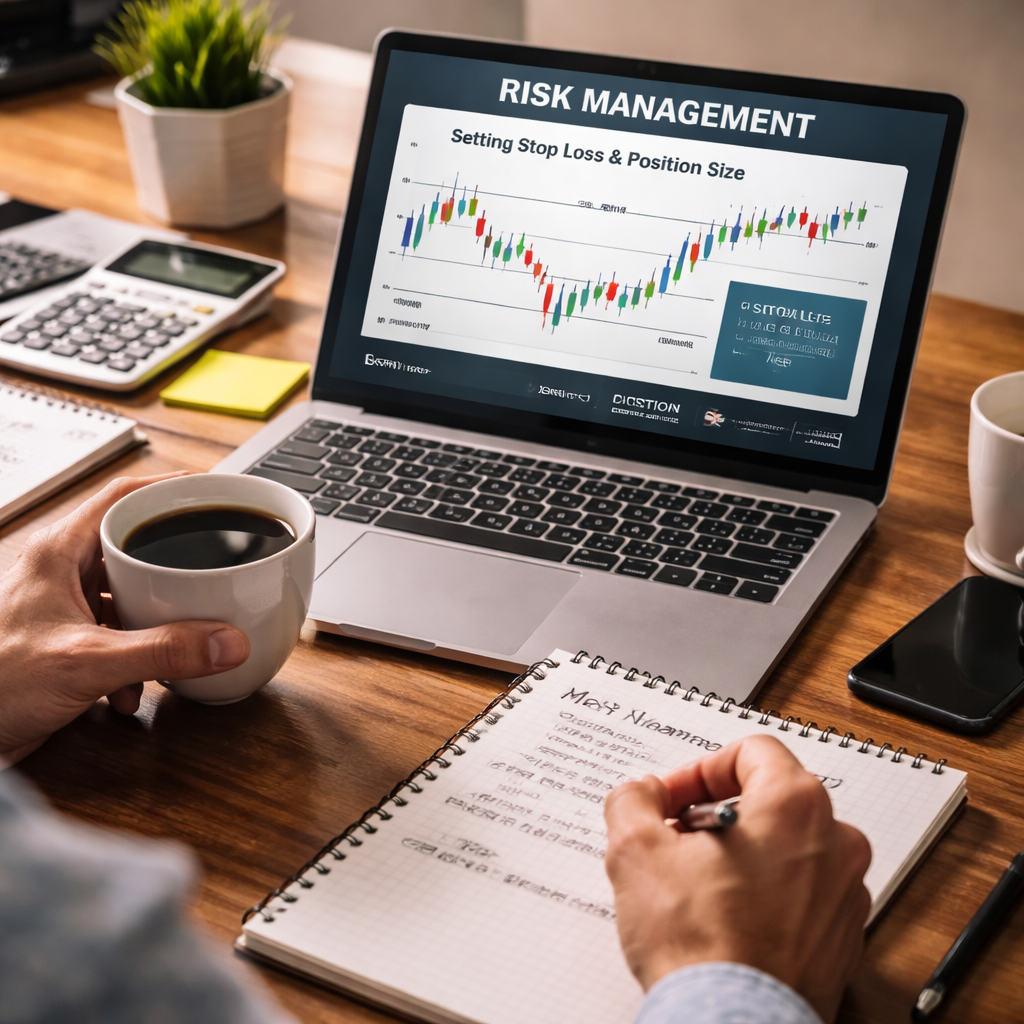
Now try it: open your demo, pick a pair, risk 1 % of your balance, set a stop loss, and log the trade. Do this for a week and watch how the safety net protects you.
Over time you’ll see your drawdowns shrink and your confidence grow.
Conclusion
You’ve seen how a free forex trading course can give you the basics, the tools, and the safety nets you need.
Start simple. Pick a demo account, set a tiny risk, write down what you did. Do this every day for a week.
Watch your notes. Spot the patterns that work for you. Adjust your plan, but keep the risk rules the same.
Remember, steady steps beat big jumps. The course is free, so there is no excuse to wait.
If you keep the habit, confidence will grow and drawdowns will shrink.
Ready to try? Open a demo, follow the steps, and let the free forex trading course guide your first trades.
Keep a short journal and review it weekly. Small tweaks based on real results keep you moving forward without costly mistakes.
The path to steady trading starts with one free lesson and you can take it today.
Frequently Asked Questions
What is a free forex trading course and who is it for?
A free forex trading course is an online program that teaches the basics of currency trading without any charge. It usually covers market terms, how to read a chart, and simple risk rules. The material is aimed at beginners who want to try forex without spending money, but it also gives a quick refresher for traders who have some experience and want a structured recap.
How can I know if a free course is good quality?
Look for a course that gives a clear syllabus, short videos or slides, and practical exercises you can do on a demo platform. Good courses will explain each concept in plain language and show a real‑time chart example. If the provider includes quizzes or a checklist, that’s a sign the material is meant to be applied, not just read.
Do I need a demo account to practice what I learn?
Yes. A demo account lets you try the strategies you learn without risking real cash. Open a free account with any broker that offers virtual funds, pick a major pair like EUR/USD, and follow the steps from the course – set entry, stop loss, and target. Watching the trade play out helps you see if the idea works before you go live.
How much time should I spend each day on the course?
Spend about 30 minutes a day on the lessons and another 15-20 minutes on practice. Short, regular sessions keep the information fresh and stop you from feeling overwhelmed. You can break it up – watch a video in the morning, take notes at lunch, and run a demo trade in the evening. Consistency beats long, occasional study marathons.
Can I earn real money by only using a free course?
A free course can give you the knowledge and a practice routine, but making real profit still needs discipline, risk control, and time. The course won’t guarantee money; it only shows how markets work and how to test ideas safely. Treat any live trading as a separate step after you’ve proven the method on a demo and feel comfortable with the risk.
Where can I find extra resources to fill gaps after the course?
After you finish the free lessons, you can look for a short checklist PDF, a forum where traders share trade logs, or a simple guide on risk ratios. Many sites offer free PDFs that recap the key steps, and reading a few real‑world trade examples helps you see how the ideas fit together. Keep a notebook and add any new tip you find useful.