

Most traders think a funded forex challenge is a sprint. The data says most firms don’t set a hard clock. The real gate is profit targets and drawdown limits. In this guide you’ll see a clear path to meet those rules, keep emotions in check, and walk away with a live account.
We’ll walk through seven steps. You’ll get practical tips, real‑world examples, and ready‑to‑use worksheets. By the end you’ll know exactly how to pass a funded forex challenge.
Step 1: Choose the Right Prop Firm and Challenge Type
First, you need a firm that fits your style. Not every prop firm works the same. Some firms, like FTMO, demand a 10% profit target, a 5% daily loss limit, and a 10% overall drawdown. Others, such as Goat Funded Trader, have no minimum trading‑day rule. The “no‑time‑limit” paradox means you can focus on steady risk control instead of racing a clock.
Make a list of the firms you’re eyeing. Check three things:
- Profit target and drawdown thresholds.
- Use limits , most firms cap at 1:1, but SabioTrade offers up to 30:1.
- Minimum trading days , 0 for most, 4 for FTMO.
When you compare, ask yourself: does the firm’s use match my risk appetite? Does the profit target feel realistic given my historical edge?
Read the firm’s official rules page before you pay any fee. The fee is a commitment, not an expense.
Imagine you pick a firm with a 10% target but you only make 5% on average. You’ll likely fail. Choose a target that aligns with your win rate and average R‑multiple.
Bottom line:Picking the right prop firm sets the stage for every later decision.
Step 2: Develop a Trading Plan Tailored to the Evaluation Phase
Next, write a plan that treats the evaluation like a small business. The plan must spell out entry criteria, exit rules, and risk limits for each trade. It should also cover what you’ll do on days when the market feels quiet.
Start with a clear definition of the evaluation phase. You are trading a demo account that mimics live conditions. The goal is to prove you can hit the profit target while staying under the drawdown ceiling.
Here’s a quick template:
- Instrument: Major EUR/USD pair.
- Timeframe: 15‑minute for entries, 1‑hour for trend confirmation.
- Entry rule: Break of a 20‑pip range with a confirming candlestick pattern.
- Stop‑loss: 15‑pip fixed, never moved.
- Take‑profit: 30‑pip target (2:1 reward‑to‑risk).
- Max daily risk: 1% of the account balance.
Stick to the plan even when you feel lucky. Over 90% of failures come from breaking the firm’s risk rules, not from a bad strategy.
Use a journal to record every trade. Note why you entered, how the trade unfolded, and whether you followed the plan. Review the journal weekly to spot deviations.
For a deeper dive on how to write a solid plan, check out Forex trading plan template. The guide walks you through each section with examples.
When you test the plan on a demo, treat the virtual money as if it were real. That mental shift builds the right discipline.
Bottom line:A tailored trading plan turns the evaluation into a repeatable process.
Step 3: Master Risk Management and Position Sizing
Risk management is the single biggest factor in passing. The average funded program caps overall drawdown at about 7%.
First, calculate how much you can lose per trade. Use the classic 1% rule: if your account is $10,000, risk no more than $100 on any single trade.
Next, size your position so the $100 risk matches your stop‑loss distance. If you set a 15‑pip stop, your position size = $100 / (15 pips * $10 per pip) = 0.67 lots.
Here’s a quick table you can copy into a spreadsheet:
Adjust the lot size whenever your account grows. That keeps risk constant.
Use can tempt you to over‑size. Remember, the median max use among providers is only 1:1. Treat higher use as a risk, not a shortcut.
Another guard is a daily loss limit. If your firm caps daily loss at 5%, stop trading for the day once you hit it. That rule saved 90% of traders at Goat Funded Trader.
Finally, keep a buffer for slippage. If you expect a 10‑pip stop, actually place it 12 pips away to avoid being stopped out by fast moves.
Bottom line:Learning risk and sizing is the foundation of any successful challenge.
Step 4: Prioritize Consistency Over High Returns
Many traders chase big wins. The data shows the profit target clusters around 10%, but the median is 7.78%. You don’t need a single huge trade; you need steady, repeatable wins.
Focus on A+ setups that meet your entry criteria. If you only get three high‑probability trades a week, that’s fine. Consistency beats occasional fireworks.
Track your win rate and average R‑multiple. Aim for a win rate of 55% with a 2:1 reward‑to‑risk. That gives a positive expectancy without huge variance.
Use a simple checklist before each trade:
- Is the market trending in the direction I want?
- Does the price respect my support/resistance level?
- Do I have a clear entry trigger?
- Is my stop‑loss within the 1% risk rule?
When the checklist fails, step away. Missing a trade is better than breaking a rule.
Remember, the evaluation period is often unlimited. You can wait for the right setups instead of forcing trades to meet a deadline.
And if you hit a streak of losses, cut the day short. The daily loss limit protects you from a cascade of bad trades.
Bottom line:Steady, rule‑based trading beats chasing big returns.
Step 5: Manage Psychology and Stick to Your Plan
Psychology is the hidden hurdle. Fear of loss, fear of missing out, and fear of failure all show up in a prop challenge.
When you feel fear, pause. Take three deep breaths and reread your trade plan. If the plan says “no trade,” stay out.
Greed spikes after a win. It pushes you to increase size or skip the checklist. Resist by logging the win and then taking a short break.
Resilience comes from treating each loss as a data point. Record why the loss happened, then move on without replaying the trade in your mind.
Here’s a quick mindset drill:
- Before market open, write down your profit target and daily loss limit.
- Visualize yourself following the plan flawlessly.
- When a trade goes bad, repeat: “I followed the rules, I will learn.”
Research shows that 90% of failures are due to discipline breaches. That means the right mindset can tip the odds in your favor.
Use a journal not just for trade data but for emotions. Note if you felt fear or greed before each entry.
“Discipline is the only universal strategy for success,” says Goat Funded Trader.
Finally, separate your self‑worth from any single trade. Your value is the habit of following rules, not the profit of the day.
Bottom line:A strong mindset keeps you on track when pressure mounts.

Step 6: Execute a Steady Strategy and Review Your Trades
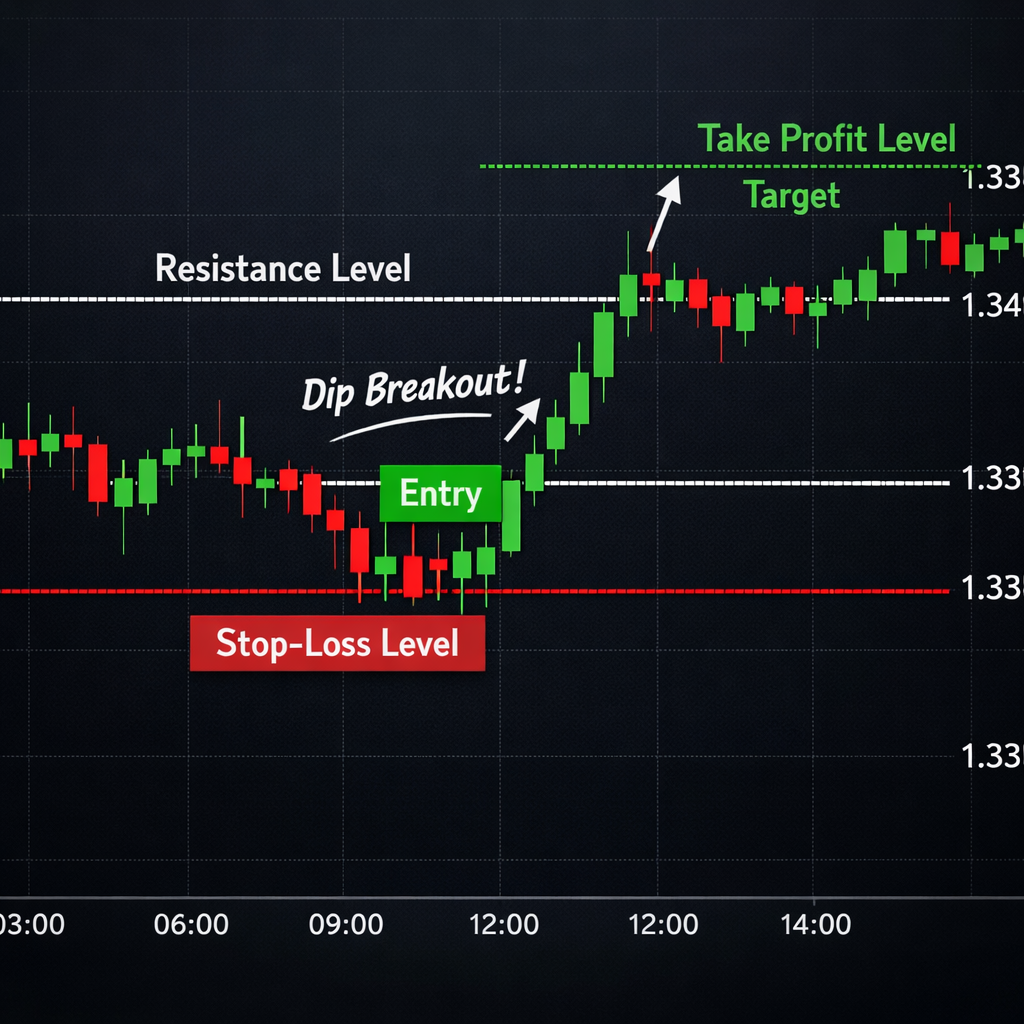
Now put it all together. Pick a simple, repeatable strategy , for example, a breakout after a 20‑pip range with a 2:1 reward‑to‑risk.
Enter only when the breakout candle closes above the range. Place a stop just below the range. Set a profit target at twice the stop distance.
Run the strategy for a full week before judging results. Keep the daily risk at 1% and stop trading once the daily loss limit hits.
After the week, review your journal. Look for any rule breaks. If you broke a rule twice, ask why and adjust.
Repeat the cycle. Each iteration should bring you closer to the profit target while staying under the drawdown ceiling.
Remember, the evaluation can run for months. Patience beats panic.
Bottom line:A steady strategy, disciplined execution, and honest review lead to success.
Frequently Asked Questions
What is the typical profit target for a funded forex challenge?
Most providers set the profit target around 8% to 10%. The average is 7.78%, while the median sits at 10%. Choose a firm whose target matches your historic win rate and risk tolerance.
Do I need a minimum number of trading days to pass?
Only a few firms, like FTMO, require four active days. Ten of the fourteen major providers impose no minimum, letting you focus on quality over quantity.
How much use should I use during the evaluation?
The median max use is 1:1, with an average of 5.83:1. High‑use firms like SabioTrade offer up to 30:1, but that can tempt over‑trading. Stick to low use until you’re comfortable with risk.
What is the most common reason traders fail?
Discipline lapses are the biggest culprit. Up to 90% of failures come from breaking daily loss limits or deviating from a written plan, not from a lack of market knowledge.
Can a beginner realistically pass a funded challenge?
Yes, but it demands strict risk control, a solid plan, and mental resilience. Beginners should start with a firm that offers a modest profit target and clear education resources.
How often should I review my trades?
Review daily for rule breaches and weekly for overall performance. Use a journal to capture entry rationale, emotions, and outcome. Regular review uncovers hidden patterns.
Is there a way to speed up the evaluation?
Speed comes from higher win rates and larger R‑multiples, not from racing the clock. Because most evaluations lack a strict deadline, focus on consistency rather than haste.
What should I do if I hit the daily loss limit?
Stop trading for the day. Reset your mindset, review what went wrong, and return fresh tomorrow. Ignoring the limit almost always leads to a full‑account drawdown.
Conclusion
Passing a funded forex challenge is less about finding a secret system and more about learning risk, staying consistent, and keeping emotions in check. Choose a prop firm that aligns with your style, write a detailed plan, size every position to a 1% risk, and stick to the plan even when fear or greed creep in. Review each trade, adjust as needed, and remember the evaluation period often has no hard clock , the profit target and drawdown limits are the real finish line.
FX Doctor offers deeper guides on chart reading, price action, and risk management to help you build the skills you need. Apply these steps, stay disciplined, and you’ll turn the challenge into a funded account.