
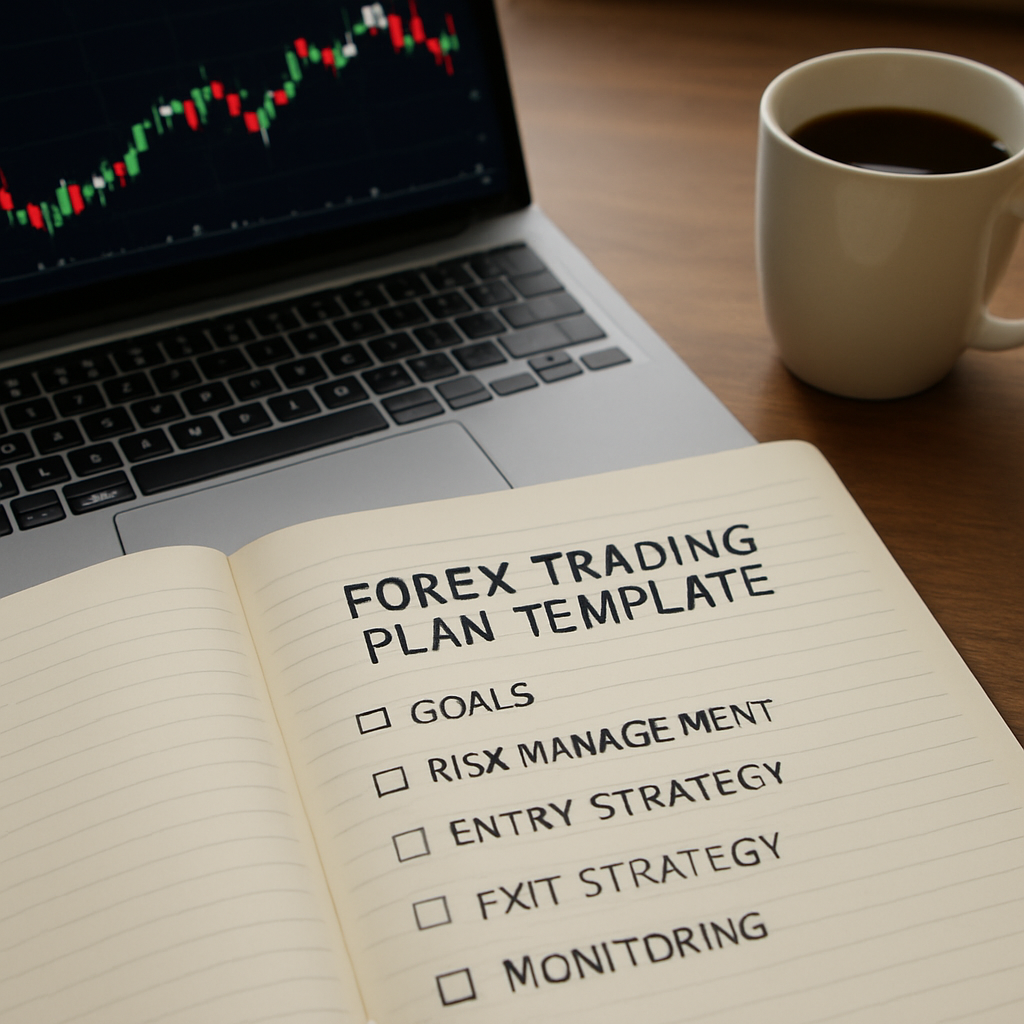
Ever felt like you’re juggling charts, news feeds, and a spreadsheet, yet still not sure if you’re actually following a plan?
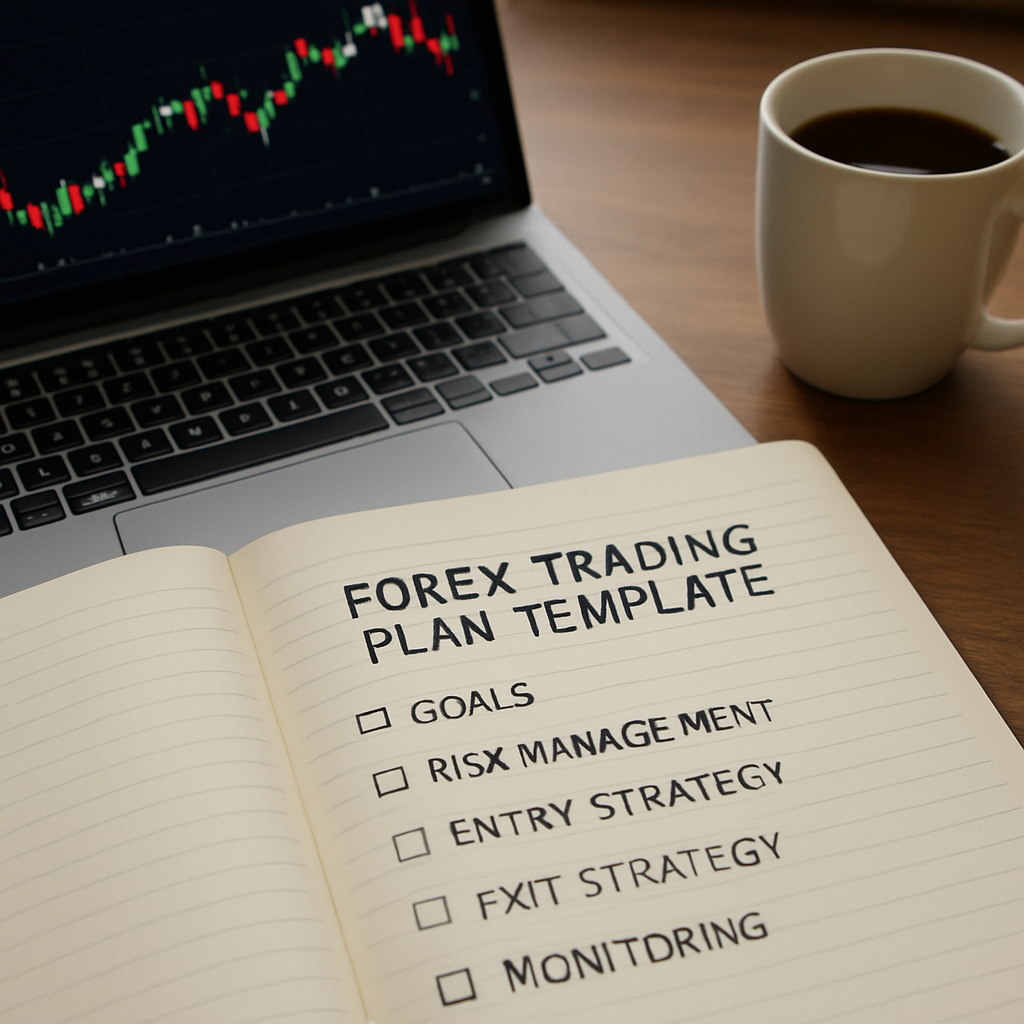
That uneasy feeling is exactly why a solid forex trading plan template matters – it turns scattered ideas into a repeatable process you can trust.
In our experience at FX Doctor, beginners often start by copying random strategies they see on forums, only to discover gaps in risk control or entry rules later on.
A good template gives you three simple pillars: when you’ll enter, how much you’ll risk, and how you’ll exit. Think of it as a recipe – the ingredients are your analysis, the method is your risk rules, and the final dish is a trade that fits your overall strategy.
But a template isn’t a one‑size‑fits‑all document. It needs to reflect your trading style, time availability, and risk tolerance. For a part‑time trader working a 9‑to‑5, the plan might focus on higher‑timeframe setups and tighter risk per trade, whereas a full‑time scalper will map out minute‑by‑minute entries and quick exits.
So, what should your first forex trading plan template look like? Start with a one‑page overview: list the currency pairs you’ll trade, define your preferred session, note the indicators you rely on, and set clear profit‑target and stop‑loss rules. Below that, add a checklist for each trade – did you confirm the trend? Is the risk‑reward at least 1:2? Have you accounted for upcoming news?
Imagine you’ve just spotted a bullish breakout on EUR/USD during the London session. Your template tells you to wait for a pull‑back to the 20‑period moving average, risk no more than 1 % of your account, and set a profit target two times that risk. By following those pre‑written rules, you eliminate the hesitation that often leads to missed opportunities or overtrading.
That’s the beauty of a well‑crafted forex trading plan template – it gives you a decision‑making framework before you even open a position, so you spend more time analyzing and less time debating.
Ready to build yours? Grab a notebook or a simple spreadsheet, sketch the three pillars we discussed, and fill in the details that match your style. As you test and refine the template, you’ll notice a clearer edge and a calmer mindset – both essential for consistent trading.
TL;DR
A solid forex trading plan template gives you a clear, step‑by‑step roadmap so you can spot setups, size risk, and exit confidently without second‑guessing each trade. Follow the simple three‑pillar structure we outlined, and you’ll trade with far less hesitation, tighter risk control, and a steadier mindset that drives consistent results.
Step 1: Define Your Trading Goals and Objectives
Before you even glance at a chart, ask yourself what you really want out of trading. Are you looking to grow a modest side‑income, preserve capital for a future purchase, or simply learn the discipline of a systematic approach? Pinning down that “why” stops the plan from feeling like a vague checklist.
Think about the next 12 months. How many hours can you realistically devote to analysis, journaling, and review? For a busy professional, a goal of “trade no more than three setups per week” might be realistic, while a full‑time day‑trader could aim for “five high‑probability entries daily.” Write the time‑commitment next to your profit ambition – it creates a built‑in sanity check.
Next, translate your vague ambition into concrete numbers. Instead of “make money,” try “target a 10 % annual return on risk capital while keeping drawdown under 5 %.” Those figures give you a measurable benchmark and a risk ceiling you can monitor every month.
It’s also worth deciding how you’ll measure success beyond raw profit. Do you value a win‑rate above 55 %? Or perhaps a risk‑reward ratio of at least 1:2 on each trade? Jot down the metrics that matter to you; they’ll become the lenses through which you evaluate every trade.
Now, let’s bring in the psychological side. If you know you tend to over‑trade after a winning streak, set a personal rule like “stop after two consecutive wins and take a 15‑minute break.” Embedding these behavioural safeguards into your goals makes the plan feel human.
Here’s where a solid Risk Management Strategies section becomes the backbone of your objectives. By defining position size, maximum loss per trade, and overall exposure, you ensure that your goals stay within the realm of what your account can support.
Want a practical way to keep your goals front‑and‑center? Try a weekly “goal board” on a whiteboard or a digital note where you tick off each objective. Seeing progress in real time reinforces discipline.
For traders who also dabble in alternative assets, understanding legal obligations can be a hidden goal. A quick read on crypto‑law compliance can save you headaches later. According to NeosLegal UAE Crypto Lawyers, maintaining proper records is essential when you expand into digital currencies.
And when it comes to carving out focused work blocks, pairing your plan with a proven productivity method helps. The One‑Week Pomodoro Plan for Writers can be adapted for traders – 25‑minute analysis sprints followed by short breaks keep mental fatigue at bay.
After watching the video, take a moment to draft a one‑page goal sheet. List your profit target, max drawdown, time commitment, and any behavioural rules. Keep it visible on your desk; the plan should feel like a trusted companion, not a distant document.
Step 2: Select Your Market, Instruments, and Timeframes
Now that your goals are crystal‑clear, the next question is simple: where will you actually put your money? Picking the right market, currency pair, and chart timeframe is the backbone of any solid forex trading plan template. If the market doesn’t match your schedule or risk appetite, even the best‑written plan will feel forced.
Match the market to your lifestyle
Ask yourself: do you have a full‑time desk or are you squeezing trades into evenings? Full‑time scalers love the rapid‑fire moves of the 1‑minute or 5‑minute charts during the London‑New York overlap, while part‑timers often thrive on the slower rhythm of the 4‑hour or daily frames. Choose a market that aligns with when you can sit in front of the screen without compromising sleep or work.
For beginners, sticking to the most liquid pairs – EUR/USD, GBP/USD, USD/JPY – reduces slippage and gives you tighter spreads. These majors also have abundant educational material, which makes it easier to calibrate your forex trading plan template against real‑world behaviour.
Select your instruments wisely
Beyond the big three, think about what you actually understand. Do you follow commodity news because you have a background in energy markets? Then adding a cross like AUD/CAD might feel intuitive. The key is to limit the number of instruments at first – two or three pairs are enough to practice consistency before you expand.
Remember the old saying: “don’t put all your eggs in one basket, but don’t juggle ten baskets either.” A focused list lets you notice subtle pattern repeats, which feeds directly into the entry criteria section of your plan.
Decide on the timeframe that fits your edge
Every trading style has a natural cadence. If you’re comfortable spotting price action on a 15‑minute chart, you’ll likely need tighter stop‑losses and a higher risk‑reward target. Conversely, swing traders who hold positions for a few days should look at the 4‑hour or daily charts, where noise is filtered out.
One practical test: open a chart on your favourite pair, set the timeframe to 1 hour, and watch it for 30 minutes. If you feel you’re constantly second‑guessing each candle, drop down a level. If you’re bored, step up a level. The timeframe you settle on becomes a fixed parameter in your template.
So, how do you lock these choices into your plan? Write a short “Market & Instrument” section at the top of your template. List the selected pairs, the sessions you’ll trade (e.g., London 08:00‑12:00 GMT), and the exact timeframe you’ll analyze. This snapshot acts like a quick‑reference checklist before you fire up your trading platform.
Need a quick reference on how a comprehensive template looks? Check out this trading plan template guide for a tidy example that walks you through market selection, risk rules, and more.
Finally, schedule a weekly “market review” session. Spend 15 minutes comparing the pairs you’ve chosen against upcoming economic releases. If a pair looks flat or the news calendar shows high volatility you don’t want, simply cross it off for that week. This habit keeps your template fluid without turning it into a rigid rulebook.
By aligning your market, instrument list, and timeframe with your personal rhythm, you give your forex trading plan template a solid foundation. The rest – entry rules, risk limits, position sizing – will slot into place much more naturally.
Step 3: Establish Entry, Exit, and Risk Management Rules
Ever felt that jittery pause right before you click “buy” because you’re not sure if the trade fits your plan?
That moment is exactly why you need crystal‑clear entry, exit, and risk rules written into your forex trading plan template. When the rules are right there on the page, you stop debating and start acting.
Define the entry trigger
First, ask yourself: what specific market condition tells you “go”? It could be a price crossing a moving average, a candlestick pattern on your chosen timeframe, or a confluence of support‑resistance and a news‑free window. Write the exact criteria – “Enter long when EUR/USD closes above the 20‑period EMA on the 1‑hour chart and the RSI is below 70.”
Notice the detail? No vague “buy on strength” – you’ve turned a feeling into an objective rule.
Set the exit parameters
Next, decide how you’ll get out. Most traders use two exits: a profit target and a stop‑loss. The profit target should respect your minimum risk‑reward ratio (1:2 is a common baseline). The stop‑loss, on the other hand, protects you from a losing streak.
Tip: place the stop a few pips beyond a recent swing low or high rather than a round number. That way the market has room to breathe before it triggers.
Lock in risk per trade
Risk management is the heart of any sustainable plan. A good rule of thumb is to risk no more than 1 % of your account equity on a single trade. To calculate the position size, divide the amount you’re willing to lose by the distance (in pips) between entry and stop‑loss, then convert that into lots.
For a deeper dive into risk‑management best practices, check out this risk management guidelines article.
Quick checklist you can paste into your template
- Entry condition (indicator, price level, timeframe)
- Stop‑loss placement rule
- Profit target rule (risk‑reward ratio)
- Maximum % risk per trade
- Maximum daily loss limit (e.g., 2 % of equity)
Remember, rules aren’t set in stone. After a few weeks review how often your stop‑loss gets hit versus your profit target. If the win‑loss ratio drifts, tweak the entry filter or adjust the risk‑reward until the numbers line up with your expectations.
Decision table
| Rule Type | Typical Tool/Indicator | Key Note |
|---|---|---|
| Entry | EMA crossover, bullish engulfing | Must meet all listed conditions |
| Exit – Stop‑Loss | Swing low/high, ATR buffer | Set beyond volatility buffer |
| Exit – Take‑Profit | Risk‑reward 1:2+, price target | Adjust if market structure changes |
Putting these three rule sets into your forex trading plan template turns chaos into a repeatable process. When the market opens, you glance at the template, see a green light, and trade with confidence instead of hesitation.
So, what’s the next step? Copy the checklist, fill in your own indicators, and stick the sheet on the side of your monitor. That simple visual cue keeps discipline alive, even on the toughest trading days.
Step 4: Build Your Position‑Sizing and Money‑Management Framework
Now that you’ve nailed entry, exit and risk rules, the next piece of the puzzle is deciding how much of your account you actually put on each trade.
That’s what we call position‑sizing, and it’s the backbone of any solid forex trading plan template. Without a clear framework you’ll either gamble too big and get wiped out, or stay so tiny that the occasional win never covers the inevitable loss.
Start by choosing a maximum % of equity you’re comfortable risking on any single trade. Most educators, including us at FX Doctor, recommend somewhere between 0.5 % and 1 % for beginners. If you have a $10,000 account, a 1 % risk equals $100.
Next, calculate the pip distance between your entry and stop‑loss. Suppose you’re looking at a EUR/USD long where the stop sits 50 pips below your entry. Divide your dollar risk ($100) by the pip distance (50) to get $2 per pip. That $2 per pip translates into a specific lot size – usually 0.02 standard lots on most platforms.
But position‑sizing isn’t a one‑off math exercise. You need a money‑management framework that tells you when to scale back or step up. A simple rule is to cap daily loss at a fixed % of equity – 2 % is a common ceiling. If you hit that limit, you stop trading for the day, review what went wrong, and come back fresh.
Another useful tool is the “trade‑risk ladder.” Write down three risk levels – low, medium, high – each with its own lot size multiplier. For example, low risk trades stay at your base lot, medium risk use 1.5×, and high risk use 2×, but only if your account equity is still above the daily loss threshold. This keeps your exposure proportional to both market conditions and your psychological comfort.
Let’s walk through a quick checklist you can paste into your forex trading plan template:
- Max % risk per trade (e.g., 1 %)
- Stop‑loss pip distance for each setup
- Dollar risk = account × max % risk
- Pip value = dollar risk ÷ stop‑loss pips
- Corresponding lot size
- Daily loss limit (e.g., 2 % of equity)
- Risk‑level multipliers (low/medium/high)
When you fill in those cells for a few sample trades, you’ll see a clear pattern: the numbers either line up nicely or they expose a mismatch that needs fixing. That’s the beauty of a written framework – it forces you to confront the math before you click “buy.”

Finally, treat your money‑management rules as living documents. Review them weekly, adjust the max % risk if your account grows, and tighten the daily loss cap if you notice more volatility. Over time the framework becomes second nature, and you’ll notice your trading psychology improve because you no longer worry about “how much could I lose?” you already know.
So, grab a pen, plug the numbers into your template, and let the framework do the heavy lifting. Consistency in position‑sizing is what separates a trader who survives from one who constantly chases the next big win.
Step 5: Incorporate Performance Review and Continuous Improvement
At this point you’ve got your entry, exit, and money‑management rules written down. But a plan that never gets looked at is just a piece of paper.
So, how do we turn the forex trading plan template into a living system that actually improves?
The answer is simple: schedule a regular performance review and feed the insights back into your template.
Weekly snapshot
Pick a day – Friday after the London‑New York overlap works for most traders – and pull your trade journal into a single spreadsheet.
Copy the key columns from your forex trading plan template: entry signal, stop‑loss distance, position size, profit target, actual outcome, and notes on market context.
Now calculate three quick metrics – win rate, average risk‑reward, and max drawdown for the week. If your win rate drops below 50 % or your risk‑reward falls under 1:1, it’s a red flag.
Take a minute to ask yourself what changed. Was volatility higher? Did you skip the news filter? Did you over‑size a “high‑risk” trade?
Write a short action item right under the table – for example, “tighten ATR buffer by 10 pips for GBP/JPY” – and copy it into the next version of your template.
Monthly deep‑dive: at the end of each month, pull the weekly sheets together and look for patterns. Maybe you consistently lose on breakout trades, or your stop‑losses get hit during economic releases.
Use those patterns to adjust the template. If breakouts are trouble, add a “no trade on news” rule. If you’re over‑risking on certain pairs, introduce risk‑level multipliers specific to those pairs.
A quick way to keep everything in one place is to use a digital journal. Notion trading journal templates offer ready‑made layouts that let you log each trade, attach screenshots, and auto‑calculate the metrics we just discussed.
You can explore those templates here — they’re free to duplicate and customise for your own forex trading plan template.
Finally, set a reminder to review the updated template before each new trading week. A 10‑minute ritual of scanning the checklist, confirming the risk parameters, and visualising the next trade can tighten discipline more than any fancy indicator.
Don’t forget the soft side of performance – note how you felt before each entry. Did anxiety push you to a tighter stop? Did confidence cause you to skip a filter? Over time those journal notes become a personal psychology map, helping you build mental resilience alongside the hard numbers.
Keep iterating, and the plan will grow with you.
Step 6: Document, Test, and Refine Your Template
Now that your forex trading plan template lives on paper or a spreadsheet, the real work begins: turning it into a living system you actually use.
Why documentation matters
Imagine you’re backtesting a breakout strategy and you forget why you set the stop‑loss at 30 pips. Without a record, that insight vanishes. Writing every trade – entry, rule trigger, emotions, and outcome – creates a feedback loop that catches blind spots before they cost you another trade.
Set up a simple trade log
Grab a digital note‑taking app or a Google Sheet and add these columns:
- Date & session
- Pair & timeframe
- Entry rule used (e.g., EMA crossover)
- Stop‑loss & target values
- Position size
- Result (pips G/L)
- Brief note on mindset (e.g., “felt rushed after news”)
Keep the log consistent – even a quick 30‑second entry after you close a trade is better than skipping it.
Test the template in real time
Pick a low‑stakes week and trade only the setups your template approves. Treat each trade as an experiment: did the entry condition fire when you expected? Did the risk‑reward ratio hold up? Record any deviation.
After the week, pull the numbers. A simple win‑rate, average risk‑reward, and max drawdown table tells you whether the template is realistic or overly optimistic.
Refine based on what you see
If you notice that “no‑trade‑on‑news” filters are being ignored, add a checklist item that forces you to glance at the economic calendar before you click “buy.” If stop‑losses are consistently hit a few pips before the target, consider widening the buffer or using an ATR‑based stop instead of a fixed pip distance.
Another common tweak: tighten the position‑size rule for volatile pairs. For example, shift from 1 % risk per trade to 0.5 % when trading GBP/JPY during the Asian session.
Make the review a ritual
Set a calendar reminder for every Friday afternoon. Spend ten minutes scanning the week’s log, noting patterns, and updating the template directly in the same file. Over time you’ll see a “psychology map” emerge – those little notes about anxiety or over‑confidence become actionable tweaks, not just anecdotes.
And don’t forget to celebrate the small wins. If a new rule reduced your average loss by 15 % after just two weeks, give yourself a mental high‑five. That positive reinforcement keeps the habit loop strong.
In our experience at FX Doctor, traders who treat the template like a lab notebook – documenting, testing, then iterating – achieve far steadier results than those who write a plan and never look at it again. The template isn’t a static document; it’s a blueprint that evolves with your skill level and market conditions.
So, grab your journal, run a focused test week, and let the data guide the next version of your forex trading plan template. The effort you put in now pays off in clearer decisions and fewer “what‑if” moments later.
Conclusion
We’ve walked through every piece of a solid forex trading plan template, from setting goals to testing, tweaking, and reviewing. By now you should see how the template becomes a living notebook rather than a static PDF.
So, what’s the next move? Grab the notebook or spreadsheet you’ve been using, fill in the three pillars we outlined, and schedule a quick Friday‑afternoon review. That 10‑minute ritual is the bridge between theory and real‑world consistency.
Remember, the biggest edge isn’t a fancy indicator – it’s the discipline to follow a plan you trust. When a trade feels right, check it against your template. When doubt creeps in, let the written rules speak for you.
As you iterate, you’ll notice patterns: maybe a certain pair needs a tighter stop, or a particular session yields better risk‑reward. Capture those insights and let the template evolve. Over weeks you’ll trade with less hesitation and more confidence.
Ready to turn the template into habit? Start today, track a handful of trades, and let the data guide the next version. Consistency, reflection, and small wins will pay off long after the markets closes.
And if you ever feel stuck, just revisit the checklist you built – it’s your roadmap back to clarity, no matter how chaotic the market gets.
FAQ
What exactly should I include in a forex trading plan template?
Think of the template as a cheat‑sheet for every trade. Start with a one‑page snapshot: your trading goals, the currency pairs you’ll focus on, and the session you’ll trade. Add a clear entry rule (e.g., price crossing a 20‑period EMA), a stop‑loss method, a profit‑target or risk‑reward ratio, and the % of equity you’ll risk. Finally, a quick checklist for each trade—trend confirmed? Risk within limits?—helps you stay disciplined.
How often should I review and update my forex trading plan template?
We recommend a brief review at the end of every trading week and a deeper dive once a month. During the weekly check, glance at the checklist you used, note any missed rules, and jot down patterns you spotted. The monthly review is where you compare win‑rate, average risk‑reward, and drawdown numbers, then tweak entry filters or position‑size rules accordingly. Keeping the rhythm simple—10 minutes Friday, 30 minutes month‑end—makes the process stick.
Can I use a spreadsheet or should I write my template on paper?
Both work, but a spreadsheet gives you instant calculations for risk per trade and lets you sort trades for quick analysis. If you prefer the tactile feel of pen and paper, use a notebook for the high‑level overview and a separate sheet for the numbers. The key is consistency: whichever medium you pick, make sure the layout stays the same so you can compare weeks without re‑learning the format.
What’s the best way to size positions in my template?
Start by deciding the maximum % of equity you’ll risk per trade—most educators suggest 0.5‑1 %. Calculate the dollar risk (account × % risk), then divide by the pip distance between entry and stop‑loss to get the $ per pip. Convert that to lot size using your broker’s pip value table. Write a simple formula in your template so you can plug numbers in and see the lot size instantly.
How do I handle news events in my forex trading plan template?
Include a “no‑trade‑on‑news” flag in the checklist. Before you open a position, glance at an economic calendar and note any high‑impact releases for the pairs you trade. If a release is due within the next hour, either skip the trade or tighten your stop‑loss by a few pips. Over time you’ll see whether certain news types consistently hurt your win‑rate and can adjust the rule.
What if my risk‑reward ratio isn’t hitting the target?
First, verify that you’re measuring it correctly—use the distance from entry to stop‑loss versus entry to profit target. If the ratio consistently falls short, look at two levers: tighten the stop‑loss (maybe by using an ATR‑based buffer) or move the profit target farther out to capture more of the move. Document any changes in the template and monitor the impact over the next few weeks.
How can I make my forex trading plan template more “living” instead of static?
Treat the template like a lab notebook. After each trade, add a short note about market context and your mindset—was you nervous, confident, or distracted? Then, schedule a 10‑minute Friday ritual to copy those notes into a “lessons learned” section of the template. Over time you’ll see recurring psychological triggers and can embed new rules, turning a static document into a dynamic, self‑improving system.
[…] tie the calendar to a solid plan. The Forex Trading Plan Template: A Step‑By‑Step Guide for Beginners helps you embed news checks into every trade review, so you never miss a […]
[…] a ready-made structure, check out the forex trading plan template that walks you through each field. Pair it with a pomodoro timer to lock in focused work blocks and […]