
You’ve been trading for a while. You know what a candlestick is. You understand support and resistance. But you’re stuck. Profits are inconsistent. That’s normal. The next step is finding a structured learning path. A good forex trading course for intermediate traders can fill those gaps. In this guide, I’ll walk you through exactly how to pick the right one. We’ll cover curriculum, delivery formats, instructor credibility, cost, and usable components. By the end, you’ll know what to look for and what to avoid.
Step 1: Assess Your Current Knowledge and Trading Goals
Before you start shopping for a course, take a hard look at where you are. Ask yourself: What do I already know? What am I struggling with? A course meant for beginners will bore you. A course for advanced traders will confuse you. You need something that fits your level.
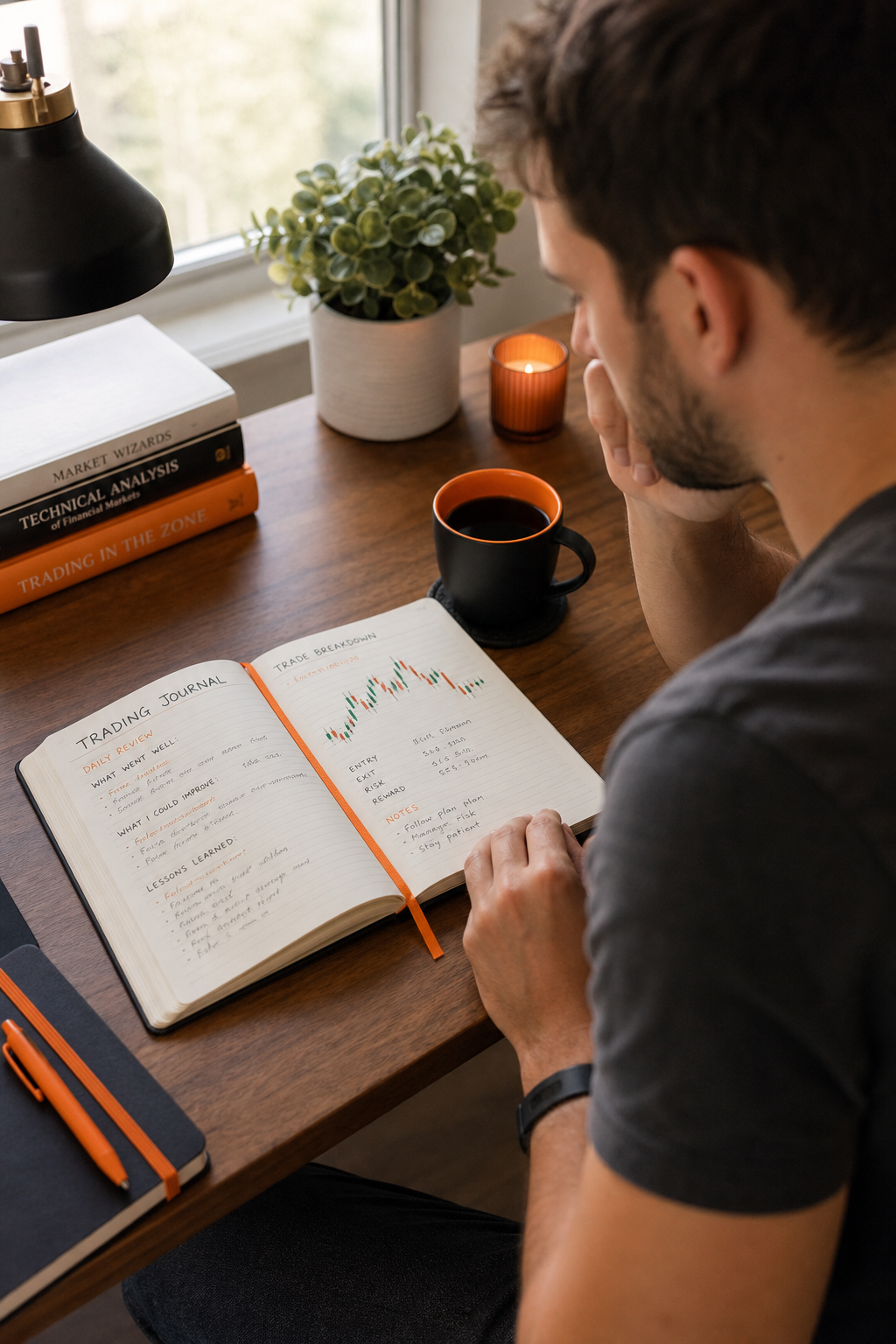
Start by listing the concepts you understand: candlestick patterns, trendlines, moving averages, support and resistance. Next, list your weak spots: risk management? psychology? fundamental analysis? For example, if you can read a chart but can’t manage your position size, look for a course that covers risk thoroughly.
I recommend creating a simple trading plan template before you enroll. A good plan includes entry rules, exit rules, position sizing, and risk limits. If you don’t have one, you can use a forex trading plan template PDF to get started. That document will help you see where your strategy gaps are.
Also consider your goals. Are you trading part-time or full-time? Do you want to scalp, day trade, or swing trade? Different courses focus on different timeframes. A course built around long-term swings won’t help a scalper.
Take notes on your current account size and drawdown history. If you consistently lose 10% per month, a course heavy on psychology might be more valuable than one on exotic indicators. The foreign exchange market is massive but unforgiving without discipline. Know your weaknesses first. That’s the only way to choose a course that actually helps.
Step 2: Evaluate Course Curriculum , Core Topics for Intermediates
Not all courses are created equal. Some cover the same old basics. Others look at real, intermediate-level material. Look for a curriculum that goes beyond price action 101. Here are the topics you should expect in a quality intermediate course:
- Advanced candlestick patterns: engulfing, harami, morning/evening star, and their reliability ratios.
- Indicator mastery: MACD, RSI, ATR, Stochastics, but also how to use them in confluence, not alone.
- Market structure: understanding trends, ranges, and breakouts with multi-timeframe analysis.
- Order flow and volume: footprint charts, delta, volume profile. These aren’t for beginners but are important for intermediate traders.
- Fundamental analysis: interest rates, GDP, central bank policy, and how they drive long-term moves.
- Risk management math: position sizing formulas, risk-to-reward ratios, drawdown control.
- Trading psychology: dealing with FOMO, revenge trading, and overconfidence.
Check the course syllabus. Does it list modules like “Fibonacci Retracements” or “Donchian Channels”? The research I’ve seen shows that intermediate courses from providers like AvaAcademy cover tools like Donchian Channels and Fibonacci retracements. Others, like IG Academy, use a tiered structure from beginning to advanced. Coursera offers a broad overview. Pick the one that targets your specific needs.
Here’s a quick comparison of what three sample courses cover. Use this as a template when you evaluate any program.
Note: Always verify the prerequisites. Some courses claim to be intermediate but actually require prior completion of their own beginner track. Check before you enroll. For a deep look at curriculum standards, the Wikipedia page on technical analysis outlines the core principles every course should teach.
Step 3: Compare Delivery Formats , Live, On-Demand, and Mentorship
How you learn matters as much as what you learn. The three main formats are:
- On-demand courses: pre-recorded videos, quizzes, and assignments. You go at your own pace. Good if you have a tight schedule. Downside: no real-time feedback.
- Live courses: scheduled classes with an instructor. You can ask questions and interact. Better for accountability.
- Mentorship programs: one-on-one or small group coaching over weeks or months. Most expensive but most personalized. For example, one program I’ve seen offers four months of mentorship with live trading floor sessions, data reviews, and a TQUK Level 3 qualification.
Think about your learning style. Do you need structure and deadlines? Live or mentorship might work. Do you prefer to watch videos at 2 AM? On-demand is fine. But intermediate traders usually benefit from live interaction because they have questions that go beyond the basics.
Also consider the time commitment. Some courses require 10 hours a week. Others are self-paced. Be honest about your availability. A course you never finish is worthless.
Step 4: Verify Instructor Credentials and Teaching Methodology
Anyone can call themselves a forex coach. But credentials matter. Look for:
- Professional certifications: Chartered Market Technician (CMT), Chartered Financial Analyst (CFA), Financial Risk Manager (FRM). These show the instructor has passed rigorous exams.
- Track record: Do they trade their own capital? Are they transparent about results? Be wary of anyone who only shows winning trades.
- Teaching experience: Do they explain concepts clearly? Watch a free preview. If they use jargon without explaining it, move on.
- Industry recognition: Have they been published in reputable financial media? Or do they only appear on social media?
A good instructor won’t promise guaranteed profits. They’ll emphasize risk management and discipline. They’ll also encourage you to paper trade before going live. If a course feels like a sales pitch for a signal service, run.
One solid credential for technical analysis is the CMT designation. The program covers trend analysis, chart patterns, indicators, and quantitative strategies. Learning from a CMT charterholder can give you confidence that the material is professional-grade.
Step 5: Analyze Cost Versus Value , Free vs Paid Courses
Surprising fact: many top-rated intermediate forex courses are free. Yes, free. Both AvaAcademy and IG Academy offer their intermediate content at no cost. That’s 2 out of 2 courses with price data in my research. So don’t assume you need to spend a lot.
But free doesn’t mean worse. It often means the platform profits elsewhere (like through spreads if they’re a broker). Paid courses can offer deeper content, live support, and mentorship. For example, Forex University launched an intermediate course for $199.95, which includes 5 modules, quizzes, simulations, and expert signal tools. Another paid mentorship program costs around $1,500 for four months of live coaching.
Here’s how to evaluate value:
- What’s included? Are there quizzes, labs, assignments, or just videos? Interactive components add value.
- Is there a certification? Some paid programs offer accredited certificates that can boost your resume.
- What about support? Can you ask questions? Is there a community? That’s worth something.
- Money-back guarantee? A sign of confidence.
Don’t be fooled by high prices. The best investment is education that changes your behavior. A free course that you actually complete is better than a $2,000 course you abandon after week one. For more on evaluating education costs, check out this breakdown of forex education costs and value.
Step 6: Look for Usable Components , Labs, Backtesting, and Platform Integration
Reading and watching aren’t enough. You need to apply what you learn. A good intermediate course includes:
- Backtesting labs: You should be able to test strategies on historical data. Some courses provide software or templates. For example, one course offers a Sierra Chart template and a TradingView Market Profile tool.
- Demo account integration: The course should guide you through opening a demo account and practicing live-market conditions without real money.
- Case studies: Real trade examples with entry, exit, and management. Look for courses that show multiple examples, not just winners.
- Live trading sessions: Some programs include a trading floor experience where you watch the instructor trade in real time. That’s invaluable.
- Review cycles: The best courses include periodic data reviews. One mentorship program I saw conducts three one-on-one data reviews over four months, analyzing your trades to find weaknesses.
Ask the course provider: “Can I see a sample of the usable exercises?” If they can’t show you anything, be cautious. The goal is to build skills, not just knowledge. A course that makes you practice is worth more than one that only lectures.
Step 7: Consider Certification and Career Advancement Opportunities
If you’re serious about forex trading as a profession, certification can open doors. For intermediate traders, certifications like the CMT (Chartered Market Technician) or CFA (Chartered Financial Analyst) are recognized globally. The CMT focuses on technical analysis, while the CFA covers broader finance. Both require significant study but signal expertise.
Some courses offer their own certificates of completion. These may not carry the same weight as professional designations, but they can still demonstrate commitment. For example, a course that includes a TQUK Level 3 qualification provides a recognized certificate in retail trading. That can help when applying for prop firm funding or roles at financial firms.
Other designations relevant to forex traders include the FRM (Financial Risk Manager) for risk-focused roles, and the Series 34 exam for those working with retail forex customers in the US. The Investopedia article on degrees for forex trading provides a detailed look at which credentials suit which career path.
If you’re planning to manage other people’s money, a recognized certification is almost mandatory. Even if you only trade your own capital, the structure of a certification program can accelerate your learning.
Frequently Asked Questions
What should I look for in an intermediate forex trading course?
Focus on curriculum depth. It should cover advanced technical analysis, risk management, trading psychology, and fundamental analysis. Also check the instructor’s credentials and the delivery format that suits your schedule. Usable components like backtesting and live trading labs are a big plus.
Are free forex trading courses worth it for intermediate traders?
Absolutely. Many reputable providers like AvaAcademy and IG Academy offer free intermediate courses. They cover substantial material and can be as good as paid ones. The catch: you might get less personalized support. But for budget-conscious traders, free courses are an excellent way to upgrade skills without risk.
How much does an intermediate forex trading course cost?
Prices vary widely. Free courses are available from brokers and educational platforms. Paid courses range from $200 to $1,500 or more. Mentorship programs with one-on-one coaching can cost several thousand dollars. Evaluate the value based on content, support, and certification rather than price alone.
Can a forex trading course guarantee profits?
No. No legitimate course guarantees profits. The market is unpredictable, and success depends on your discipline, risk management, and consistent application of strategy. Be extremely skeptical of any course that promises specific returns or signals that make money every time. Education builds skills, not profits.
What certifications are available after completing a forex trading course?
Some courses offer their own certificates of completion. Professional certifications include the CMT (Chartered Market Technician), CFA (Chartered Financial Analyst), and FRM (Financial Risk Manager). Each focuses on different aspects. The Series 34 is a regulatory exam for US retail forex professionals.
How long does it take to complete an intermediate forex trading course?
It depends. Self-paced courses can be completed in a few weeks to a few months, depending on your time. Live courses often run 4 to 12 weeks. Mentorship programs may last 4 to 6 months with weekly sessions. Look at the total hours of content and your schedule to estimate.
Should I choose a live course or an on-demand course?
It depends on your learning style and schedule. Live courses offer real-time interaction and accountability, which helps if you need structure. On-demand courses offer flexibility. For intermediate traders, live courses can be more valuable because you can ask detailed questions about strategies you’re struggling with.
Conclusion
Choosing the right forex trading course for intermediate traders isn’t about finding the most expensive or the most hyped one. It’s about matching the course to your current skill level, learning style, and goals. Start with a honest self-assessment. Then evaluate the curriculum for topics that address your weaknesses. Compare delivery formats to see what fits your life. Verify the instructor’s credentials and look for usable components that let you apply what you learn. Don’t ignore free options; they can be surprisingly good. And consider certification if you’re aiming for a professional career.
Remember, no course replaces screen time and experience. The best course is one you actually complete and apply. Improve your time, do your research, and choose a program that moves you from inconsistent results to consistent, disciplined trading. At FX Doctor, we believe in education that builds real understanding, not hype. Use this guide to make an informed decision and take the next step in your trading journey.