

Ever stared at a sea of broker logos and thought, “Where do I even begin?”
You’re not alone—most aspiring traders feel the same way when they first hunt for the best forex brokers for beginners. The market is crowded, and every banner promises low spreads, lightning‑fast execution, or a magic “no‑risk” account, which can make the decision feel like choosing a needle in a haystack.
What really matters is a blend of solid regulation, transparent fee structures, and a trading platform that feels intuitive instead of intimidating. If a broker hides its licensing or tacks on hidden commissions, those red flags will bite you later when you’re trying to protect a modest account.
At FX Doctor, we’ve spent years breaking down these concepts for newcomers, so we know which features separate a trustworthy broker from a flash‑in‑the‑pan promo. Think of it like learning to drive: you start with a car that has clear controls, reliable brakes, and a calm instructor, not a souped‑up race car you can’t handle.
In the pages that follow, we’ll walk you through a short list of brokers that tick the essential boxes, compare their demo options, leverage limits, and customer support, and give you a quick checklist you can use right now. No hype, just the practical details you need to make a confident first move.
So, if you’re ready to cut through the noise and find a broker that matches your learning pace, keep reading. Let’s dive in and get you set up for a smoother start on the forex journey.
Before you even fund a live account, make sure the broker offers a risk‑free demo that mirrors real market conditions—this lets you test strategies without jeopardising capital. Also double‑check that the regulator listed (such as the FCA or CySEC) is displayed prominently, because that extra layer of oversight can save you from nasty surprises down the road.
TL;DR
Looking for the best forex brokers for beginners? We break down essential features—regulation, demo accounts, low spreads—so you can choose confidently and start trading soon.
Our checklist, side‑by‑side comparisons, and quick tips let you avoid scams and focus on platforms that actually support your learning curve as a new trader.
Step 1: Define beginner criteria for choosing a forex broker
Picture this: you’ve just opened your first trading account and the screen is flooded with numbers, charts, and a dozen broker logos. Your heart’s racing because you want to get started, but a tiny voice whispers, “What if I pick the wrong one?” That nervous feeling is totally normal – we’ve all been there.
Let’s break it down together. The first thing you need is a clear set of criteria that matches a beginner’s reality. Think of it as a checklist you’d use before buying a car – you wouldn’t jump behind the wheel without checking safety ratings, fuel efficiency, and warranty, right?
Regulation and safety net
Regulation is the foundation. A broker that’s licensed by a reputable authority – FCA, CySEC, or ASIC – gives you a legal safety net. If something goes sideways, you have a regulator that can step in. It’s not just paperwork; it’s peace of mind. And when you’re juggling a modest account, you don’t want to risk it on a shady platform.
One quick way to verify a broker’s status is to look for the regulator’s logo on the website and then cross‑check it on the regulator’s official list. If the broker can’t show you that, walk away.
Demo account that mirrors reality
Before you risk real money, a demo account should feel just like the live environment – same spreads, same execution speed, same order types. That way, the practice you put in translates directly when you go live. A good demo is like a rehearsal before the big performance.
We often see beginners skip this step, thinking the demo is just a toy. In reality, it’s the safest way to test your strategy without the emotional sting of a loss.
Low spreads and transparent fees
Spreads can eat into a small account fast. Look for brokers that quote tight spreads on major pairs (EUR/USD, GBP/USD) and be wary of hidden commissions. If a broker advertises “zero commission” but the spread is huge, you’re paying the price anyway.
Transparency matters. A fee schedule that’s easy to read – no fine‑print surprises – means you can calculate your real cost per trade. That clarity helps you manage risk more accurately.
Leverage that suits beginners
High leverage is tempting, but for a newbie it’s a double‑edged sword. Many regulators cap leverage for retail traders at 30:1 or 50:1 for a reason. Choose a broker that respects those limits or lets you dial down the leverage yourself. It keeps your position sizes realistic and protects you from blowing out your account on a single move.
Remember, leverage is a tool, not a shortcut to profit.
Customer support you can actually talk to
When you hit a snag – maybe a login issue or a question about a fee – you want a human on the other end, not a chatbot that loops you forever. Test the support channels before you commit: send an email or start a live chat and see how quickly they respond and how clear their answers are.
Good support is a sign that the broker values you, not just your deposits.
And if you’re looking for a deeper dive into the basics of trading, our forex trading basics guide walks you through the essential concepts you’ll need before you even pick a broker.
Now, a quick side note on the broader financial landscape. Even though you’re focusing on forex, it helps to understand the regulatory environment for digital assets. NeosLegal UAE Crypto Lawyers provide solid insight into compliance issues that can affect broker contracts and the handling of crypto‑related FX pairs.
And while you’re diversifying your knowledge, consider looking beyond FX. how to invest in mortgage notes guide offers a practical alternative asset class that can balance a forex‑heavy portfolio.
Here’s a quick visual recap of the criteria:
- Regulated by a reputable authority
- Real‑world demo account
- Low, transparent spreads
- Beginner‑friendly leverage limits
- Responsive, human‑centric support
Take a moment to write these points down. When you start comparing brokers, tick each box – the ones that check all the boxes are the ones worth a deeper look.
Ready for a visual walk‑through? Below is a short video that explains why each of these criteria matters in plain language.
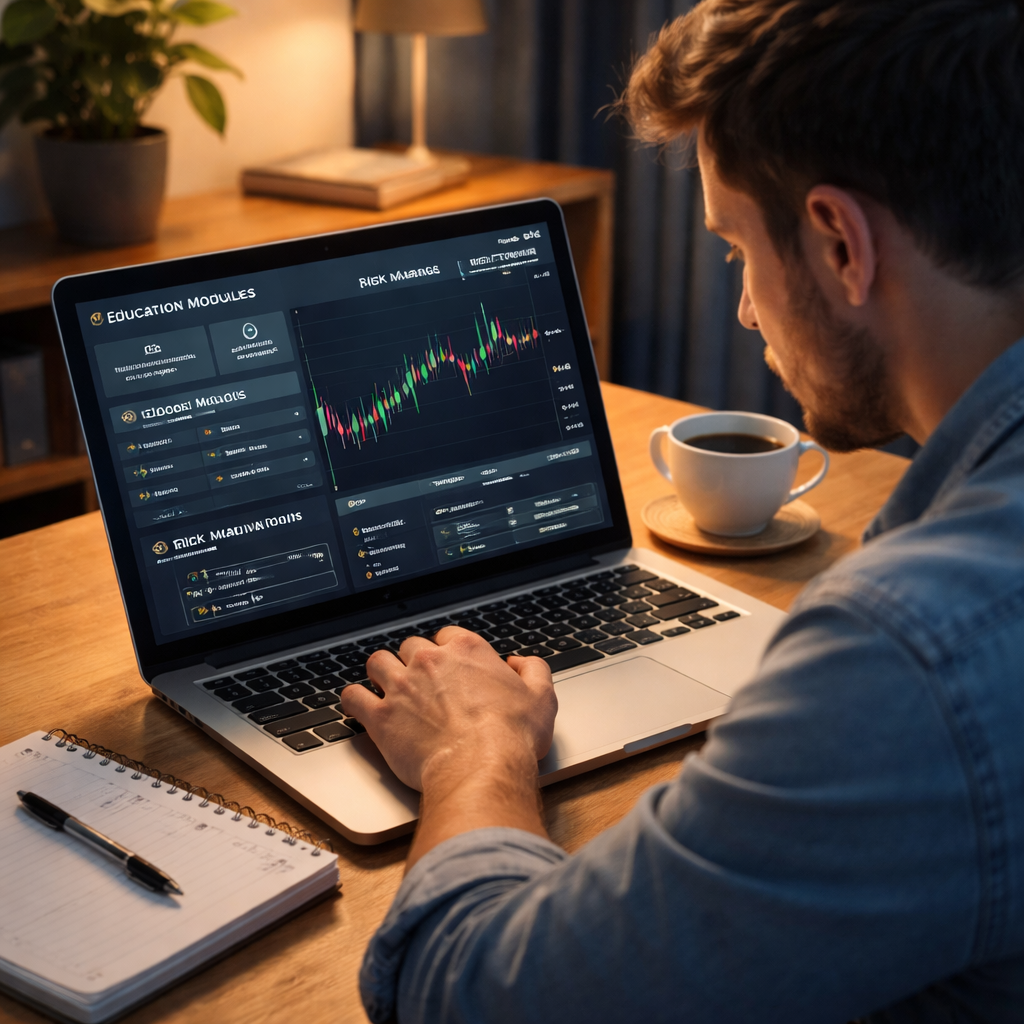
After watching, picture a clean, well‑lit desk with a laptop open to a broker’s platform, a notebook with a checklist, and a steaming cup of coffee – that’s the environment we recommend for a focused, beginner‑friendly research session.

Core comparison: evaluating brokers for beginners (table included)
Let’s be practical: when you’re new to forex, the goal isn’t to find the slickest platform but to find a safe doorway into real trading. You want clarity, not hype, and you want to start with conditions that protect your small starting capital.
Before you fund anything, focus on the basics: regulation, transparent pricing, a risk-conscious demo, solid educational support, and sensible leverage. These aren’t sexy features, but they’re the guardrails that help a beginner learn with confidence.
How you test matters as much as what you test. Use this structured approach to compare brokers side by side, then put each candidate through a real-time demo before committing funds.
What to test in a beginner-friendly broker
Regulation and client funds protection should be non-negotiable. Look for licensed entities with segregated accounts and clear disclosures about where money sits. If a broker can’t show a regulator or a reliable guarantee, that’s a red flag.
Demo quality matters. A demo that mirrors real market conditions and lets you practice all order types you’ll use live is priceless. Don’t settle for a sandbox that’s missing features or liquidity gaps during news events.
Pricing transparency is essential. Spreads, commissions, withdrawal costs—list them and verify how they’re calculated, especially in volatile moments. Hidden fees eat tiny accounts fast, and you’ll thank yourself later for spotting them early.
Education and toolset should be practical, not just marketing. Favor brokers that structure content by beginner levels and offer guided practice so you can track your progress alongside real trades. A strong demo plus a learning path is worth its weight in learning hours.
Leverage and risk controls should be clearly explained. Start with conservative defaults and capped positions so you don’t blow your starting capital while you’re still learning. Negative balance protection helps shield you during sharp moves.
Customer support matters on days when you’re stuck. Easy access, patient guidance, and hours that fit learning schedules save you from panicking on a volatile day.
In FX Doctor’s experience, this approach keeps learning steady. It also lines up with our recommendation to begin with education-first brokers that offer robust demos and clear risk disclosures. So, what should you test next in your live demo?
For a broader view, you can explore beginner broker roundups from trusted educational sources like Best Brokers for Beginners overview.
| Feature | Broker A (illustrative) | Broker B (illustrative) | Broker C (illustrative) |
|---|---|---|---|
| Regulation & safety | Tier-1 license; segregated funds | Tier-2 license; client protection | Tier-1 license; segregated accounts |
| Demo availability | Real-money mirror demo with 100k funds | Limited demo access | Full-featured demo with all orders |
| Pricing transparency | Spreads & commissions disclosed | Variable spreads; clear charges | Transparent withdrawal costs |
| Educational resources | Structured beginner path | Video tutorials & glossary | Live webinars & practice exercises |
| Default leverage | Conservative defaults | Moderate leverage; risk warnings | Conservative limits |
Bottom line: your first broker should feel approachable, not intimidating, and should give you a safe doorway into real trading. It’s about starting small, learning deliberately, and growing your toolkit as you gain confidence. Ready to test with a real demo and compare side by side?
In our experience, the best starting path is to prioritize education and a robust demo that mirrors live conditions. Use the table as a live checklist, not a one-and-done verdict, and adjust as your learning curve shifts.
Section 4: Platform usability, account types, and funding options for beginners
Let’s cut to the chase: the best forex brokers for beginners aren’t the flashiest; they’re the ones that feel approachable, offer a true learning path, and let you grow without fighting the UI.
For beginners, the platform should be intuitive, with clean navigation, obvious labelling, and a demo that mirrors real trading conditions. You’re not testing every feature at once—just the basics: placing a market order, setting a stop, and switching between a couple of timeframes.
Run a quick test: execute a small market order, place a stop, and check how your chart responds to a price move. If you’re lost after two clicks, that’s a red flag. A good beginner-friendly broker makes these steps obvious, not a scavenger hunt.
Platform usability: start with the cockpit, not a cluttered dashboard
For beginners, the platform should be intuitive, with clean navigation, obvious labelling, and a demo that mirrors real trading conditions. You’re not testing every feature at once—just the basics: placing a market order, setting a stop, and switching between a couple of timeframes.
Run a quick test: execute a small market order, place a stop, and check how your chart responds to a price move. If you’re lost after two clicks, that’s a red flag. A good beginner-friendly broker makes these steps obvious, not a scavenger hunt.
Account types: what to look for when you’re building a learning routine
Most beginner-friendly brokers offer micro or mini accounts or a genuine demo account. The idea is small position sizing and a low barrier to entry. Look for a low minimum deposit, sensible margin requirements, and a clearly stated default leverage you can adjust as you gain confidence.
Also verify risk protections: is there negative balance protection? Are there max trade sizes for new accounts? These controls prevent you from blowing a tiny account in a single volatile day.
Funding options: how to fund without surprises
Funding speed and transparency matter. Common methods include bank transfer, card payments, and popular e-wallets. Bank transfers are typically slower but cheaper; cards or wallets are faster—watch for processing fees or withdrawal policies later.
Before you fund, check withdrawal policies: minimum withdrawal, processing times, and required verification. You want to avoid a situation where you can deposit quickly but wait weeks to retrieve profits or capital.
- Look for flexible funding methods that fit your setup as a beginner—you don’t want to be forced into one option.
- Verify identity quickly so you can move from demo to live trading smoothly.
- Ask about fees on deposits and withdrawals, and whether there are monthly maintenance costs.
From our experience at FX Doctor, the best starting path is education-first brokers with robust demos and clear disclosures. This approach keeps you in control as you learn. Does this feel doable for your learning pace?
For broader context, top resources on broker reliability and features can be helpful: ForexBrokers.com: U.S.-regulated forex brokers explained and Investopedia: Best brokers for forex trading.
What we recommend for beginners
Start with a demo, pick a micro account or a very small live account, and choose a broker that emphasizes education and clarity. Move gradually from demo to live trading as your confidence grows, not all at once.
Be mindful of currency conversions and funding implications. Some brokers offer multi-currency accounts, while others convert on deposit—watch for hidden costs that can creep in over time.
Quick decision checklist
- Is the platform easy to navigate for a true beginner?
- Do you see a clear micro account or demo option?
- Are funding and withdrawal options flexible and clearly priced?
- Is there a realistic default leverage with straightforward risk disclosures?
- Is there solid customer support with learning resources?
Why this matters: when you’re learning, friction costs and confusing interfaces steal time and confidence. Keep it simple, test thoroughly, and choose a path that actually supports your learning pace. And yes—our focus remains on education-first brokers that align with this mindset.
Section 5: Education tools, risk management features, and demo accounts
When you first log into a broker’s platform, the learning curve can feel like stepping onto a moving treadmill – you’re trying to keep up while the belt never stops. That’s why a solid suite of education tools, built‑in risk controls, and a realistic demo account are non‑negotiable for anyone hunting the best forex brokers for beginners.
Most brokers bundle their teaching material into three buckets: self‑paced courses, live webinars, and on‑platform guides. A good beginner‑friendly broker will organise these into a clear learning path, starting with “Forex 101” concepts and graduating to “position‑sizing basics.” Look for short video lessons that explain pips, spread, and leverage in plain language – we’ve seen learners click away from hour‑long webinars, but a 5‑minute animated clip keeps the brain engaged.
Interactive tutorials that feel like a conversation
Imagine you’re sitting at a kitchen table with a friend who’s just shown you how to brew coffee. You’d expect step‑by‑step instructions, a chance to ask questions, and a quick recap at the end. The same idea applies to broker education portals. Look for:
- Quizzes after each module that give instant feedback.
- Practice‑trade widgets that let you place a mock order without leaving the lesson.
- Glossaries that pop up definitions when you hover over jargon.
These interactive features turn passive reading into active learning, and they’re often highlighted in a broker’s top risk‑management strategies page, where the same platform explains how to set stop‑losses and take‑profits directly from the tutorial screen.
Built‑in risk management features you can actually use
Risk control isn’t just a buzzword – it’s the safety net that keeps a tiny account from vanishing overnight. The most useful tools for beginners include:
- Stop‑loss orders: pre‑define the maximum loss you’re willing to take on each trade.
- Take‑profit orders: lock in gains automatically once the price hits your target.
- Guaranteed stops: a premium feature that prevents slippage during fast‑moving news events.
- Negative‑balance protection: ensures you can’t owe the broker more than your deposited capital.
Real‑world example: Jane, an aspiring trader from Belgrade, opened a demo account with a 1:30 leverage limit. She set a €50 stop‑loss on a EUR/USD trade that moved against her by 70 pips during a surprise ECB announcement. Because the broker offered guaranteed stops, her loss stayed at exactly €50 instead of spiralling to €120 due to slippage. That kind of precision is what separates a “nice‑to‑have” feature from a must‑have one.
Demo accounts – the sandbox you can’t skip
A demo account is more than a free playground; it’s a risk‑free rehearsal that mirrors live market conditions. The best brokers give you virtual funds (often £10,000 or €10,000) and let you trade the same instruments, spreads, and margin requirements you’ll face with real money. According to the comprehensive demo‑account guide, a quality demo reproduces order‑execution latency and even includes occasional simulated slippage, so you don’t develop a false sense of perfection.
Here’s a quick three‑step routine to get the most out of a demo:
- Set up a trading plan – write down entry, stop, and take‑profit levels before you click “Buy.”
- Test each order type – place market, limit, and stop orders on the same pair to see how the platform reacts.
- Review the trade journal – most demo platforms generate a log of every simulated trade; analyse win‑rate, average risk‑reward, and any emotional notes you recorded.
When the journal shows a consistent 1:2 or better risk‑reward ratio, you’ve built a habit that can survive the jump to a micro‑account. If the numbers look shaky, adjust your position sizing or tighten your stops before you ever deposit real cash.
One more tip: treat the demo as a “pre‑flight checklist.” Before you fund a live account, run a 30‑day trial where you only trade with a maximum of 2% of your virtual balance per position. This mirrors the risk‑percentage rule we teach in our core guide and gives you a realistic feel for drawdown limits.
Section 6: Regulatory landscape, security, and common beginner pitfalls
When you finally pick a broker, the excitement can turn into a nightmare if you ignore the fine print. You’ve probably felt that knot in your stomach wondering, “Is my money really safe?” Let’s pull back the curtain on what really protects you and what traps beginners fall into.
Why regulation matters
Think of a regulator as the landlord of the trading world – they set the rules, do regular inspections, and can evict a broker that breaks the lease. In the UK, the Financial Conduct Authority (FCA) is that landlord. In the U.S., the National Futures Association (NFA) plays the same role. The U.S. regulatory framework for forex brokers explains how these bodies protect individual investors by demanding segregation of client funds and limiting leverage for retail traders.
If a broker can’t point you to a licence number or a regulator’s website, that’s a red flag louder than a fire alarm.
Key regulators to look for
- FCA (UK) – strong client‑money protection, compensation scheme up to £85,000.
- CySEC (Cyprus) – EU‑wide passport, but check if they offer negative‑balance protection.
- ASIC (Australia) – rigorous capital‑adequacy rules, useful if you trade in AUD.
- NFA (U.S.) – detailed verification system called BASIC; you can look up a broker’s NFA ID.
Regulators differ in how they handle leverage. The FCA caps retail leverage at 30:1 for major pairs, while some offshore licences let you see 500:1 – tempting, but dangerous for a newcomer.
Security basics you shouldn’t ignore
Even a fully regulated broker can be hacked. Look for two‑factor authentication (2FA) and encrypted data transmission (HTTPS). If a platform stores passwords in plain text, you’ll hear about it in a headline before you even notice.
Also, check whether the broker offers negative‑balance protection. It means the worst you can lose is the money you deposited – a lifesaver when a sudden news spike hits.
Common beginner pitfalls and how to dodge them
1. Chasing high leverage. It feels like getting a super‑powered car, but you’ll spin out faster than you can brake. Start with the default leverage your regulator allows and only increase after you’ve proven a consistent risk‑reward ratio.
2. Ignoring fee transparency. Some brokers hide commission in the spread, others slap a “withdrawal fee” you only discover after you’ve earned a profit. Keep a simple spreadsheet: spread, commission, rollover, withdrawal cost. If the total feels vague, walk away.
3. Skipping the demo‑to‑live transition plan. Many beginners jump straight from a perfect‑paper demo to a live account, assuming the market will behave the same. In reality, slippage, latency, and emotional pressure change the game. Run a 30‑day “pre‑flight checklist”: trade no more than 2% of your demo balance per position, record every trade, and review your win‑rate.
4. Overlooking client‑fund segregation. If a broker mixes its own money with yours, a bankruptcy could mean you lose everything. Regulated brokers must keep client money in separate, reputable banks.
5. Forgetting to secure your own account. Using the same password across multiple sites, or skipping 2FA, opens a back door for thieves. Treat your trading login like your online banking.
Quick checklist for the “best forex brokers for beginners”
- Regulated by FCA, CySEC, ASIC, or NFA (verify licence ID).
- Offers negative‑balance protection and segregated client accounts.
- Provides 2FA and SSL‑encrypted connections.
- Clear, upfront fee schedule – no hidden commissions.
- Default leverage ≤30:1 for major pairs.
- Demo account mirrors live spreads, includes stop‑loss and take‑profit tools.
Run through this list before you click “Open Account.” If you can answer “yes” to each point, you’ve likely found a broker that won’t trip you up in the first weeks of trading.
Remember, the goal isn’t just to find a platform that looks slick; it’s to pick a partner that lets you learn safely. By focusing on regulation, security, and those sneaky beginner traps, you set a solid foundation for a trading journey that’s more about skill‑building than surviving a crash.
FAQ
What should I look for when choosing the best forex brokers for beginners?
First off, think about safety. A broker that’s regulated by a reputable authority (FCA, CySEC, ASIC, NFA) gives you a legal safety net. Next, check the fee transparency – low spreads, no hidden commissions, and clear withdrawal costs are a must. You’ll also want a demo that mirrors live conditions, easy‑to‑use platforms, and solid educational resources. Finally, make sure the broker offers negative‑balance protection and segregated client accounts so your money stays where it belongs.
How important is regulation for a beginner broker?
Regulation is the cornerstone of trust. Without it, there’s no guarantee that client funds are kept separate or that the broker follows strict capital‑adequacy rules. For a newcomer, a regulator acts like a landlord: they inspect, enforce rules, and can shut down a shady broker. Look for a licence number on the broker’s site and verify it on the regulator’s database. If you can’t find that info, walk away – it’s not worth the risk.
Do I need a large deposit to start with a beginner‑friendly broker?
Not at all. Many of the best forex brokers for beginners let you open an account with as little as $5‑$10. The idea is to let you trade micro‑lots, so you’re not blowing your bankroll on a single mistake. Start small, treat each trade as a learning experiment, and only add more capital once you’ve proven a consistent risk‑reward pattern in your demo. Small deposits also make it easier to test the broker’s withdrawal process.
Are demo accounts really necessary, and how should I use them?
Think of a demo as a rehearsal before the real performance. It gives you a risk‑free sandbox that replicates live spreads, margin, and order execution. Use it to practice placing market, limit and stop orders, and to test your trading plan. Set a rule: never risk more than 2% of the virtual balance per trade, just like you would with real money. Review your trade journal after each session – note win‑rate, average risk‑reward, and any emotional hiccups.
What common pitfalls should I avoid with the best forex brokers for beginners?
One big trap is chasing high leverage. It feels exciting, but it magnifies losses as fast as it does gains. Another is ignoring hidden fees – some brokers embed commissions in the spread or charge withdrawal fees you only discover later. Skipping the demo‑to‑live transition plan is also risky; the market behaves differently when real money is on the line. Finally, don’t forget to secure your account with 2FA and a strong, unique password.
How can I assess the fee structure before opening an account?
Start by looking at the broker’s “Pricing” or “Fees” page – they should list spreads for major pairs, any commission per lot, and withdrawal costs. Compare these numbers across a few brokers; a spread of 0.8 pips on EUR/USD with zero commission is generally better than a 0.3 pip spread that hides a $5 commission per trade. Also, check for swap or rollover fees if you plan to hold positions overnight.
Is high leverage ever a good idea for a new trader?
High leverage can feel like a shortcut, but for a beginner it’s more like a slippery slope. With 500:1 leverage, a 1% move against you wipes out a large chunk of a tiny account. Instead, stick with the default leverage your regulator allows – usually 30:1 for major pairs. As you gain confidence and a proven risk‑management track record, you can consider modestly increasing leverage, but never jump straight to the max.
Conclusion
We’ve walked through what makes the best forex brokers for beginners feel like a friendly guide rather than a confusing maze.
First and foremost, safety wins. A broker regulated by the FCA, CySEC, ASIC or NFA gives you that landlord‑like protection, segregated client funds, and negative‑balance safeguards that keep your tiny account from disappearing overnight.
Next up, pricing clarity saves you from hidden fees that eat your profits. Look for transparent spreads, zero hidden commissions and clear withdrawal costs – a 0.8‑pip spread with no commission usually beats a tighter spread that sneaks in a $5 fee per trade.
The demo environment is your rehearsal stage. A realistic demo that mirrors live spreads, order execution and risk‑management tools lets you test strategies without the emotional pressure of real money.
Leverage should stay modest until you’ve proven a consistent risk‑reward ratio. Sticking with the regulator’s default – often 30:1 for major pairs – gives you room to learn without the slippery‑slope effect of 500:1.
So, what’s the next step? Grab a broker that ticks the safety, pricing, demo and leverage boxes, open a micro‑account, and run a 30‑day trial where you risk no more than 2% of your virtual balance per trade. When the numbers look solid, you’ll be ready to transition confidently to live trading.
Appendix: Glossary and deeper reading
Before you dive back into broker comparisons, let’s make sure every term you’ve seen feels like a friend, not a mystery.
Glossary quick‑fire
- Spread – the gap between the bid and ask price. Think of it as the broker’s “service fee” you pay every time you trade.
- Pip – the smallest price move a currency pair can make. For most majors it’s 0.0001; for JPY pairs it’s 0.01.
- Lot – the standard size of a trade. A “standard lot” is 100,000 units, but beginners usually start with micro‑lots (1,000) or mini‑lots (10,000).
- Leverage – a multiplier that lets you control a larger position with a smaller deposit. 30:1 means €30 of market exposure for every €1 you put down.
- Margin – the amount of money you must keep in your account to sustain an open position. It’s basically a collateral deposit.
- Negative‑balance protection – a safety net that ensures you can’t owe the broker more than you deposited.
- Segregated client funds – money kept in a separate bank account, away from the broker’s operating cash.
- Demo account – a risk‑free sandbox that mirrors live spreads and margin rules. Use it like a rehearsal before the real performance.
- Risk‑reward ratio – the relationship between your potential profit and potential loss on a trade. A 1:2 ratio means you aim to earn twice what you risk.
Got a term that still feels fuzzy? Jot it down and revisit this list whenever you hit a new platform.
Deeper reading for the curious
We’ve covered the basics, but the learning curve never truly flattens. Here are a few places you can explore next, all written in the same no‑fluff style you’ve come to expect.
First, check out our “Comprehensive Forex Trading Guide for Beginners and Beyond.” It walks you through market mechanics, chart basics, and how to build a solid trading plan without overwhelming you with jargon.
If you’re itching for concrete strategies, the “Forex Trading Strategies: 5 Proven Approaches for Beginners and Beyond” breaks down trend‑following, breakout, and carry‑trade ideas in bite‑size steps.
When you feel ready to formalise your approach, the “Forex Trading Plan Template: A Step‑By‑Step Guide for Beginners” gives you a printable worksheet to capture entry criteria, stop‑loss levels, and daily performance reviews.
And for those who still wonder, “how do I actually read a chart?” our “How to Read Forex Charts: A Step‑By‑Step Guide for Beginners” uses everyday metaphors – think of support as a floor and resistance as a ceiling – to demystify candlesticks and trend lines.
Each of these resources is free, ad‑free, and designed for people who prefer a coffee‑shop chat over a sales pitch. Bookmark the pages, set a weekly “reading hour,” and watch the concepts click together.
So, what’s the next move? Pick one of the deeper reads, spend 15‑20 minutes a day, and you’ll start seeing the market’s language turn from gibberish into a conversation you actually enjoy.
[…] But the real charm is the customizable workspace – you can drag‑and‑drop widgets, set up multi‑monitor layouts, and save templates for different strategies. It feels a bit like arranging your own trading cockpit, which is something we often highlight in our best forex brokers for beginners guide. […]
[…] a deeper dive into picking the right first broker, check out our guide Best forex brokers for beginners: A 2026 guide …. It breaks down fees, regulation, and tools in plain […]
[…] that offers webinars, tutorials or a solid blog helps you grow. For a beginner‑focused list, see best forex brokers for beginners on FX […]