

Ever opened a blank PDF and felt the weight of your trading history staring back at you? That’s the moment many aspiring traders hit – the forex trading journal pdf feels both essential and intimidating.
Think about the last trade you made: a EUR/USD breakout that fizzled out, a surprise news spike, or a perfectly timed pullback. If you couldn’t write down the entry price, stop‑loss, emotions, and why you took the trade, you’ll repeat the same mistakes. A well‑structured journal captures those details, turning raw data into actionable insights.
Here’s a quick way to get started: 1) Download a ready‑made journal template; 2) Fill in the basics – date, pair, timeframe, and trade rationale; 3) After the trade closes, note the outcome, P/L, and a brief reflection on what you learned. Over time, colour‑code wins versus losses and spot patterns in your decision‑making.
In our experience, traders who consistently log each trade see a 20‑30% improvement in trade‑selection consistency after a few weeks. That’s not magic – it’s the power of systematic review. For a hands‑on example, check out our Forex Trading Journal Template: A Step‑by‑Step Blueprint for Accurate Record Keeping, which walks you through every field you should track.
Real‑world scenario: Maria, a part‑time trader, began using the template alongside a daily 15‑minute review session. She discovered she was over‑trading during the London session, leading her to adjust her schedule and cut daily losses by half. Simple habit, big impact.
To make journalling a habit, set a reminder right after your trading window. Use a focused mindset – maybe sip a cup of tea and listen to soft music. If you need a little mental boost while you write, a quality focus‑enhancing supplement can help keep your attention sharp.
Finally, treat the PDF as a living document. Update the layout as you evolve, add sections for risk‑reward analysis, and periodically export a summary to spot long‑term trends. The more personal you make it, the more valuable it becomes.
TL;DR
A forex trading journal pdf lets you capture every trade detail—entry, exit, rationale, and emotions—so patterns emerge and you can fine‑tune your strategy with data‑driven confidence.
Start today by filling a simple PDF after each session, colour‑coding wins versus losses, and reviewing weekly to spot the habits that boost consistency.
Step 1: Choose the Right Forex Trading Journal PDF Template
Choosing a template isn’t glamorous, but it’s foundational. If your forex trading journal pdf is missing the fields you actually use after a session, you’ll end up guessing what happened and repeating small mistakes. So, what should you look for from the start?
First, the core fields matter. You want a template that captures date, currency pair, timeframe, entry price, exit price, position size, stop loss, take profit, and risk/reward. But don’t stop there. Add sections for the trade rationale, the emotions you felt, and the key lesson learned. Those details are where patterns start to reveal themselves, not just the numbers.
Second, layout and usability. A clean, consistent layout saves you minutes each day and reduces friction when you’re journaling in a busy market. Prefer templates with dropdowns for common reasons (like breakout, pullback, or news spike) and auto-calculated P/L and risk metrics. And yes, colour coding helps—green for wins, red for losses—without turning the page into a traffic light.
Third, adaptability. Your trading path isn’t linear, so your journal shouldn’t be either. Look for a forex trading journal pdf that lets you add fields for risk-reward analysis, trade setup type, and notes on the market context (session timing, liquidity, volatility). A good template grows with you, rather than forcing you into a rigid structure.
What makes a forex trading journal pdf effective?
- Clear, consistent fields that match your actual workflow
- Space for emotion and psychology notes so you learn from behavior, not just price
- Pre-built sections for post-trade reflection and actionable takeaways
- Simple customization options so you can evolve the layout as you improve
- Visual cues like colour coding and checkboxes to speed review
Does this actually work in practice? In our experience, templates that balance structure with flexibility help beginners capture the full story of each trade, then gradually reveal the patterns they need to refine their approach.
How do you test a template quickly? Try a 7-trade sprint: fill it out for seven recent trades in one sitting, focusing on readability and completeness. If you can breeze through the seven trades and still feel you learned one concrete takeaway, you’re on the right track.
To help you gauge practical value, watch this quick overview video that highlights the features to prioritize in a journal pdf—and what to ignore when you’re just starting out.
So, if you’re ready, test a few templates side by side and pick the one that feels simplest to keep up with after each trading session. The right choice isn’t about perfection—it’s about consistency and the ease of turning data into insight.
In the next part, we’ll dive into how to customize your chosen template without breaking its flow—keeping you focused on learning and improvement rather than admin.

Step 2: Customize the PDF to Fit Your Trading Style
Nice—you’ve got a template that fits your workflow. Now it’s time to make it yours. In 2026, your forex trading journal pdf should flex with how you actually trade, whether you’re logging rapid day trades or methodical swing setups.
Your journal isn’t just a log; it’s a mirror of your decision process. The more you tailor the fields to your questions after a trade, the faster you’ll spot what’s really guiding your outcomes.
Define your essential fields
Start with the basics, then add what matters to your style. Here’s a practical starter list you can adapt:
- Date and UTC time
- Currency pair or asset
- Direction (buy/sell)
- Entry price and exit price
- Stop loss, take profit, and position size
- Realized P/L
- Notes and a quick emotional snapshot
- Risk‑reward ratio and setup type
- Trade duration or time in trade
- Market context (session, news, volatility)
If you run multiple trading styles, you might keep separate pages or sections for each style. This keeps comparisons clean and reduces cognitive load when you review your history.
To customize effectively, think about what you actually need to answer after each trade. Do you want to see how emotion correlated with outcomes? Do you want a quick read of risk metrics at a glance? Build those prompts into the template so you don’t have to hunt for them later.
Templates like AFFiNE trading journal template show how you can hide or add sections without breaking the layout, keeping the file visually tidy while staying flexible. AFFiNE trading journal template illustrates how modular sections let you grow your journal as your strategy evolves.
And if you crave automation, consider how tools like FX Replay streamline data capture. An automated journal can log trades and compute metrics so you focus on learning, not bookkeeping. FX Replay’s automated journal is a helpful reference for what that efficiency looks like in practice.
So, what should you do next? Sketch your fields on a scrap sheet, then test them on a recent trade to confirm the flow feels natural. A messy template is a distraction; a clean one accelerates your learning.
Remember: your goal is consistency and clarity. A well‑designed PDF that aligns with your process helps you read a row in seconds and pull a real insight from what happened.
Practical layout tweaks that move the needle
Keep the most-used fields front and center. Move secondary fields to a collapsible or secondary page if your tool supports it. Use color only for immediate cues—green for profitable trades, red for breaches of your rules. Too much color hides the point.
Use consistent units and formats. If you’re tracking pip values for forex, include a dedicated column and a small note about how you convert to your account currency. This reduces calculation drift when you review weekly or monthly results.
Finally, build a quick testing ritual. After you log a real trade, spend a minute scanning the row: Can you read the risk, the rationale, and the outcome in one glance? If not, refine the fields or the layout until that becomes true.
Checklist before you settle on a design
- Does the template capture essential fields (date, pair, entry, exit, risk, notes)?
- Can you hide or add sections without breaking the layout?
- Are profit/loss totals automatic or easy to sum?
- Is the design printable on standard A4/Letter without truncation?
- Did you test it with at least one real trade and feel confident reading the row in seconds?
When you answer yes to all, you’ve got a forex trading journal pdf that will grow with you and turn each trade into a data point you actually learn from.
Step 3: Record Trades Consistently – How to Fill the PDF Daily
Okay, you’ve got a template that feels right – now the real habit starts. The moment you finish a trade, you don’t want to wait an hour, a day, or worse, forget the details entirely. That’s why we treat the forex trading journal pdf like a post‑trade “to‑do” that you knock out in under two minutes.
1. Create a micro‑ritual you can stick to
Pick a cue that already exists in your schedule. Maybe it’s the sound of your computer powering down, the last sip of tea, or the click of the “Close Position” button. As soon as that cue fires, open the PDF and pull up the blank row for today.
Why does a cue matter? Because the brain links the habit to something concrete, and research shows a single, consistent trigger boosts repeatability. If you’re a night‑owl, set an alarm for 8 p.m. – that way you’re not scrambling at 11 p.m. when fatigue clouds your memory.
2. Fill the essential columns first
Start with the data you can copy‑paste from your broker: date (UTC), currency pair, direction, entry price, stop‑loss, take‑profit, and position size. Those numbers are objective, so you won’t waste mental energy debating them later.
Next, add the realised P/L. Most platforms let you export the trade’s net result; copy it straight into the PDF. If you prefer manual entry, jot the pip value first – it’s a quick sanity check before you calculate the dollar amount.
3. Capture the “why” in a sentence or two
Here’s where the journal becomes a learning tool. Ask yourself: what market condition sparked the trade? Was it a London breakout, a news release, or a confluence of support‑resistance levels? Write a short phrase like “London session breakout on 1.0835” or “Fed‑watch news spike.”
Then, note a quick emotional snapshot – “felt a little nervous, but confident in the setup.” Keeping it brief prevents the habit from feeling like a chore.
4. Use a quick‑check prompt
Before you close the PDF, glance at the row and ask: can I understand the risk, the rationale, and the outcome in a single glance? If anything feels fuzzy, add a tiny note. Over time you’ll notice patterns, like “most losses happen when I skip the news filter.”
Pro tip: colour‑code the row as you fill it – green for a win, red for a loss. The visual cue reinforces the habit without adding extra steps.
5. Keep a reference template handy
If you ever feel unsure about the column order, pull up a sample forex trading journal pdf template. Seeing a filled‑in example reminds you of the exact fields you need, and you can copy the layout into your own file.
6. End with a one‑minute review
Once the row is complete, spend 60 seconds scrolling through the day’s trades. Look for any recurring theme – maybe you’re over‑trading during the New York open or consistently missing the stop‑loss when volatility spikes. Jot a single action item for tomorrow, like “tighten stop‑loss by 5 pips on high‑vol days.”
This tiny review turns a static record into a living feedback loop.
Quick consistency checklist
- Do you open the PDF the same minute you close a trade?
- Are the core numbers (date, pair, entry, SL, TP, size) entered first?
- Do you write a one‑sentence market rationale?
- Is there a brief emotional note?
- Do you colour‑code the result and run a 60‑second review?
Hit all five and you’ve built a solid daily habit. The next time you glance back at a month’s worth of rows, the patterns will jump out – and that’s the real power of a consistently filled forex trading journal pdf.
Step 4: Analyze Your Performance with Data Tables
Now that you’re filling the forex trading journal pdf every day, the next logical step is to turn those rows into a picture you can actually learn from. A data table does exactly that – it pulls the noise out and lets you see the story at a glance.
Does looking at a spreadsheet feel a bit… intimidating? It doesn’t have to be. Think of a table as a tidy notebook where each column is a question you keep asking yourself: “How often am I winning?” “What’s my average risk‑reward?” “Which session is costing me the most?”
Why a table matters
When you scroll through a month of rows, patterns are hidden in the weeds. A table aggregates the weeds into a few tidy rows, so you can spot trends without squinting. Academic work on forex system performance shows that summarising trade outcomes in a structured table dramatically improves the reliability of any subsequent analysis research on forex performance evaluation.
In plain English: the table is your shortcut from “I think I’m losing money” to “Here’s exactly where the loss is coming from”.
Build a simple performance table
Start with the columns you already have in your journal – date, pair, direction, entry, exit, P/L, risk‑reward, session. Add three summary rows that will sit at the bottom of each month:
| Metric | Formula | What it tells you |
|---|---|---|
| Win Rate | Winning trades ÷ Total trades × 100% | Are you winning more than you’re losing? |
| Average P/L per Trade | Sum of P/L ÷ Total trades | How much does a typical trade earn (or lose)? |
| Average Risk‑Reward | Sum of RR ratios ÷ Winning trades | Is your reward justifying the risk you take? |
Pop those numbers into the bottom of your forex trading journal pdf – most PDF editors let you add a small “summary” section on a new page. If you prefer a spreadsheet, copy the data over; the math stays the same.
Interpret the numbers
Now the fun part: reading the table. A win rate of 55% looks decent, but if your average risk‑reward is 1:0.5, you might still be in the red. Conversely, a 40% win rate can be perfectly fine if each winner makes twice what a loser loses.
Look at the “session” column next to the win rate. Maybe the London session shows a 30% win rate while New York is 60%. That’s a clear signal to adjust your trading schedule or tighten risk during the weaker session.
Want a concrete example? The scribd forex trade‑journal template includes a pre‑built summary table that you can copy straight into your PDF Forex Trade Journal Template on Scribd. It’s a handy reference if you’re not sure how to lay out the rows.
When you see a metric drift – say your average risk‑reward slipping from 2.0 to 1.3 over two weeks – treat it as a red flag. Pause, review the underlying trades, and ask yourself if you’re over‑trading, missing stop‑losses, or simply facing a tougher market phase.
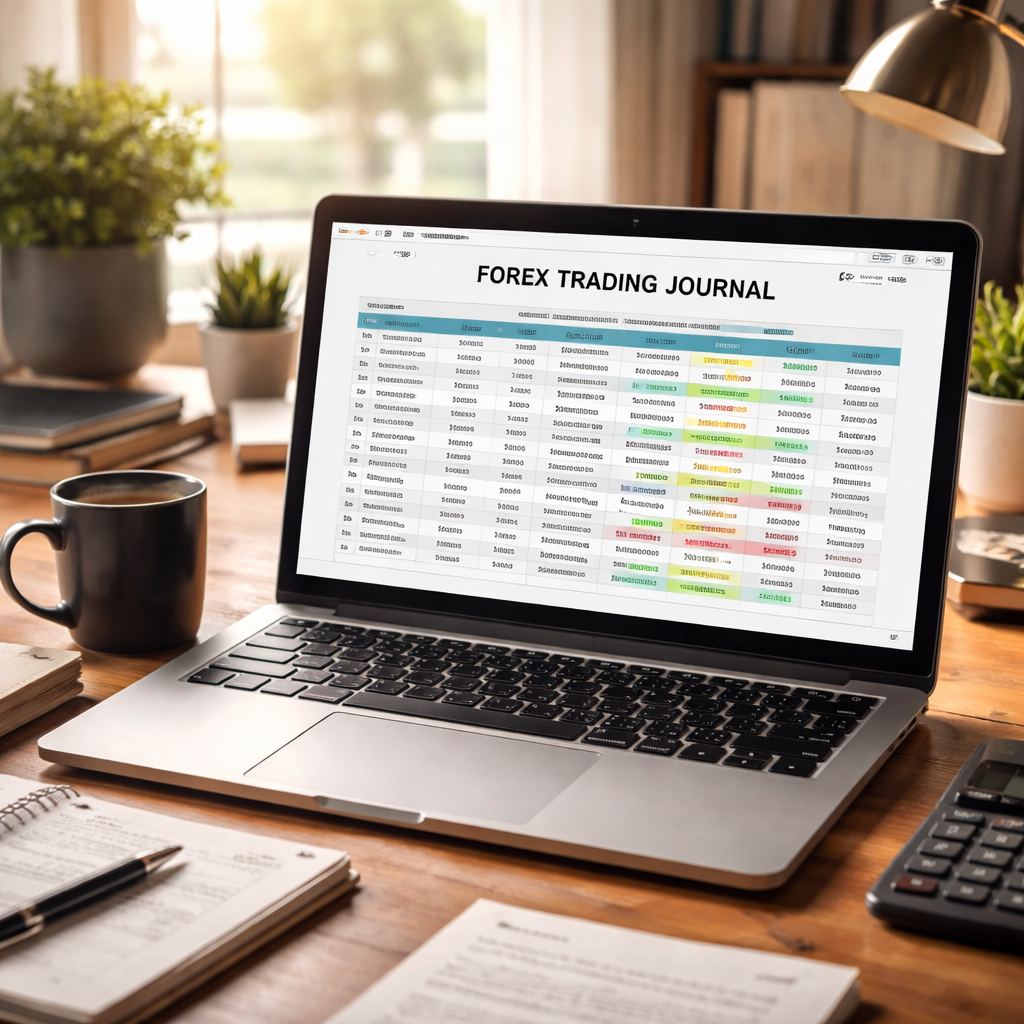
Quick sanity‑check checklist
- Did you calculate win rate, average P/L, and risk‑reward for the last 30 days?
- Do the numbers line up with the feeling you get when you glance at your raw rows?
- Is any session consistently underperforming?
- Have you added a “notes” column to capture why a metric moved?
If you can tick all four, you’ve turned a static log into a living performance dashboard. That’s the power of a well‑designed table – it forces you to ask the right questions and gives you concrete answers you can act on tomorrow.
Step 5: Review and Refine – Continuous Improvement Cycle
Now that your forex trading journal pdf is filling up with rows, the real magic happens when you start to look at the data with fresh eyes. It’s one thing to record a trade; it’s another to turn that record into a decision‑making lever.
Schedule a recurring review window
Pick a specific time slot – maybe every Sunday evening after you’ve closed the New York session – and treat it like a non‑negotiable meeting. When the alarm goes off, open the PDF, grab a notebook, and dive in. Consistency beats intensity: a 15‑minute weekly check beats a frantic quarterly scramble.
Step‑by‑step review checklist
- Sort the last 30 days by win/loss colour. Do the greens cluster around a particular session or setup?
- Calculate three core metrics: win rate, average P/L per trade, and average risk‑reward. If any of them drift more than 10 % from your baseline, flag it.
- Read the “notes” column for each flagged trade. Ask yourself: was I rushing? Was the market volatile? Did emotions cloud the entry?
- Write one actionable tweak for the next week – for example, “tighten stop‑loss by 5 pips on high‑volatility news candles.”
Doing this every week creates a feedback loop that keeps you honest and lets small adjustments compound over time.
Real‑world example: the London‑session slip
Maria, a part‑time trader we mentioned earlier, noticed that during a two‑week stretch her win rate in the London session dropped from 58 % to 32 %. By pulling the notes column she saw a pattern: most losing trades were entered without waiting for the 30‑minute breakout confirmation. Her refinement? Adding a “confirmation tick” checkbox to the PDF and refusing to check the box unless the price stayed above the breakout level for at least 30 minutes. After a month the win rate climbed back to 55 % and her average risk‑reward improved from 1.4 : 1 to 1.8 : 1.
Use data tables to spot drift early
Remember the simple performance table from Step 4? Keep a live version on a separate sheet and update it after each weekly review. When you see the risk‑reward ratio sliding, that’s a red flag before the numbers in your P/L column even turn negative. ActivTrades outlines why a professional trading journal needs consistent metrics, and they’re right – the sooner you catch a drift, the cheaper the correction.
Layer in psychological insight
Beyond numbers, scan the emotional snapshots you added after each trade. Do you notice “nervous” tags clustering around high‑impact news releases? If so, schedule a brief mental‑reset routine before you trade those sessions – a minute of deep breathing, a quick glance at your risk parameters, then a deliberate entry.
Automation shortcuts (without abandoning the PDF)
If you’re comfortable with a spreadsheet, link the PDF columns to a Google Sheet that automatically calculates the three core metrics. The sheet can email you a summary every Sunday, so you never miss the review window. SureSwift Capital outlines habit‑building tips that work for traders of any level, and the “auto‑import” mindset fits right into that framework.
Refine the template itself
After each review, ask yourself: is there a column I never fill? Is there a piece of data that keeps popping up in the notes? Add a new field or hide an unused one. Your forex trading journal pdf should evolve as your strategy evolves – think of it as a living document, not a static form.
Action plan for the next 30 days
- Set a recurring calendar event for a 15‑minute weekly review.
- Copy the performance table to a separate sheet and update metrics every review.
- Identify one metric that drifted this month and create a concrete tweak in the PDF.
- Log any emotional pattern you see and pair it with a mini‑ritual (breathing, stretch, quick risk‑check).
Stick to this cycle for a month and you’ll see the same kind of 20‑30 % consistency lift we mentioned earlier – not because the market changed, but because your feedback loop became tighter.
Remember, the goal isn’t perfection; it’s incremental improvement. Each review nudges your process a little farther, and over weeks those nudges add up to a more disciplined, data‑driven trading habit.
Conclusion
We’ve walked through picking a template, tailoring it, logging every trade, and turning those rows into clear metrics. If any part felt overwhelming, remember the journal is just a notebook that grows with you.
So, what’s the next tiny step? Open your forex trading journal pdf right after your next trade, jot the basics, and add a one‑sentence note about why you entered. That’s all it takes to start the feedback loop.
Over the next week, schedule a five‑minute review – glance at the colour‑coded rows and ask yourself if the risk‑reward still makes sense. Spot a pattern? Jot a quick adjustment, like tightening stop‑losses during volatile news.
In our experience, traders who treat the journal as a living document see consistency lift without chasing market predictions. The habit itself, not the tool, does the heavy lifting.
Does this feel doable? If you’ve made it this far, you already have the mindset to turn data into insight. Keep the PDF simple, keep the ritual consistent, and let the small nudges add up.
Ready to make that habit stick? Grab the free template we’ve shared, set a reminder, and watch your own trading process become clearer, one line at a time.
Remember, consistency beats complexity every time.
FAQ
What should I include in a forex trading journal pdf?
At the very least you need the date (UTC), currency pair, direction, entry and exit prices, stop‑loss, take‑profit, position size and realised P/L. Adding a brief note about the market context –‑ “London breakout” or “Fed news spike” –‑ helps you see why you entered. A one‑sentence emotional snapshot (e.g., “felt nervous but confident”) turns a raw number into a learning cue.
How often should I update my forex trading journal pdf?
Ideally right after you close a trade, before the market moves on. A two‑minute micro‑ritual –‑ open the PDF, copy the broker data, type the short note –‑ keeps details fresh and prevents forgotten nuances. If you miss a trade, jot it down within the next hour; the longer you wait, the fuzzier the rationale becomes.
Can I use a simple PDF instead of a spreadsheet?
Yes, a PDF works well if you prefer a printable, static layout. The trick is to design it with clear columns and a space for quick notes, then fill it manually. Some traders export the PDF to a spreadsheet once a week to run calculations, but the daily habit stays in the PDF because it’s quick to open and doesn’t require formulas.
What’s the best way to review the data in my journal?
Set a recurring weekly window –‑ maybe Sunday evenings –‑ and scan the colour‑coded rows. Ask yourself: can I understand the risk, rationale and outcome in one glance? Pull the win‑rate, average P/L and risk‑reward numbers onto a quick table, then look for patterns like “most losses happen during high‑vol news.” Jot one actionable tweak for the coming week.
How do I keep my journal consistent when trading multiple time‑frames?
Use separate sections or pages for each style –‑ day‑trading, swing, position. Keep the core fields identical across sections so you can compare apples‑to‑apples later. If you trade both 15‑minute breakouts and daily trend rides, a small “time‑frame” column lets you filter the data without redesigning the whole PDF.
What common mistakes should I avoid with a forex trading journal pdf?
Don’t over‑complicate the layout; extra columns become visual noise and you’ll skip filling them. Avoid vague notes –‑ “good trade” tells you nothing. Skip the habit of only logging winners; every loss is a data point that reveals a weakness. Finally, don’t treat the PDF as a one‑time document; treat it as a living record that you update, review and tweak regularly.