
Swing trading sits between day‑trading frenzy and long‑term patience. It lets you catch a price wave without staring at the screen all day. But with so many ideas floating around, picking a solid plan can feel like a maze. In this guide you’ll get five proven swing setups, a side‑by‑side comparison, and a quick way to match a method to your style.
Ready to add a reliable swing edge to your toolbox? Let’s jump in.
1. 50‑Pip Pullback , Mid‑range Reversal Strategy
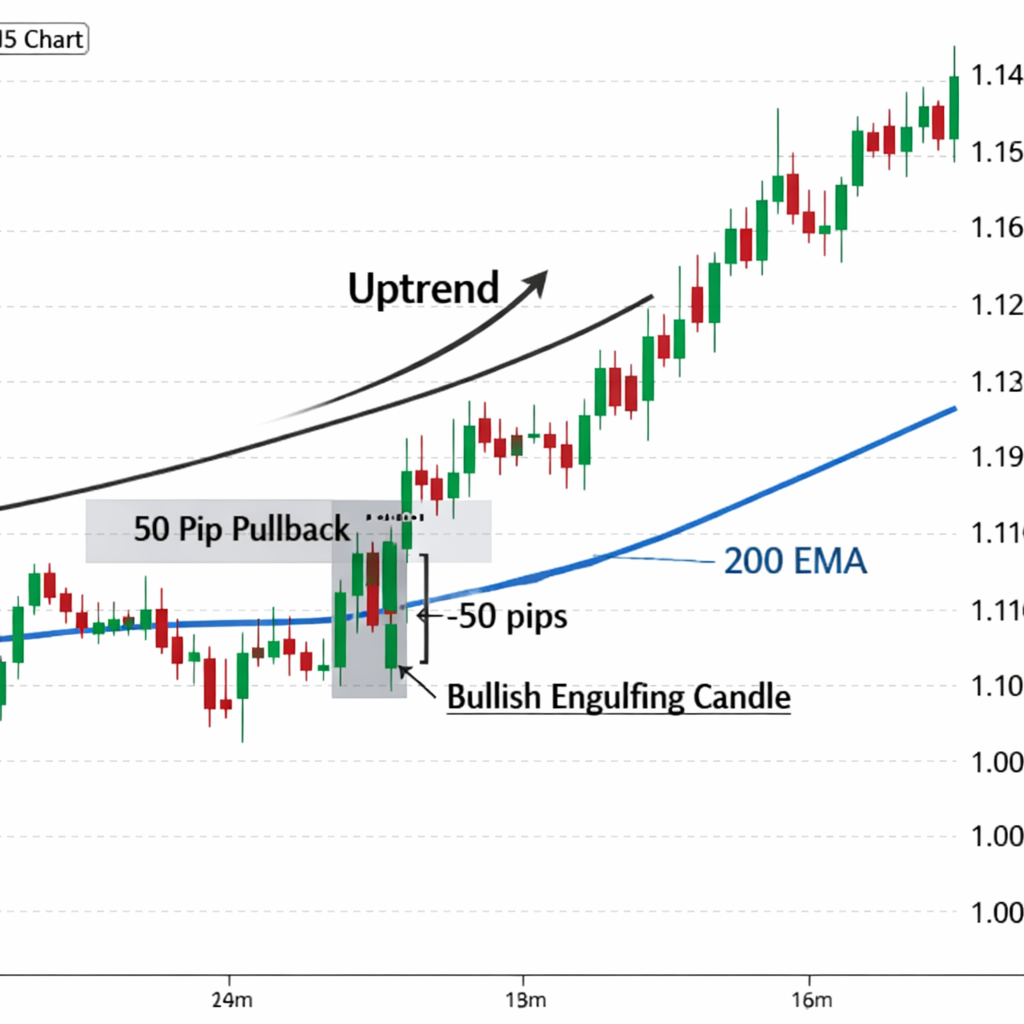
The 50‑pip pullback looks for a short dip in a clear trend. Imagine EUR/USD marching upward and then slipping about 50 pips before bouncing back. That dip is the entry cue.
Why it works: The market often pauses to let traders catch their breath. A 50‑pip move is big enough to filter out noise but small enough to catch the next leg.
Steps to run it:
- Identify a strong trend on a 4‑hour chart using a 200‑EMA.
- Watch for a pullback of roughly 40‑60 pips toward the EMA.
- Confirm with a bullish candlestick pattern (e.g., hammer or engulfing).
- Enter a long trade near the EMA bounce.
- Set a stop just below the pullback low and target a 1.5‑2 R ratio.
Risk tip: If the price breaks the EMA on the pullback, skip the trade , the trend may be weakening.
Real‑world example: A trader spotted GBP/JPY in a strong uptrend on May 3 2026. The pair fell 52 pips to the 200‑EMA, formed a bullish engulfing candle, and the trader entered. The price rallied 90 pips over the next three days, delivering a tidy profit.
Bottom line:The 50‑pip pullback lets you trade a clear reversal within a trend while keeping risk tight.
2. 3‑Day Breakout , Trend Continuation Play
Breakouts happen when price bursts through a resistance or support level. The 3‑day breakout waits for the move to hold for three days before committing.
How it fits: By letting the breakout survive a few sessions, you avoid false spikes that often reverse quickly.
How to set it up:
- Find a strong trend on the daily chart.
- Mark a recent swing high (uptrend) or low (downtrend) as the breakout line.
- Enter only if the price closes beyond that line and stays there for three consecutive daily closes.
- Use a 20‑period SMA to confirm trend direction.
- Place a stop just beyond the breakout line; aim for a 2 R reward.
Why patience pays: The three‑day rule weeds out news‑driven spikes that often lack follow‑through.
Case in point: On April 15 2026, USD/CHF broke above a key resistance at 0.9250. The price stayed above for three days, then climbed to 0.9400, giving a clean 150‑pip gain.
One more tip: Combine the breakout with a momentum oscillator like the Stochastic to catch over‑bought signals before you exit.
Bottom line:The 3‑day breakout trades the next leg of a trend while filtering out fake moves.
For a deeper dive on trend tools, check out Forex Swing Trading Strategies: A Practical Listicle for Traders on the FX Doctor site.
3. Fibonacci Swing , Confluence with Fib Levels
Fibonacci retracements map out where price might pause after a move. The Fibonacci swing blends these levels with moving averages for extra confidence.
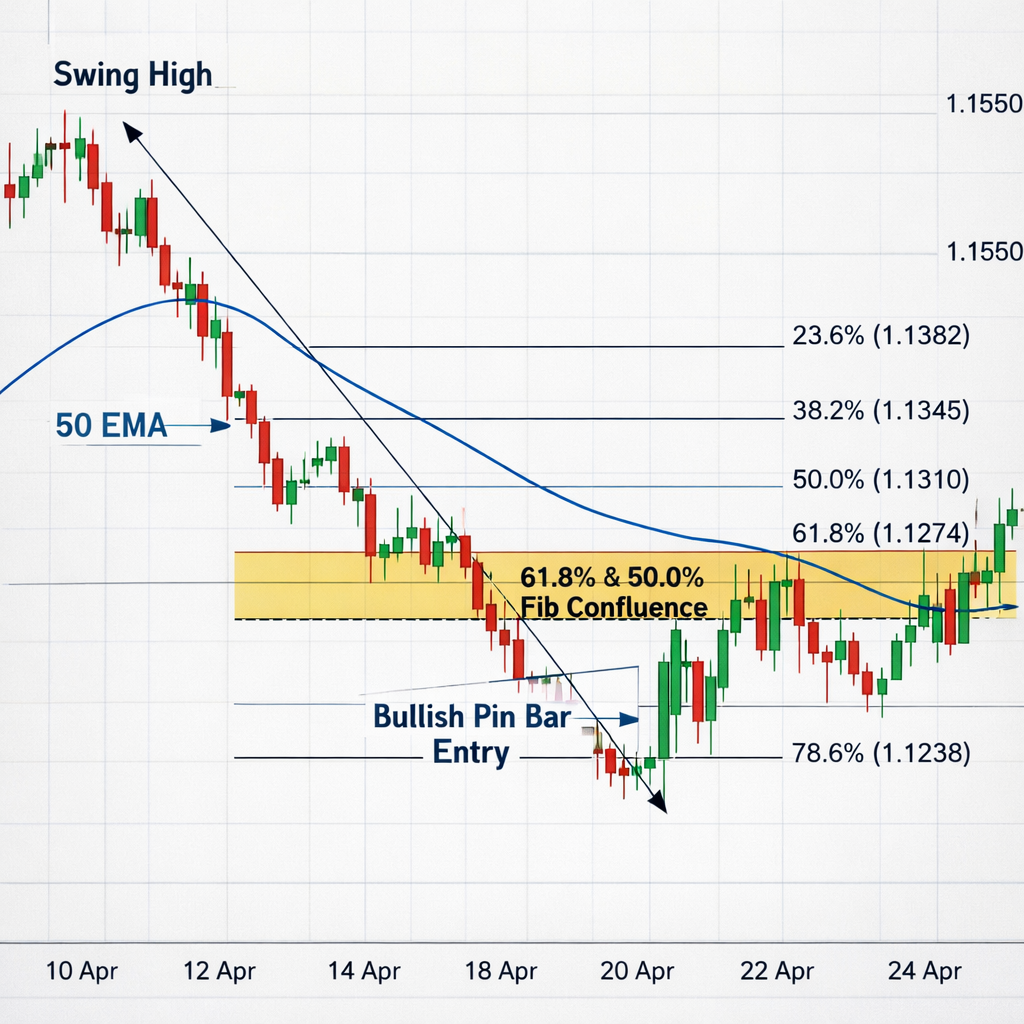
Core idea: After a strong swing, draw the fib from the swing low to high. Look for the 0.71 level to line up with a 50‑EMA or 200‑EMA. When price respects both, you have a high‑probability entry.
Setup routine:
- Identify a clear swing on a 4‑hour chart (e.g., EUR/GBP moves 150 pips).
- Draw fib retracement from the swing low to high.
- Check if the 0.71 fib line sits near the 50‑EMA.
- Wait for a reversal candle that closes above both the EMA and the fib level.
- Enter with a 10‑pip stop and a 2 R target.
Why the 0.71 level? It often marks a strong pullback zone where buyers step back in.
Example: On May 7 2026, AUD/JPY rallied from 78.00 to 80.50. The 0.71 fib line sat at 79.30, right on the 50‑EMA. A bullish pin bar closed above both, and the trade hit the 2 R target in four days.
Remember to keep the stop tight; fib levels can act as support, but a break suggests the move is failing.
Bottom line:The Fibonacci swing blends math and momentum for a disciplined entry.
4. EMA Crossover Swing , Dual EMA Signal
Two EMAs crossing each other is a classic trend‑change cue. The EMA crossover swing uses a short‑term EMA (9) and a longer‑term EMA (21) on a daily chart.
Signal logic:
- When the 9‑EMA climbs above the 21‑EMA, the trend is turning bullish.
- When the 9‑EMA falls below the 21‑EMA, the trend is turning bearish.
- Enter on the first candle that closes after the crossover.
- Place a stop a few pips beyond the recent swing low (for longs) or high (for shorts).
- Target a 1.5‑2 R profit or trail the stop with the 9‑EMA.
This method works well in markets that respect moving averages, like major forex pairs.
Watch the video below for a quick walkthrough of setting up the EMAs on a chart:
Real example: On June 2 2026, NZD/USD saw the 9‑EMA cross above the 21‑EMA after a period of consolidation. The trader entered long, set a stop 30 pips below the recent low, and rode the move to a 120‑pip gain before the EMAs crossed back.
Bottom line:The EMA crossover swing offers a simple visual trigger with built‑in trend confirmation.
5. News‑Driven Swing , Volatility Spike Capture
Economic releases can shake the forex market in seconds. The news‑driven swing aims to ride the volatility wave that follows a major data point.
How it works:
- Pick a high‑impact news event (e.g., U.S. non‑farm payrolls, ECB rate decision).
- Check the market’s pre‑event bias using a short‑term moving average.
- Enter a trade a few minutes after the release when price breaks the bias direction.
- Set a stop just beyond the initial spike to protect against reversal.
- Target a 1.5‑2 R reward, or exit when volatility subsides (usually 1‑2 days).
Key to success: Use a reliable economic calendar and avoid trading during low‑impact releases.
Example: On May 20 2026, the Bank of Japan announced a surprise rate cut. The USD/JPY pair spiked 90 pips in 30 minutes. A trader entered long on the second pullback, set a stop 30 pips below the spike, and closed for a 130‑pip gain as the market settled.
Beware of over‑trading; not every news burst leads to a lasting swing.
Bottom line:Capture the momentum after major news while protecting against sudden reversals.
6. Comparison of the 5 Forex Swing Strategies
What the table shows is that each method balances risk, time, and effort differently. If you prefer a rule‑based, low‑maintenance plan, the 50‑pip pullback or EMA crossover are solid picks. If you thrive on fast‑moving news, the news‑driven swing can be rewarding, but it asks for tighter discipline.
Bottom line:The comparison helps you see strengths and trade‑off of each swing style at a glance.
7. How to Choose the Right Swing Strategy for Your Style
Picking a swing plan isn’t about chasing the flashiest chart. It’s about matching a method to your personality, schedule, and risk tolerance.
Use this quick checklist:
- Do you have time to watch the market a few times a day? If yes, consider the 50‑pip pullback or EMA crossover.
- Do you enjoy scanning economic calendars and can you act within minutes of a release? Then the news‑driven swing may suit you.
- Do you prefer math‑based entries over pure price action? Try the Fibonacci swing.
- Are you comfortable waiting for multi‑day confirmations? The 3‑day breakout fits.
- Assess your risk appetite: higher volatility (news) needs tighter stops; trend‑following methods allow wider stops.
Once you tick the boxes, backtest the chosen method on at least 50 trades. Look for a win‑rate above 55 % and an average R‑multiple of 1.5 or higher.
Remember, consistency beats perfection. Start with a modest position size, log each trade, and refine the rules as you gather data.
Bottom line:A good fit between method and trader mindset is the foundation of swing‑trading success.
8. FAQ
What time frame works best for swing trading?
Most swing traders use the 4‑hour or daily chart. These frames capture enough price movement to see clear swings while still allowing you to check the market a few times a day. A 4‑hour view gives you more trade‑entry detail, while a daily chart helps you spot the broader trend.
How many trades should I run at once?
Start with one or two open positions. This lets you focus on risk management and avoid over‑exposure. As you gain confidence, you can add more, but never let the total risk exceed 2‑3 % of your account on any given day.
Do I need a lot of indicators?
No. The data shows many swing guides list dozens of tools, but the most reliable setups rely on just one or two. For example, the EMA crossover uses only two EMAs, and the 50‑pip pullback leans on a single EMA plus a candlestick pattern.
Can I use these strategies on any currency pair?
They work best on pairs with good liquidity and clear trends, like EUR/USD, GBP/USD, and USD/JPY. Low‑liquidity pairs can give noisy signals that break the rules.
How do I manage risk on news‑driven swings?
Use a tight stop just beyond the initial spike and size your position based on the ATR of the pair. This keeps your risk consistent even when volatility spikes.
Is backtesting necessary?
Absolutely. Run each strategy on historical data for at least 50 trades. Look for a win‑rate above 55 % and an average R‑multiple of 1.5. Adjust the rules if the stats fall short before you go live.
Should I trade with a demo or real account first?
Begin on a demo to get comfortable with the entry and exit rules. Once you can execute the plan without hesitation, switch to a small real‑money account to test execution speed and slippage.
How often should I review my performance?
Do a weekly review of all trades. Record entry, exit, reason, and outcome. Look for patterns in losses , maybe a particular indicator is giving false signals.
9. Conclusion
Swing trading offers a middle ground that lets you profit from market moves without the stress of day‑trading. The five methods covered , 50‑pip pullback, 3‑day breakout, Fibonacci swing, EMA crossover, and news‑driven swing , each bring a unique blend of timing, risk, and effort.
Pick the one that matches your schedule, test it thoroughly, and keep risk low. As you gain experience, you can mix elements from multiple setups to craft a personalized system. Swing trading isn’t a get‑rich‑quick scheme; it’s a disciplined approach that rewards patience and clear rules.
Ready to start? Dive into the FX Doctor library for more swing‑trading education and practice your chosen strategy on a demo account today.