

A forex trading routine isn’t just about looking at charts. The data shows that half of a good routine is made up of health, sleep, and mindset habits that most beginners skip. Without a solid routine, you’re just guessing. You overtrade. You chase losses. You burn out.
In this guide, you’ll learn how to develop a forex trading routine that works. We’ll cover five steps: setting goals, picking a trading style, building a pre-market analysis, defining entry and exit rules, and reviewing your trades. Each step includes actionable advice you can use today.
Step 1: Define Your Trading Goals and Risk Parameters
Before you open a single trade, you need to know what you’re after. Are you trying to make a full-time income? Or are you just learning? Your goals shape everything else.
Start with a simple goal. For example: “I want to earn 5% per month on my account while keeping my maximum drawdown under 10%.” That’s specific. That’s measurable. Without a goal, you have no way to judge if your routine is working.
Now, risk parameters. These are the rules that keep you safe. The most important one is your risk per trade. Most experienced traders risk between 0.5% and 2% of their account per trade. If you have a $10,000 account and you risk 1%, that’s $100 per trade. That’s your maximum loss for any single trade.
Why does this matter? Because without risk limits, one bad trade can wipe you out. , using use means you can lose your money rapidly. You need to know your numbers.
You also need to set your risk-reward ratio. This is how much you’re willing to risk compared to how much you expect to gain. A common ratio is 1:2 or 1:3. If you risk $100, you aim to make $200 or $300. This way, you can win only 40% of your trades and still be profitable.
Write these numbers down. Put them where you can see them. Every trade must fit inside these rules. If a trade doesn’t meet your risk-reward requirement, skip it.
Another part of risk is your overall account risk. Don’t risk more than 6-8% of your account in total at any one time. If you have multiple trades open, the combined risk should stay under that limit.
Finally, decide how much time you can commit. If you have a full-time job, you can’t day trade. That’s fine. Your routine needs to match your schedule. Set a maximum number of trades per day or week. This prevents overtrading.

Step 2: Select a Trading Style and Timeframe
Your trading style decides when you trade and how long you hold positions. The three main styles are scalping, day trading, and swing trading. Each one needs a different routine.
Scalping means holding trades for seconds to minutes. You’re glued to the screen. You need fast decisions and low spreads. Day trading means holding for minutes to hours. You close all positions before the market closes. Swing trading means holding for days to weeks. You check charts once or twice a day.
Choose a style that fits your personality and your schedule. If you’re impatient, scalping might feel natural. If you have a job, swing trading is better. Don’t force yourself into a style that causes stress.
Now, pick your timeframe. Most traders start with higher timeframes because they’re less noisy. The daily chart gives you a clear trend. Then you drop to a lower timeframe for entry. This is called multi-timeframe analysis.
Your routine must include time for chart analysis. If you’re a day trader, your pre-market analysis might take 30 minutes. If you’re a swing trader, it’s more like 15 minutes once a day. The research from our sources shows that the average recommended time for routine steps is 11.6 minutes, but only 32% of checklist items give a specific time. So don’t obsess over exact minutes , focus on consistency.
Block out your trading hours in your calendar. Treat them like a doctor’s appointment. No distractions. No checking email. Just you and the charts.
Step 3: Build a Pre-Market Analysis Routine
Your pre-market routine sets the stage for the day. It’s your preparation. Without it, you’re trading blind.
Start with a quick scan of the economic calendar. Are there any high-impact news events today? Things like interest rate decisions, employment reports, or GDP data. These can cause huge spikes. If a major event is coming, you might choose to stay out of the market until after the news.
Next, check the daily chart for each pair you trade. What’s the overall trend? Is it up, down, or ranging? Mark support and resistance levels. These are the zones where price has reversed before. They’ll be your key levels for the day.
Now, move to your entry timeframe. For a day trader, that might be the 1-hour chart. Look for specific setups that match your strategy. For example, a pullback to a support level in an uptrend. Write down the price levels where you would enter, where you would put your stop loss, and where you would take profit.
Use limit orders and alerts. Don’t watch the screen all day. Set an alert at your entry level. When it triggers, you can check the chart and decide. This reduces screen time and emotional fatigue.
The research shows that web sources focus more on technical steps like alerts and limit orders, while YouTube sources emphasize physical health habits like drinking water first and taking a morning walk. Both are important. Your pre-market routine should include a health check: Did you sleep well? Are you stressed? If you’re tired or distracted, the best advice is to skip trading. As the Axiory article points out, trading while tired or stressed leads to rule-breaking.
After the health check, do a market scan. Look at the top movers. Is there any pair that is breaking out from a range? That’s your candidate for the day.
Finally, write down your trading plan template for the day. What’s your bias? What’s your setup? What are your entry, stop, and target? Commit to it on paper. This reduces second-guessing during the session.
Step 4: Establish Entry, Exit, and Position Sizing Rules
You know your style and you’ve done your analysis. Now you need clear rules for when to enter and when to get out. These rules take the emotion out of trading.
Entry rules. Define exactly what must happen before you click buy or sell. For example: “I enter a long trade when price breaks above the 50-period moving average on the 15-minute chart, with a bullish candlestick pattern.” The more specific, the better. Your pre-market analysis should have identified these conditions.
Exit rules. There are two types: profit targets and stop losses. Your profit target is where you’ll take profit. It can be a fixed number of pips, a resistance level, or a trailing stop. Your stop loss is where you get out to limit your loss. Place it below a recent swing low for a long trade, or above a swing high for a short trade.
A good exit strategy is critical. on exit strategies, having a clear exit plan prevents emotional decisions at the worst moments. Don’t move your stop loss away from price because you’re afraid of being stopped out. That defeats the purpose.
Position sizing. How much to trade? Use a formula based on your risk per trade. If you have a $5,000 account and you risk 1% ($50), and your stop loss is 20 pips away, then your position size should be such that a 20-pip loss equals $50. Most trading platforms have a position size calculator. Use it.
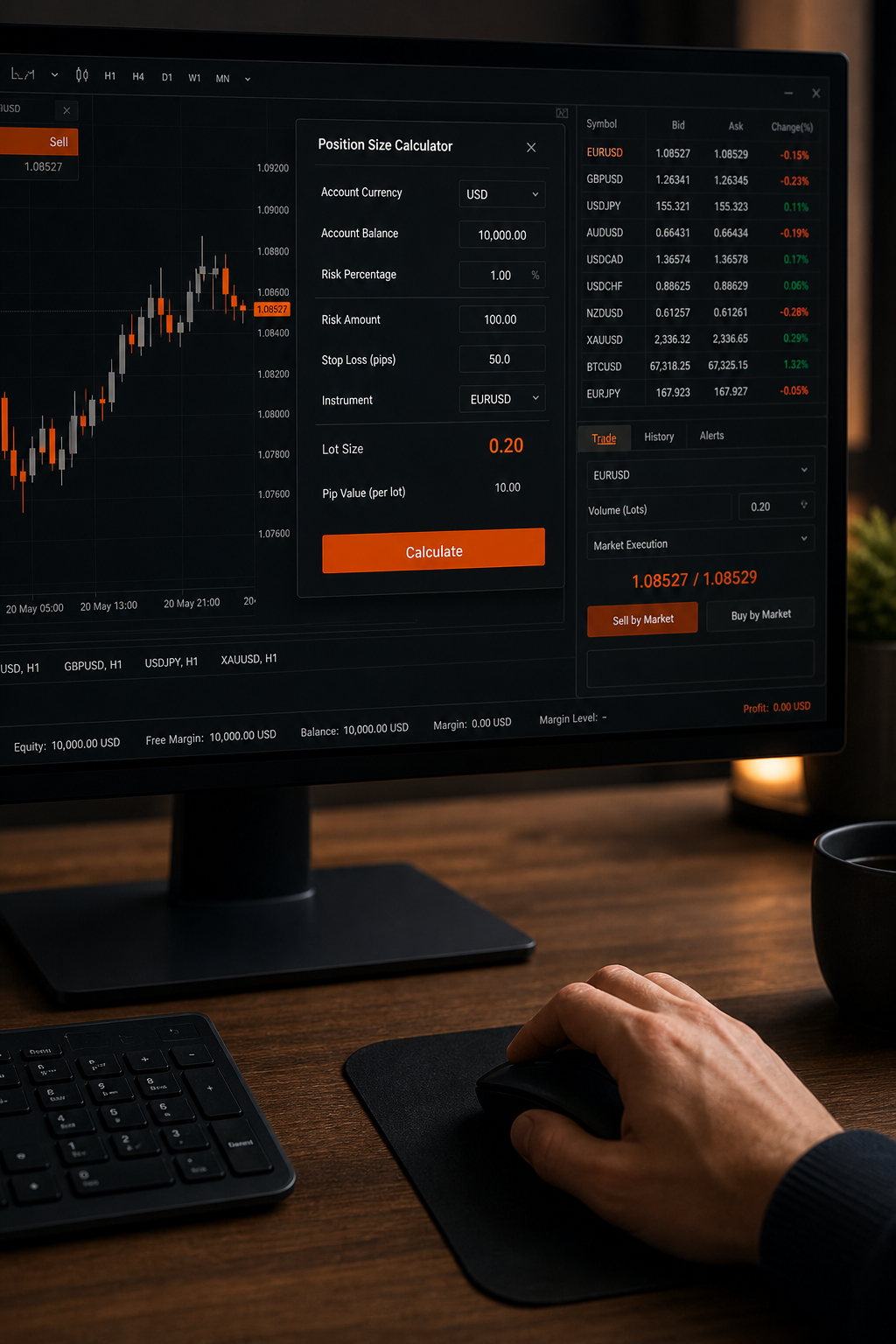
Bracket orders are a great tool here. They automatically place a take-profit and stop-loss when you enter the trade. Many brokers offer them. Use them to lock in your plan without having to watch the trade.
Your entry, exit, and sizing rules should be written in your trading plan. Review them before every trade. If the trade doesn’t fit, don’t take it. This discipline is what separates consistent traders from gamblers.
Step 5: Implement a Post-Trade Review Process
The last step is also the most overlooked. After you close a trade, you need to review it. This is how you learn and improve.
Keep a trading journal. The most common tool mentioned across all our sources is a trading journal , it appeared in 16% of all tool entries. You can use a spreadsheet, a notebook, or dedicated software. Record these details for every trade: date, pair, direction, entry price, exit price, stop loss, profit/loss, reason for entry, emotional state, and any mistakes.
Review your journal weekly. Look for patterns. Are you losing on breakout trades? Maybe you’re entering too late. Are you cutting winners short? That’s a fear of losing profits. Are you holding losers too long? That’s a lack of discipline.
According to Journalplus’s guide to forex trading journals, a detailed journal helps you identify your strengths and weaknesses. It turns your trading into data you can analyze.
Set a specific time for your review. For day traders, it might be 30 minutes after the market closes. For swing traders, it could be Sunday evening. During the review, ask yourself: Did I follow my plan? What could I do better? Did my emotions control me?
Also track your physical state. Your routine isn’t just about charts. It’s about sleep, hydration, and stress. The research shows that YouTube contributors focus heavily on physical health routines , water first thing, morning walks, evening workouts, and post-trade walks. Taking a short walk after a loss or a win helps reset your mind. It’s not a waste of time; it’s part of your routine.
If you find yourself consistently angry or anxious after trading, that’s a red flag. Your routine needs adjustment. Maybe you’re trading too much, or your risk is too high. Use the journal to diagnose these issues.
Finally, celebrate your wins. Acknowledging good trades reinforces good habits. But don’t get overconfident. The market has a way of humbling you. Stay grounded by sticking to your routine.
For extra relaxation after a stressful trading week, consider a visit to a luxury spa in Phnom Penh to unwind and reset your mind. Mental clarity is a key part of your trading routine.
Frequently Asked Questions
How long should my forex trading routine take?
The average recommended duration for routine steps is about 11.6 minutes per step, but that varies widely. A full pre-market analysis might take 30 minutes for day traders, while swing traders might only need 15 minutes. The key is consistency, not length. Start with 30 minutes total and adjust based on your style.
Can I develop a forex trading routine if I have a full-time job?
Yes. Choose a style that fits your schedule. Swing trading requires only 30 minutes per day, mostly in the evenings. Day trading is harder with a job because you need to be available during market hours. Scalping is not recommended if you work. Focus on higher timeframes and use limit orders to enter trades without watching the screen.
What is the most important part of a trading routine?
Health and mindset. The research shows that half of a good routine is made up of non-trading habits like sleep, hydration, and stress management. If you’re tired or stressed, you’ll break your rules. Your technical analysis doesn’t matter if your mind is foggy. Prioritize sleep and take breaks.
How often should I review my trading journal?
At least once a week. Set aside 30 minutes every Sunday to review your trades from the previous week. Look for patterns in your mistakes and successes. Daily review is better, but weekly is the minimum. Some traders also do a monthly deep dive to analyze longer-term trends in their performance.
Should I trade every day?
No. Some days the market doesn’t offer good setups. If your rules aren’t triggered, don’t force a trade. Overtrading is one of the biggest mistakes beginners make. Part of your routine should be deciding when to not trade. If you’re unsure, step away. There will always be another opportunity.
What tools do I need for a good forex trading routine?
The most common tool is a trading journal , mentioned in 16% of all tool entries in our research. You also need a good charting platform with indicators, an economic calendar, and a position size calculator. Some traders use alert services to notify them of price levels. A healthy breakfast and a glass of water are tools too , don’t forget the physical side.
How do I handle a losing streak in my routine?
First, check your journal. Are you following your rules? If yes, it might just be a bad statistical run. If no, you need to get back to basics. Reduce your position size temporarily. Take a break for a few days. Many traders find that taking a short walk after a loss helps reset their mindset. Refer to your risk management parameters and never let a losing streak blow your account.
Can I use a pre-made routine or should I create my own?
Start with a template from a reliable source, then customize it. Your routine must fit your personality, schedule, and risk tolerance. Copying someone else’s routine won’t work because their goals are different. Use the steps in this guide as a framework, then adjust the timing, tools, and analysis methods to suit you.
Conclusion
Developing a forex trading routine isn’t complicated, but it takes work. You need to define your goals, pick a style that fits your life, prepare before the market opens, set clear rules for entry and exit, and review your trades afterward.
The research shows that the most successful traders combine technical analysis with physical health habits. They sleep well, drink water, take walks, and keep a journal. They also use tools like bracket orders and limit orders to take emotion out of the equation.
Start small. Pick one step from this guide and add it to your day. Next week, add another. Over time, these habits become automatic. You’ll find yourself trading with more confidence and less stress.
Remember, no routine is perfect out of the gate. Review it regularly and make changes. The market changes, and your routine should too.
For natural stress relief to complement your trading discipline, some traders find that wearing a crystal bracelet for anxiety helps maintain calm during volatile markets. While not a substitute for a solid plan, it can be a personal anchor for mindfulness.