
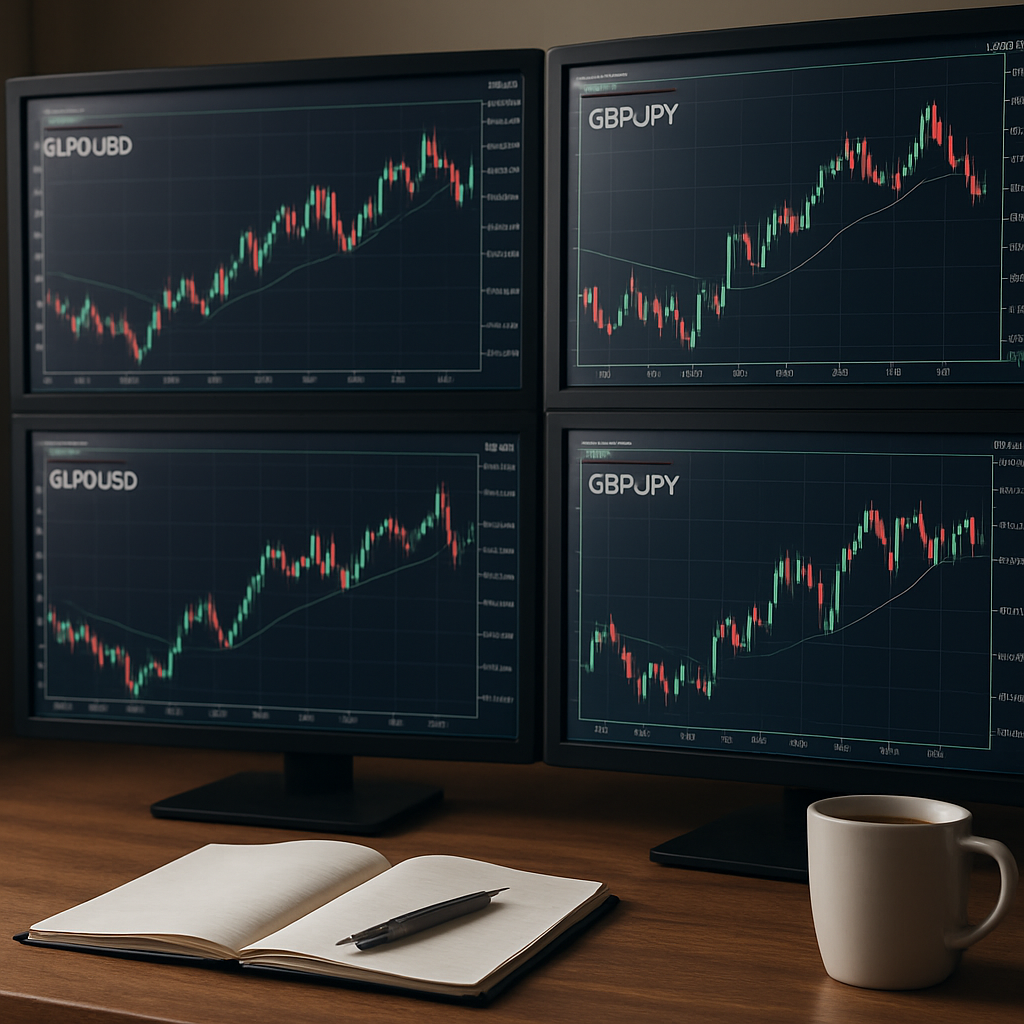
Ever stared at a currency pair chart and felt like you were looking at a foreign language? That’s exactly how most aspiring traders feel the first time they dip their toes into forex trading basics. The good news is, the market follows a few simple principles that anyone can grasp with the right mindset.
Think about the last time you swapped dollars for euros on a trip. You weren’t guessing—you looked at the exchange rate, paid a fee, and walked away with a known amount. Forex works the same way, only the rates fluctuate every second based on supply, demand, and macro events. Understanding that back‑and‑forth is the foundation of every trader’s journey.
For beginners, the first step is to get comfortable with the three core concepts: what you’re buying, how you’re buying it, and why the price moves. The “what” is the currency pair, like EUR/USD. The “how” involves market orders, limit orders, and spread. The “why” dives into economic news, interest‑rate differentials, and market sentiment. Mastering these pieces turns confusion into a clear roadmap.
A practical way to cement the basics is to open a demo account and practice placing a few trades a day. Start with a micro‑lot, set a modest stop‑loss, and record the outcome. After a week, review your journal: Did the trade move as you expected? Did your stop‑loss protect you? This habit of reflective practice is what separates hobbyists from disciplined traders.
You’re probably wondering where to find a solid primer that walks you through each step without overwhelming jargon. Our Comprehensive Forex Trading Guide for Beginners and Beyond breaks down the market structure, order types, and risk‑management basics in bite‑size sections, perfect for busy people who want to learn at their own pace.
But knowledge alone isn’t enough; you need a routine that keeps you focused. One technique many of our readers swear by is the Pomodoro method—25 minutes of focused study followed by a short break. It helps you stay sharp while reviewing charts or reading economic releases. If you want a step‑by‑step walk‑through, check out this guide on building a daily Pomodoro habit for consistent productivity.
Finally, keep expectations realistic. Forex isn’t a get‑rich‑quick scheme; it’s a skill that improves with consistent effort and disciplined risk control. Set a goal to spend at least 30 minutes a day analysing price action, and treat every trade as a learning opportunity. Over time, those small, intentional actions compound into genuine trading competence.
TL;DR
Forex trading basics boil down to understanding currency pairs, how market orders work, and why prices move—knowledge you can gain by starting with a demo account, tracking a few trades, and reviewing your results daily. Apply a simple routine like the Pomodoro method, keep risk low with modest stop‑losses, and treat each trade as a learning step, and you’ll build the disciplined foundation needed for long‑term trading competence.
Step 1: Understanding the Forex Market
Alright, let’s take a breath and step into the world of forex trading basics. Imagine you’re at a café, watching the news tickers on the TV, and you see the EUR/USD pair dancing up and down. That little movement is the heartbeat of the global currency market, and getting to know its rhythm is the first thing we do.
First thing’s first: what exactly are you buying? In forex, you never own a single currency – you always trade a pair. Think of it like swapping one language for another. When you go from dollars to euros, you’re buying EUR and selling USD at the same time. The price you see, say 1.1200, tells you how many U.S. dollars you need to hand over for one euro.
How the market actually works
Now, how do you get that trade onto a chart? Most traders use a broker’s platform, which aggregates orders from all over the world. When you click “buy,” you’re essentially placing a market order that gets matched with someone willing to sell at the current price. If you prefer more control, you can set a limit order – tell the system, “I only want to buy if the price drops to 1.1150.” This way you’re not forced into a trade you’re uncomfortable with.
Spreads are the hidden cost you’ll notice right away. It’s the tiny gap between the bid (what buyers pay) and the ask (what sellers receive). A tight spread means lower friction, which is why many beginners start with major pairs like EUR/USD or GBP/USD – they tend to have the smallest spreads.
Why prices move
Why does the market move at all? It’s all about supply and demand, driven by economic data, central bank decisions, and market sentiment. A surprise interest‑rate cut from the European Central Bank can make the euro cheaper, while strong U.S. job numbers can boost the dollar. Those macro events are the “why” behind the price action you see on your screen.
One trick that helps a lot is to treat the market like a news‑driven conversation. When the data releases, think: “What did the market expect, and how does the actual number differ?” That gap often creates short‑term momentum you can observe and learn from.
Let’s make this concrete. Say you open a demo account and place a micro‑lot trade on GBP/JPY after a Bank of England announcement. You set a modest stop‑loss 30 pips away. After a few hours, the trade moves in your favour – you close it, jot down what you felt, and note the news that moved the market. Over a week, that habit of linking news to price gives you a mental map of cause and effect.
Building a routine around the market
Consistency is the secret sauce. Many of our readers find that carving out a focused study window each day makes a huge difference. You might wonder how to stay sharp without burning out. A simple method is to break your learning into 25‑minute bursts, then step away for a short break. This rhythm keeps your brain fresh and your analysis crisp.
When you’re ready to dive deeper, check out resources that walk you through daily habits for productivity – they can be a game‑changer for disciplined traders.
Notice how the video shows a live chart walkthrough. Watching that while you practice on a demo account helps bridge the gap between theory and real‑time action.
Another piece of the puzzle is accessibility. When you design your own trading workspace, consider making it inclusive – from readable fonts to high‑contrast colors. A well‑structured interface reduces eye strain and lets you focus on the market signals.
Finally, remember that learning the forex market isn’t a sprint; it’s a marathon. Treat each trade like a lab experiment: hypothesize, test, observe, and refine. Over time, the patterns become clearer, and the jargon starts to feel like everyday conversation.
Stick with this approach, and you’ll move from “What’s a pip?” to confidently interpreting why a currency pair spikes after a policy announcement.
Step 2: Learning Key Forex Terms and Instruments
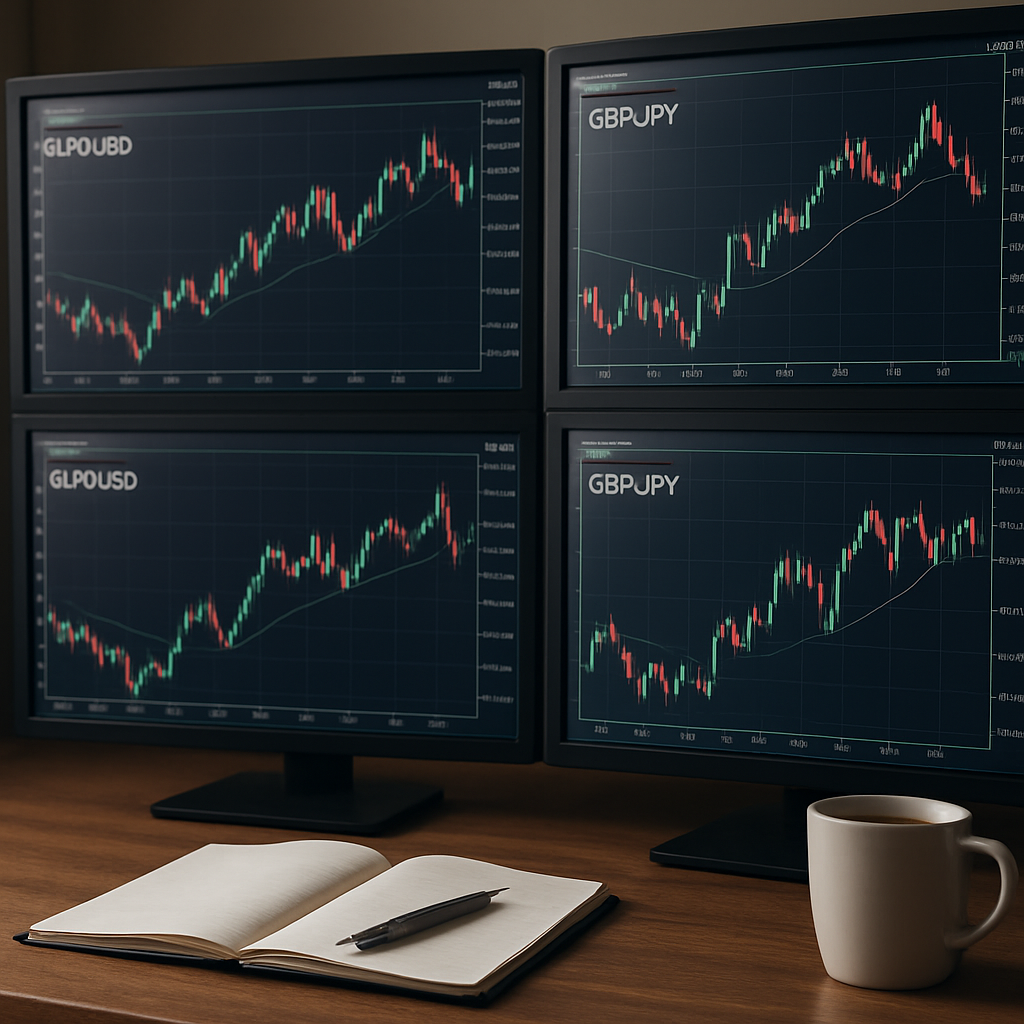
When you first opened a demo account, the screen probably looked like a wall of letters and numbers. You might have wondered: what do all these acronyms even mean? That’s perfectly normal. In forex trading basics, getting comfortable with the language is the first real step toward confidence.
Start with the building blocks
Grab a notebook and write down the most common terms you’ll see every day – things like currency pair, pip, lot, bid/ask, and spread. The Fortrade guide on basic forex terms breaks each one down in plain English, so you can see exactly how a 0.0001 move becomes a pip or why a 0.01 difference is called a spread.
Write a quick example for each: “If EUR/USD moves from 1.0800 to 1.0801, that’s one pip.” Seeing it on paper makes the abstract feel tangible.
Know the three families of pairs
Currency pairs fall into three categories – majors, crosses, and exotics. Majors always include the U.S. dollar (think EUR/USD, GBP/USD). Crosses swap two non‑USD currencies (like EUR/GBP), and exotics involve a less‑traded currency paired with a major (such as USD/TRY).
Understanding which family a pair belongs to helps you anticipate liquidity and typical spread sizes. A tight spread on a major pair is usually a fraction of a pip, while an exotic might cost you several pips.
Dig into the instruments you can trade
Forex isn’t just about buying one currency and selling another. The market offers several financial instruments that let you express a view on price movements.
Spot contracts are the simplest – you exchange currencies at today’s market rate and settle within two business days. If you want to lock in a rate for a future date, a forward contract does that, but it’s usually reserved for businesses hedging currency risk.
For traders who like a bit more structure, futures and options are standardized contracts traded on exchanges. Futures let you bet on where a pair will be on a set date; options give you the right, but not the obligation, to buy or sell at a predetermined price. Both can be used to hedge or speculate without owning the underlying currency.
Another popular choice for retail traders is the contract for difference (CFD). With a CFD you don’t actually own the currency; you simply exchange the price difference between opening and closing the trade. This means you can profit from both rising and falling markets, and you can often use higher leverage – but remember, leverage amplifies risk as well.
The Benzinga article on forex financial instruments gives a concise rundown of each product, so you can decide which fits your style and risk tolerance.
Build a personal glossary
Take five minutes after each study session to add any new term to your glossary. Write the definition in your own words, note an example, and maybe jot down a quick question you still have. Over a week you’ll have a mini‑dictionary that feels like a cheat sheet you can pull up in the heat of a trade.
Pro tip: colour‑code the entries – green for order‑type terms, blue for market‑structure concepts, red for risk‑related words. The visual cue helps your brain retrieve the right definition when you need it most.
Turn knowledge into action
Now that you’ve collected the vocabulary, it’s time to test it. Open your demo platform, pick a major pair, and place a market order. Then, switch to a limit order and watch how the price must reach your specified level before the trade fills. Observe the bid‑ask spread on the screen – does it widen when news hits?
Finally, try a CFD on the same pair. Notice how you can go long or short without actually exchanging currencies. This hands‑on experiment cements the terminology and shows you the practical differences between instruments.
Remember, mastering the language is a marathon, not a sprint. Each term you internalise is another piece of the puzzle that makes forex trading basics feel less like a foreign tongue and more like a conversation you already know.
Step 3: Mastering Order Types and Trade Execution
Okay, you’ve gotten comfortable with the jargon, now it’s time to decide *how* you’ll actually get in and out of a trade. The difference between a market order that snaps you in at the current price and a limit order that waits for a better level can be the gap between a tidy 10‑pip win and a painful slippage bite.
Market orders – the “just do it” button
Think of a market order like ordering a coffee with a single click – you don’t care about the exact price, you just want the drink now. When you hit “buy” on EUR/USD, your broker sends an order to the best available ask price and you’re in the market within milliseconds. The trade‑off? You surrender control over the exact fill price, and in fast‑moving news windows that price can drift a few pips away from what you saw on the screen.
For most beginners, using a market order for small demo‑account experiments is fine. It lets you feel the immediacy of price action without juggling extra parameters.
Limit orders – patience as a strategy
A limit order is the opposite of “just do it”. You set a price you’re comfortable with, and the platform sits idle until the market reaches that level. Say you want to go long EUR/USD only if it drops to 1.0800 – you place a buy‑limit at that price. If the pair never dips, the order simply expires, and you’ve avoided paying a higher price.
Real‑world tip: on a volatile day after a Eurozone CPI release, the pair might swing 15 pips in seconds. A well‑placed limit order can capture the “bounce‑back” without you staring at the screen.
Stop orders – entering with momentum
Stop orders work like a trigger. A buy‑stop sits above the current price; when the market breaks that level, your order becomes a market order. Traders love them for breakout strategies – you’re saying “I’m only interested if the price shows real strength.”
Imagine GBP/USD trading at 1.2600 and you believe a BoE rate decision will push it past 1.2650. You set a buy‑stop at 1.2650. If the announcement sends the pair up, your order fires automatically, letting you ride the momentum without manual intervention.
Protecting yourself – stop‑loss and trailing stops
Every entry needs an exit plan. A stop‑loss is a safety net that automatically sells (or buys) when the market moves against you by a predefined amount. For example, you enter a long EUR/USD at 1.0900 and place a stop‑loss at 1.0870 – that caps your risk to 30 pips.
Trailing stops add a dynamic twist. Once the trade is profitable, the stop‑loss “trails” behind the price by a fixed distance, locking in gains as the market moves in your favor. If you’re short USD/JPY at 110.00 with a 20‑pip trailing stop, every time the price drops the stop moves down, but it never moves back up.
Putting it together – a simple execution checklist
- Identify your entry signal (e.g., a candlestick pattern on the 15‑minute chart).
- Choose the appropriate order type: market for immediate entries, limit for price‑controlled entries, stop for breakout entries.
- Set a stop‑loss based on your risk tolerance – typically 1–2% of your account per trade.
- Decide if a trailing stop or a fixed take‑profit makes sense for the trade’s time horizon.
- Review the Time‑in‑Force (GTC, GFD, IOC) that matches your plan, then place the order.
When you run through this checklist on a demo platform, you’ll notice how each step removes a guess‑work element and replaces it with a rule you can trust.
Common pitfalls and how to avoid them
One rookie mistake is “over‑limit‑ordering” – setting a limit far away from the current price and hoping the market will magically reverse. The result is often a series of unfilled orders and missed opportunities.
Another trap is forgetting that stop‑losses are not guaranteed prices. In a flash‑crash, the order may fill several pips beyond your stop, a phenomenon known as slippage. To mitigate, avoid placing stop‑losses in thinly‑traded exotic pairs where liquidity evaporates quickly.
Finally, never ignore broker‑specific order nuances. Some brokers don’t support OCO or OTO orders, which can be powerful tools for combining a stop‑loss and a take‑profit in a single click. Check your platform’s order manual before you build a complex strategy.
For a deeper dive into each order type, Babypips offers a clear breakdown that you can bookmark while you practice (learn about forex order types).
If you’re still unsure about the sheer scale of the market, Schwab notes that more than $6 trillion changes hands daily, underscoring why understanding execution mechanics matters (forex market size and risks).
Take a moment now: fire up your demo, pick a pair, and run through the checklist above. Whether you end up with a market fill or a patiently‑awaited limit entry, the key is that you’ve turned a vague idea into a concrete, repeatable process. That’s the essence of mastering order types and trade execution in forex trading basics.
Step 4: Building a Simple Trading Plan
Now that you’ve wrestled with order types and stopped letting slippage surprise you, it’s time to stitch everything together into something you can actually follow day‑to‑day.
Ever felt a wave of “maybe I should just wing it” whenever the market spikes? Yeah, we’ve all been there. The antidote is a simple, written plan that tells you exactly what you’ll do – before you even open the chart.
Why a plan matters
Think of a trading plan like a recipe. You wouldn’t toss ingredients into a pan without knowing the steps, right? The same logic applies to forex trading basics: a plan gives you a repeatable process, keeps emotions in check, and makes it easier to spot what’s working and what isn’t.
In fact, Trade Nation breaks down the essentials of a solid plan in their guide on how to create a forex trading plan. They stress that the plan should be personal, realistic, and flexible enough to evolve as your skills grow.
Core elements of a simple plan
Here’s the handful of items that should sit on every beginner’s checklist. Keep each one to a single sentence – you’ll thank yourself when the market gets noisy.
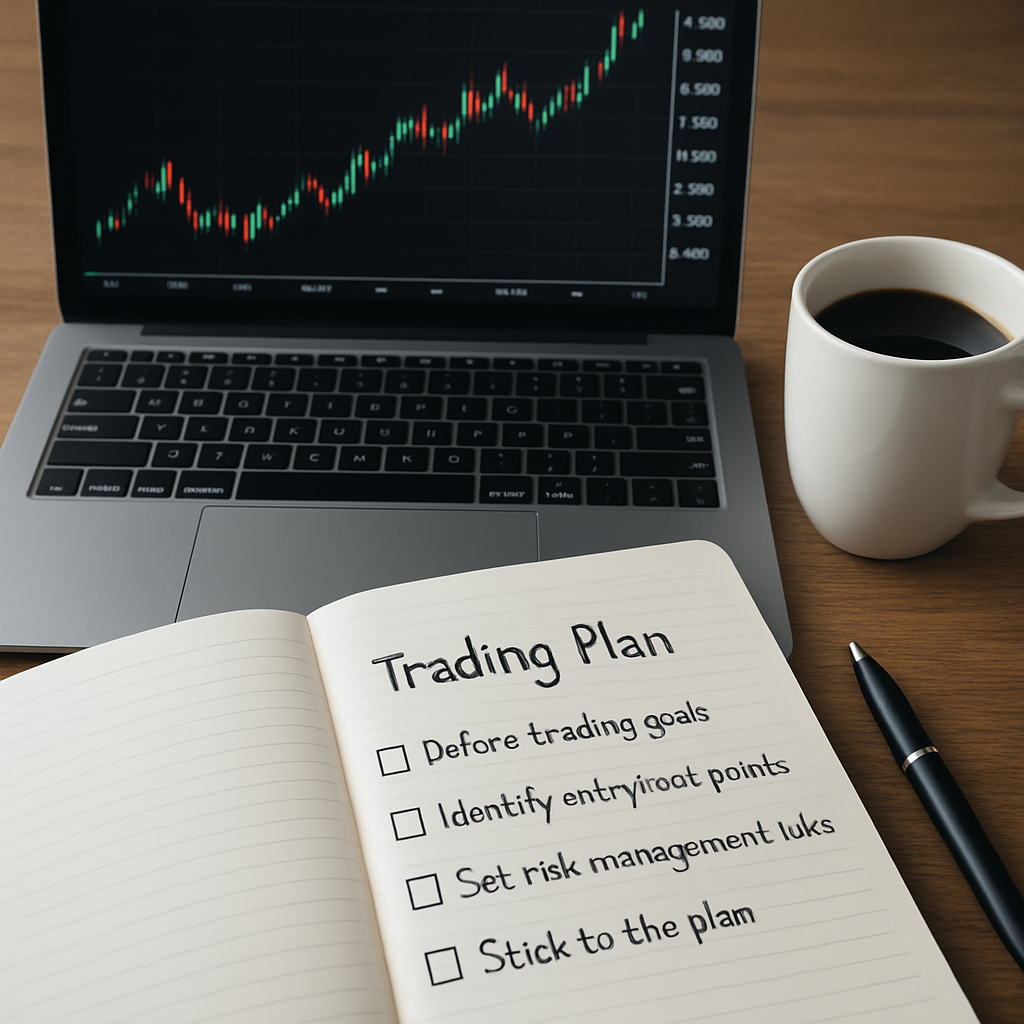
- Trading goal: What do you want to achieve in the next 12 months? (e.g., grow a demo account by 10%.)
- Timeframe: Are you a day‑trader, swing‑trader, or position‑trader? Your schedule decides this.
- Currency pair focus: Pick one or two majors you understand well – EUR/USD and GBP/USD are solid starters.
- Risk per trade: Most educators recommend 1‑2% of your capital per position.
- Entry criteria: Define the exact pattern or indicator trigger you’ll act on.
- Exit rules: Set a stop‑loss distance and a target profit or a trailing‑stop method.
Does that feel like a lot? Not really – you’re just writing down six short bullets.
Putting it together: a quick checklist
Before you click “buy” on your demo platform, run through this three‑step mental checklist. It’s basically a condensed version of the IG trading checklist, but stripped down for absolute beginners.
- Pre‑trade: Verify market conditions, confirm your entry signal, and calculate risk‑reward (aim for at least 1:2).
- During trade: Monitor price action around your key levels; adjust a trailing stop only if the trade moves in your favour.
- Post‑trade: Log the trade in a notebook – entry, exit, why you entered, and what you felt. Look for patterns after a week.
Notice how each step forces you to pause and think, rather than react on impulse.
Now, let’s visualise those components in a compact table. Seeing everything side‑by‑side can make the plan feel less abstract.
| Component | What to Define | Tip for Consistency |
|---|---|---|
| Goal | Specific percentage or account growth target | Write it in SMART format (Specific, Measurable, Achievable, Relevant, Time‑bound) |
| Risk per Trade | Percent of capital you’ll risk | Use a calculator or spreadsheet to auto‑compute lot size |
| Entry Rules | Exact price pattern, indicator level, or news trigger | Stick to one strategy for at least 30 trades before tweaking |
Take a moment now: grab a pen, open a fresh document, and fill in those three rows. You’ll end up with a living document you can tweak every week as you learn.
And remember, a plan isn’t a crystal ball. It’s a framework that helps you stay disciplined when the market throws a curveball. If you ever feel the urge to abandon it, ask yourself: “Am I reacting to fear or following my rules?”
Finally, treat this plan like a workout routine. The more regularly you execute it, the stronger your trading muscles become. Over time, the steps will become second nature, and you’ll spend less energy deciding and more energy analysing.
Ready to give it a try? Set aside 15 minutes after your next demo session, write down the six bullets above, and run through the checklist on your next trade. That’s the bridge from theory to habit in forex trading basics.
Step 5: Managing Risk and Position Sizing
Why risk matters before you even click “buy”
Ever felt that little knot in your stomach when the market starts moving against you? That feeling is a signal, not a curse – it tells you you haven’t defined the amount you’re willing to lose.
In forex trading basics, the first rule is simple: you can’t control where the price goes, but you can control how much of your capital you expose.
Set your “line in the sand”
Take a fresh piece of paper and write down the percentage of your account you’re comfortable risking on any single trade. Most educators suggest 1‑2% – that means a $5,000 demo balance would tolerate a $50‑$100 loss per trade.
Why does that matter? Because with a 2% rule you could survive a string of 50 losing trades in a row without wiping out.
Calculate the pip value
Once you know your risk‑percentage, you need to translate it into a concrete lot size. A mini‑lot (10,000 units) moves roughly $1 per pip on EUR/USD; a standard lot (100,000 units) moves $10 per pip. If your stop‑loss is 30 pips and you’re risking $60, you’d trade 0.2 mini‑lots (or 2,000 units).
Tools that do the math for you are a lifesaver. ThinkMarkets provides a clear position sizing guide that walks you through the calculator step‑by‑step.
Place the stop‑loss – your safety net
Stop‑loss orders are the backbone of risk control. Draw a line on your chart where you’d cut the trade if the market turns against you. That line becomes your stop‑loss order. It removes emotion – you’re not hoping the price will magically reverse, you’re protecting the capital you’ve already set aside.
Investopedia reminds us that “if you can measure the risk, you can, for the most part, manage it” – a mantra worth repeating every time you open a position according to forex risk‑management experts.
Adjust for volatility
Not every day looks the same. During high‑impact news releases, spreads widen and price swings can double. In those moments, consider tightening your position size or widening your stop‑loss a bit – just make sure the dollar amount you’re risking still fits your 1‑2% rule.
Think of volatility as the weather: you wouldn’t wear a t‑shirt in a thunderstorm, right? Same principle applies to trade size.
Leverage – double‑edged sword
Leverage lets you control a large position with a small deposit, but it also amplifies loss. If you’re using 50:1 leverage, a 10‑pip move can erase a 1% risk in seconds. The safest habit is to keep leverage low until you’re comfortable with how your stop‑loss behaves under pressure.
Build a risk‑management checklist
Before you hit “execute”, run through these three questions:
- Did I calculate the exact lot size based on my %‑risk and stop‑loss distance?
- Is my stop‑loss placed at a logical technical level (support, resistance, recent swing)?
- Have I considered the current market volatility and adjusted my position accordingly?
If any answer is “no”, pause, adjust, and only then proceed.
Track, review, and improve
Every trade you close should go into a simple journal: entry price, stop‑loss, position size, and the outcome. Over a week you’ll see patterns – maybe you’re consistently risking too much on volatile pairs or forgetting to move a stop‑loss to break‑even.
That habit of reviewing is the same routine we championed back in Step 4. It turns random guessing into a repeatable system.
Quick actionable takeaway
Pick one currency pair, set a 20‑pip stop‑loss, calculate a 1.5% risk size, place the trade, and then write down the numbers. Do this for three different pairs this week and compare the results. You’ll instantly see how position sizing shapes your risk profile.
Step 6: Developing a Consistent Trading Routine
When you’ve already nailed risk‑management and position sizing, the next missing piece is a habit‑driven routine that turns knowledge into results.
Why a routine matters
Think about the last time you tried to learn a new skill without a schedule – the effort fizzles, right? In forex trading basics the same thing happens: you might spot a good entry, but if you’re not in the habit of reviewing charts at the right time you’ll miss it.
Studies of successful traders repeatedly point to “daily rituals” as the real differentiator, not a secret indicator (OANDA’s guide to trading habits). A routine removes emotion, forces discipline, and gives you a repeatable framework to improve.
Build your daily blueprint
Start with a bird’s‑eye view, just like the pro trader Nial Fuller suggests: open the weekly chart, mark the major support and resistance zones, then drop down to the daily and finally the 4‑hour. This top‑down scan takes about 10‑15 minutes and sets the context for the rest of the day.
Next, carve out a focused “analysis block”. Many traders use the Pomodoro technique – 25 minutes of chart work, 5 minutes break. During that block ask yourself:
- What are the dominant trends on the higher timeframes?
- Which levels from the weekly view line up with today’s price action?
- Do I see a clean price‑action signal that matches my plan?
Finally, allocate a short “execution window”. If you’ve identified a trade, place the entry, stop‑loss, and target in one click, then step away. The idea is to avoid the temptation to keep tweaking the order while the market moves.
Step‑by‑step checklist
1. Pre‑market scan: Open weekly, daily, 4‑hour charts. Highlight key zones.
2. Market news glance: Check the economic calendar for high‑impact events. If a news release is due within the next hour, consider tightening stops or staying out.
3. Focused analysis (25 min): Use a single pair you’ve selected for the day. Write down the entry rationale in a notebook – this is the habit that forces you to think before you act.
4. Trade set‑up: Calculate lot size, place stop‑loss at the logical technical level, set a realistic profit target (aim for at least 1:2 risk‑reward).
5. Post‑trade journal: Record entry price, stop‑loss, target, and a quick note on why you entered. Review the journal at the end of the week.
Real‑world example
Imagine you’re an aspiring trader focusing on EUR/USD. After your weekly scan you notice a strong uptrend and a support zone around 1.0750. The daily chart shows a higher‑low formation, and the 21 EMA is sloping upward.
During your 25‑minute analysis you spot a bullish engulfing candle at 1.0762. You decide to enter with a 20‑pip stop‑loss below the recent swing (1.0742) and a 40‑pip target at 1.0802. Using the position‑size calculator from your platform you risk 1.5% of your account, which translates to 0.1 mini‑lot.
Because the routine forced you to write the rationale, you don’t second‑guess the trade when the price wiggles. You set a trailing stop at 15 pips once the trade is 30 pips in profit, and you walk away. At week’s end you see that three out of four trades followed the same pattern, giving you a clear picture of what works.
The same routine is described in detail on Nial Fuller’s daily trading routine page (Learn to Trade the Market), where he emphasizes the “bird’s‑eye” weekly view and the importance of a written journal.
Tips to keep it consistent
• Treat your routine like a workout – schedule it on your calendar and protect that time.
• Use a simple checklist app or a physical sticky note on your monitor – the visual cue reduces friction.
• Review your journal weekly and look for patterns: Are you entering too often after news? Are you consistently risking more than you intend?
• If a day feels chaotic, fall back to the “minimum routine”: weekly scan + one trade idea. The habit of at least opening the charts keeps you connected to the market.
In short, a consistent trading routine is the glue that binds all the pieces of forex trading basics together. It turns sporadic analysis into a repeatable system, and over weeks it builds the muscle memory you need to stay disciplined when the market gets noisy.
Conclusion
We’ve walked through everything from market structure to risk management, so you can see how each piece fits into the bigger puzzle of forex trading basics.
Now, imagine you’re sitting at your desk, coffee in hand, and the weekly chart is already marked with support zones. You’ve got a simple plan, a clear entry rule, and a stop‑loss that respects the 1‑2% risk rule. Does that feel more doable than the chaotic picture you had at the start?
The truth is, consistency beats complexity. A routine that forces you to scan, analyse, and journal—even for just 15 minutes a day—creates the muscle memory needed when the market gets noisy.
So what’s the next step? Pick one pair, set a tiny demo trade using the checklist we outlined, and record the outcome. Treat the journal like a conversation with yourself; over a week you’ll spot patterns you didn’t notice before.
Remember, forex trading basics aren’t a shortcut to quick profits; they’re a foundation you keep polishing. Keep learning, keep reviewing, and let each small improvement compound over time.
If you ever need a deeper dive, our educational hub at FX Doctor offers free resources that walk you through every topic in more detail.
FAQ
What is the best first step for someone new to forex trading basics?
Start by getting comfortable with the language of the market. Write down the core terms – pip, lot, spread, bid/ask – and practice converting a price move into a pip count on a demo chart. A quick notebook exercise turns abstract jargon into something you can actually see, and it gives you a reference point before you place your first trade. It’s cheap, it’s safe, and it builds confidence.
How much capital should I risk on each trade when I’m just starting?
Most educators, including the team at FX Doctor, recommend risking no more than 1‑2 % of your account on any single position. If you have a $5,000 demo balance, that means a $50‑$100 risk ceiling. Calculate the lot size that matches that dollar amount based on your stop‑loss distance, and stick to it. This habit protects you from a string of losses and keeps your emotional reaction in check.
What’s the difference between a market order and a limit order, and when should I use each?
A market order snaps you into the best available price instantly – think of it as “buy now, I don’t care about the exact price.” It’s useful when you want immediate exposure, like testing a strategy on a demo account. A limit order, on the other hand, sits idle until the market reaches a price you pre‑set. Use it when you have a clear entry level, for example entering EUR/USD only if it pulls back to a support zone you identified earlier.
Why do stop‑loss orders matter, and can I rely on them completely?
Stop‑losses act as a safety net, automatically closing a position when the market moves against you by a predefined amount. They remove the need to stare at the screen and make decisions in the heat of the moment. However, they aren’t a guarantee – in extremely fast moves, slippage can push the fill a few pips beyond your set level. That’s why you should also consider the liquidity of the pair and avoid ultra‑tight stops in volatile news windows.
How often should I review my trade journal?
Treat your journal like a fitness log. After every trade, jot down entry price, stop‑loss, position size, and a brief note on why you entered. Then set a weekly review session – 15 minutes is enough – to look for patterns. Are you consistently risking too much on certain pairs? Do you tend to exit too early? Spotting these trends lets you adjust your plan before bad habits become entrenched.
Can I trade forex on my mobile phone, and is it safe?
Yes, most reputable brokers offer mobile platforms that mirror the desktop experience, letting you monitor charts, place orders, and adjust stops on the go. The key is to choose a broker that’s regulated in a strong jurisdiction and to keep your device’s security up‑to‑date – strong passwords, two‑factor authentication, and regular app updates go a long way toward protecting your account.
What’s a realistic expectation for profit when I’m learning forex trading basics?
Focus on consistency, not big wins. In the early months, aim to keep losses smaller than gains and to stay within your risk limits. A modest 1‑2 % monthly return is a solid benchmark for a disciplined beginner. Over time, as your strategy matures and you refine your risk‑reward ratios, those percentages can grow, but the foundation is always protecting capital first.
[…] that no free resource covers everything. Pair the course with a solid reference like Forex Trading Basics: A Step‑by‑Step Guide for Beginners to fill any gaps and keep your learning path on track. Keep it simple and stay […]
[…] you’re looking for a clear roadmap, the Forex Trading Basics step‑by‑step guide walks you through each concept with examples you can try right […]