

Ever stared at a blank spreadsheet and wondered how a real forex trading plan actually looks?
It’s easy to feel stuck—especially when the internet is full of vague checklists but no concrete template you can download and start using right away.
That’s why we’re going to walk you through a practical forex trading plan example pdf that you can open, fill in, and adapt to your own style.
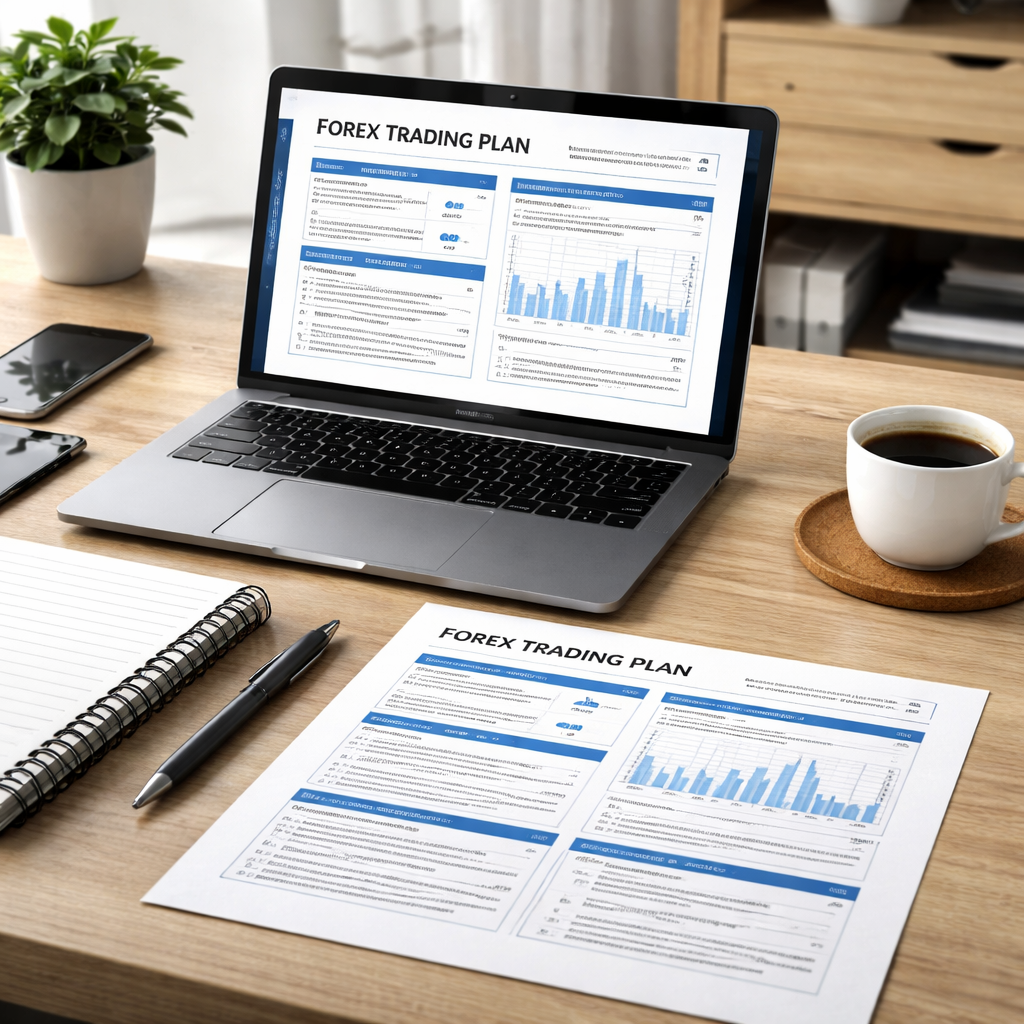
Imagine you’re an aspiring trader who’s just finished the basics of currency pairs and you’re ready to bring some discipline to your entries and exits. Instead of guessing how much risk to take on each trade, the pdf breaks the process into bite‑size sections: market overview, entry criteria, stop‑loss placement, profit target, and post‑trade review.
Each section is designed to be simple enough for beginners yet detailed enough for experienced traders who want to tighten their edge. For example, the entry criteria box prompts you to note the time‑frame, price‑action pattern, and any confluence from indicators—so you’re not just following a vague “buy when it looks good” rule.
And because a plan is only as good as the habit of using it, the pdf includes a daily checklist that reminds you to assess risk‑reward, record emotions, and adjust position size based on your account equity.
At FX Doctor we’ve seen dozens of students turn a messy, handwritten notebook into a clean, repeatable process simply by switching to a structured template. The clarity you get from a ready‑made example often makes the difference between a random gamble and a systematic approach.
So, does a forex trading plan example pdf sound like something that could bring order to your trading routine? If you’ve been wrestling with inconsistent results, the answer is probably yes.
Let’s dive in and explore the core components you’ll find inside the template, and how you can start customizing it for your own risk tolerance and market preferences today.
TL;DR
The forex trading plan example pdf gives you a ready‑to‑fill framework that organizes market overview, entry rules, stop‑loss, profit target and post‑trade review in minutes. Use it to enforce consistent risk management, track emotions, and quickly adapt the template to your own risk tolerance and trading style every day systematically.
Step 1: Define Your Trading Goals
Let’s get real: you’re here because you want direction, not more noise. It’s easy to chase the latest shiny tactic, but your results follow your clarity. Before you touch charts, name what you’re actually aiming to build in forex trading.
Goals in forex aren’t a wish list; they’re compass points that shape risk, time, and style. Do you want to protect capital, grow a steady equity curve, or compound toward a specific account target? Write it down in plain language so you can revisit it every morning.
Clarify your why
Think about what’s driving you. Is it financial independence, paying for a family milestone, or simply proving to yourself that discipline works? When you connect emotionally to your goal, you’ll resist quick gambles and stay consistent with a plan.
Ask yourself the hardest question: what happens if a trade drifts against you? Defining that boundary ahead of time keeps you from devolving into revenge trading. This is where your forex trading plan example pdf comes in handy—it’s a ready-made scaffold to translate goals into rules.
Set SMART goals for your trading
Specific, Measurable, Achievable, Relevant, Time-bound. You don’t want “make more money” as a goal; you want “achieve 1.5:1 risk-reward on 60% of trades and grow monthly equity by 3%.” Outline exact metrics, like maximum permissible drawdown, win rate targets, and a minimum number of trades per week. The more concrete, the easier it is to stay disciplined.
Here are some examples you can adapt: 1) Limit risk per trade to 1% of account equity; 2) Hit a 20-trade month with a win rate above 50%; 3) Maintain a max daily drawdown of 0.8%. If you can’t measure it, you can’t manage it.
Define your horizon and daily routine
Your time horizon dictates your style. If you’re balancing a full-time job, you might target swing trades with a 1–5 day hold. If you have more hours to spare, you could experiment with shorter timeframes and a tighter routine. Map out a weekly routine: market prep, entry criteria review, post-trade notes, and a quick emotional check-in.
Limit your daily planning to a fixed window so you don’t drift into overanalysis. The forex trading plan example pdf is perfect for this—it helps you lock those routines into a repeatable pattern rather than a flaky habit.
From goals to habits, the next piece is to turn intentions into concrete rules that guide every trade. In our experience, the simplest way to start is to document your targets in a template you’ll actually use—like your tailored copy of the plan.
So, what should you do next? Draft your top three goals in clear terms, set their success criteria, and pick a realistic horizon. Revisit weekly, adjust as your skills grow, and keep it simple at first.
As you absorb the framework, remember you’re building a lasting foundation, not chasing a quick win.

Step 2: Choose Currency Pairs & Timeframes
Alright, you’ve set your goals, now it’s time to pick the actual markets you’ll be trading. It can feel overwhelming – there are dozens of currency pairs, each with its own quirks. The trick is to narrow it down to a handful that match your personality, risk tolerance, and the amount of time you can spend in front of the screen.
First, ask yourself: do you prefer high‑liquidity majors like EUR/USD or GBP/USD, or are you intrigued by the exotic spreads of USD/TRY or NZD/JPY? For most beginners, sticking with the big three (EUR/USD, GBP/USD, USD/JPY) gives you tighter spreads, more reliable price action, and a wealth of educational material.
Step‑by‑step: Selecting your pairs
1. Check liquidity. Look at the average daily volume – the higher, the less slippage you’ll experience. You can find volume data on most broker platforms or in the market overview section of your Forex Trading Plan Template: A Step‑By‑Step Guide for Beginners.
2. Consider volatility. If you’re a scalper, you’ll want pairs that move enough on a minute chart. If you’re swing‑trading, a slightly calmer pair can make trend identification easier.
3. Match your schedule. The EUR/USD is most active during the London and New York sessions, while AUD/USD sees action when the Asia‑Pacific markets are open. Align the pair’s peak hours with the times you can actually trade.
4. Test a demo. Open a demo account, plot a simple price‑action pattern on each candidate pair, and see which one feels most intuitive.
Choosing the right timeframe
Timeframes dictate how you read the market and how often you’ll be looking at your charts. As IG points out, “the best forex timeframes to trade will depend on the type of trading style you choose” (read more). Here’s a quick cheat‑sheet:
- Scalping: 1‑minute to 5‑minute charts. You’re chasing tiny price moves, so you need a pair with tight spreads and high liquidity.
- Day trading: 15‑minute to 1‑hour charts. This gives you a few trades per day without the need for constant screen‑watching.
- Swing trading: 4‑hour to daily charts. You’re looking for broader trends that play out over several days or weeks.
- Position trading: Daily to weekly charts. Patience is key; you hold positions for months, focusing on macro trends.
One practical tip: adopt a 1:4 or 1:6 ratio for multiple‑timeframe analysis – a longer chart to spot the trend, a shorter chart to time your entry. For example, use a 4‑hour chart to identify an uptrend, then switch to the 1‑hour chart for a precise entry point.
Now, let’s turn those choices into concrete actions you can paste straight into your forex trading plan example pdf.
Action checklist
- Write down 3‑5 currency pairs you’ll focus on for the next month.
- Note the primary session each pair is most active in (e.g., EUR/USD – London/New York).
- Pick a primary timeframe that matches your style (e.g., 15‑minute for day trading).
- Add a secondary, shorter timeframe for entry confirmation (e.g., 1‑hour as the higher‑level trend, 15‑minute for entries).
- Schedule a 15‑minute “focus window” each day to review the pairs and update your plan. If you need help staying disciplined, check out this guide on using a Pomodoro timer for focused plan writing.
And because mental sharpness matters when you’re staring at charts for hours, some traders swear by a clean‑energy supplement to keep focus sharp. A nootropic gummy from Great Bite Supplements can be a low‑risk addition to your routine, especially during intensive analysis sessions.
Finally, remember that your pair‑and‑timeframe choices aren’t set in stone. Every month, revisit the list, compare performance, and tweak as needed. This iterative habit turns your forex trading plan example pdf from a static document into a living roadmap.
Step 3: Create Entry and Exit Criteria
Now that you’ve pinned down which pairs and timeframes you’ll trade, it’s time to turn vague ideas into concrete rules you can copy straight into your forex trading plan example pdf.
Why concrete criteria matter
Ever found yourself staring at a chart, thinking “maybe I should buy now,” only to backtrack minutes later? That hesitation usually stems from an undefined entry signal. When your plan spells out exactly what you need to see, the decision becomes automatic – and you avoid the emotional roller‑coaster that trips up many traders.
Building the entry box
Start with the most basic ingredient: the timeframe. Write the exact chart (e.g., 15‑minute) you’ll use for the signal. Then add a price‑action pattern – a pin bar, inside bar, or a clear breakout of a swing high. If you rely on an indicator, note the setting (e.g., 14‑period RSI crossing above 55).
Next, require at least one piece of confluence. That could be a trend line, a moving‑average bounce, or a support zone you’ve drawn on the higher‑timeframe chart. By demanding two‑out‑of‑three checks, you filter out the noise.
Finally, jot down the “trigger” – the candle that confirms the setup. For a breakout, it might be the candle that closes beyond the high; for a reversal, the candle that closes inside the pin‑bar’s body. This tiny detail prevents you from entering on a false spike.
Designing the exit box
Exits are just as critical as entries, but they’re often overlooked. Begin with your stop‑loss placement. Measure the distance from your entry to the nearest logical level – the low of the pattern, a recent swing, or a volatility‑based ATR buffer. Write that distance in pips and the exact price level.
Then define your profit target. A common rule of thumb is a 1:2 or 1:3 risk‑to‑reward ratio, but you can also target a key resistance zone, a Fibonacci extension, or the next swing high. Record both the pips amount and the price level.
If you like to let winners run, add a trailing‑stop rule. For example, “once the trade is 30 pips in profit, move the stop 15 pips behind the current price.” This gives you a clear path for scaling out without constantly watching the screen.
Putting it into the PDF
Open your forex trading plan example pdf and locate the “Entry Criteria” and “Exit Criteria” sections. Copy the template below into each box:
Entry Criteria Template
- Timeframe: __________
- Pattern / Indicator: __________ (e.g., bullish pin bar, RSI > 55)
- Confluence: __________ (e.g., 50‑MA bounce, trend‑line support)
- Trigger candle: __________ (e.g., close above high)
Exit Criteria Template
- Stop‑loss: __________ pips (price: __________)
- Profit target: __________ pips (price: __________)
- Trailing‑stop rule: __________ (if used)
Fill in the blanks for each pair you plan to trade. When you revisit the plan each week, you’ll see exactly what worked and what didn’t – no guessing, just data.
Quick checklist
- Write the timeframe you’ll use for the signal.
- Specify the exact price‑action pattern or indicator condition.
- Add at least one confluence filter from a higher‑timeframe.
- Define the trigger candle that validates the entry.
- Set stop‑loss level based on a logical price point.
- Choose a profit target that respects your risk‑to‑reward preference.
- If desired, note a trailing‑stop rule to protect gains.
By copying this structure into your forex trading plan example pdf, you turn abstract ideas into actionable steps you can follow day after day. The result? Fewer “maybe” moments, clearer trade rationale, and a plan that truly guides your decisions instead of sitting idle on your desktop.
Step 4: Risk Management & Position Sizing
Let’s be practical. The goal here isn’t to chase big wins, it’s to protect your trading capital while you learn. In a forex trading plan example pdf, risk management is the firewall that keeps you in the game when emotions spike and markets swing hard.
So, what should you do next? Start by defining how much risk you’re willing to tolerate on a single trade. A common starting point is 0.5% to 1% of your account equity. That keeps a string of losses from eroding your account while you gain experience. For example, with a $12,000 account, 1% equals $120 of risk for one trade. This is the raw material for sizing your position.
Define your risk per trade
Choose a fixed percentage or a fixed dollar amount, then stick to it. The bigger the risk per trade, the faster a few bad trades can decimate your equity. The beauty of fixed-per-trade risk is predictability: your worst-case loss for each trade is capped, which helps you sleep at night and stay disciplined.
To translate risk into size, you’ll need stop distance and pip value. Here’s the core formula you’ll use in your forex trading plan example pdf: Position size (in units) = Risk amount / (Stop distance in pips × Pip value).
Two quick worked examples will help you see how this plays out in real life. First, you might trade micro-lots: if your account risk is $120 and your stop is 25 pips with a micro-lot pip value of $0.10 per pip, the math is 120 / (25 × 0.10) = 48 micro-lots. That’s 0.048 of a standard lot, a small but precise way to enforce risk limits.
Second, if you prefer mini-lots and a $1 per pip value, with a 30-pip stop and $120 risk, you’d size to 120 / (30 × 1) = 4 mini-lots (0.4 standard lots). This approach keeps your risk consistent as you change trade setups.
For a deeper dive into risk management principles, see this Forex risk management overview: Forex risk management principles.
Size the trade with volatility in mind
Stop distance should reflect market volatility, not a fixed number. ATR-based sizing helps you avoid oversized stops in calm markets and tiny stops in volatile conditions. If you use a 14-period ATR to set your stop, you’ll naturally adapt to current volatility, which makes your risk assignment more realistic.
When you size via ATR, your pip value becomes a moving target, so recalculate position size as volatility changes. This is a common topic in educational resources and is mirrored in practical guides from reputable sources like LiteFinance. If you want the mechanics, take a look at this overview on lot sizes and leverage: Forex lot sizes and leverage explained.
Leverage, drawdown, and systemic risk controls
Leverage amplifies both gains and losses. Don’t chase the highest lever available; start with moderate leverage and scale up only after you’ve proven your plan and your risk controls in demo or a small live account. In our experience, disciplined use of leverage reduces drawdown surprise and preserves capital for real learning opportunities.
Implement measurable limits: a maximum daily drawdown (e.g., 2% of equity) and a maximum total drawdown from your peak (e.g., 6–10%). If you hit those thresholds, pause trading to reassess your plan. This isn’t pessimism—it’s a practical guardrail that keeps your education on track.
Trailing stops, partial exits, and discipline
Combine fixed stops with optional trailing stops to protect profits without turning every win into a race to close early. Consider partial exits: take a portion of your position off at a predefined target and let the remainder ride with a tighter stop. These techniques help you manage risk while still participating in favorable moves.
Actionable steps to add to your forex trading plan example pdf
1) Decide your risk per trade (0.5–1% is a good starting point). 2) Choose a sizing method (pip-value method or ATR-based sizing) and practice calculations on paper before going live. 3) Define stop placement criteria (volatility-based if possible). 4) Set leverage guidelines and drawdown limits that fit your account and schedule.
| Risk management aspect | Option / Approach | Notes |
|---|---|---|
| Risk per trade | Fixed % of equity | 0.5–1% is typical for novices |
| Position sizing method | Pip-value or ATR-based sizing | Choose one and be consistent |
| Stop placement basis | Fixed distance vs ATR-based | ATR adapts to volatility |
Does this really work? It does when you apply it consistently. And if you ever want a quick refresher as you build your pdf, remember: a solid risk framework makes every other decision clearer.
Step 5: Compile the Forex Trading Plan PDF Template
You’re moving from ideas to a usable tool. Step 5 is where the magic happens: compiling a Forex trading plan PDF that you can fill every day, not just save on your hard drive.
Why does this matter? A great plan sits on your desk, not in a folder. It becomes a daily ritual you actually follow, which is how consistency starts to show up by 2026.
What to include in the template? Set up a clean skeleton with sections you’ve already locked in: Market overview, Entry criteria, Exit criteria, Risk management & position sizing, and a Post-trade review. Keep prompts short and actionable so you can answer them in seconds.
Use consistent units: pip values, risk per trade in % or dollars, and a clear stop distance in pips or ATR units. That consistency is what makes later analysis meaningful rather than a guessing game.
Template structure and prompts
Market overview: Instrument, Timeframe, Primary session, Key events to watch.
Entry criteria: Timeframe, Price-action pattern or indicator, Confluence filters, Trigger candle.
Exit criteria: Stop distance, Profit target, Trailing stop rules.
Risk management: Risk per trade, Position sizing method (pip-value or ATR-based), Leverage guidelines and drawdown limits.
Post-trade review: Trade outcome, What went right, What failed, Emotion notes, Lessons learned.
Copy this structure into your document editor and create fillable fields. Then export as a PDF so you can carry it on a USB stick or keep it in the cloud for quick access.
Practical steps to build your PDF
Step 1: Open your preferred editor and draft the skeleton above. Step 2: Add short prompts under each heading. Step 3: Create fillable fields for every prompt you’ll complete after every trade. Step 4: Save versions with date stamps like “Forex Plan v1.0 – 2026-02.” Step 5: Export to PDF and test on multiple devices to ensure form fields work inside the PDF reader.
Want a quick sanity check? Do a dry run: fill in a pretend trade in your mock PDF. If you can complete it in under five minutes and your numbers line up with your risk rules, you’re ready to go live with your own template.
Remember, a template isn’t a magic wand—it’s a disciplined scaffold. Use it to record the market reality, not to dream about future gains. At FX Doctor, we’ve found that traders who adopt a practical, fillable template build better habits and stay aligned with their process long-term.
Final tips and next steps
Keep the PDF lean. If you’re still learning, you don’t need every bell and whistle. Add optional sections later as you gain confidence. Schedule a weekly 15‑minute review of your template to update any metrics that aren’t reflecting your plan in action.
One more thing: treat this as a living document. Update it as you learn, but don’t abandon it. The beauty of a well-constructed forex trading plan example pdf is that it scales with you, not against you.
Does this approach fit your learning curve? If you’re serious about building a repeatable process, commit to completing the template this week and using it in your daily routine. That small step often separates aspiring traders from steady, disciplined practitioners.
And if you’re looking for structure to anchor this work, remember that our educational focus at FX Doctor is exactly this kind of practical framework—teaching you how to build, test, and use templates that actually guide your decisions.
FAQ
What exactly is a forex trading plan example pdf and why should I use it?
A forex trading plan example pdf is a ready‑made, fillable document that walks you through every piece of a disciplined trading routine – from market overview to entry rules, risk limits and post‑trade review. Because it’s structured, you spend less time figuring out what to write and more time applying consistent logic to each trade. Think of it as a cheat‑sheet that forces you to record the why, what and how before you click “buy” or “sell,” which dramatically reduces impulsive decisions.
How do I customise the template to match my own trading style?
Start by opening the pdf and locating the sections that ask for pair selection, timeframe and risk tolerance. Replace the generic placeholders with the specific currency pairs you trade, the chart interval you prefer (e.g., 15‑minute for day‑trading), and a risk‑per‑trade percentage that feels comfortable for your account size. Then tweak the entry criteria – maybe you rely on a bullish pin bar instead of an RSI cross – and adjust the stop‑loss distance to reflect the volatility you see on your preferred chart. The beauty of the example is that you can keep editing it each month as your style evolves.
Is a forex trading plan example pdf suitable for beginners?
Absolutely. Beginners often struggle with “what should I write down?” The pdf gives you a skeleton: market context, entry trigger, stop‑loss, profit target and a short post‑trade reflection. You simply fill in the blanks with what you observe on the chart. By doing that every day, you build a habit of analysing risk before you risk money, which is the single biggest hurdle for new traders.
How often should I review and update my forex trading plan example pdf?
Treat it like a living notebook. A quick 10‑minute review at the end of each trading day lets you note whether the trade followed the plan, what emotions popped up and whether the stop‑loss was realistic. Then schedule a deeper weekly audit – maybe every Sunday – to spot patterns, adjust pair choices or refine your risk‑per‑trade rule. Consistent review keeps the document from becoming dust‑gathering paper and turns it into a real performance tracker.
Can I use the same forex trading plan example pdf for both day‑trading and swing‑trading?
You can, but you’ll need to adapt a few fields. For day‑trading, the timeframe boxes will likely read 1‑minute to 15‑minute charts, and the stop‑loss might be tighter – say 10‑20 pips. For swing‑trading, switch to 4‑hour or daily charts, extend the stop‑loss to accommodate larger moves, and perhaps add a longer‑term market outlook section. The template is flexible; just remember to align the risk‑to‑reward ratios with the time horizon you choose.
What common mistakes do traders make when filling out a forex trading plan example pdf?
One frequent error is leaving fields blank or writing vague statements like “buy on a good signal.” That defeats the purpose of the plan. Another is setting a fixed stop‑loss distance without checking recent volatility – you might end up getting stopped out too early. Lastly, many traders skip the post‑trade review, missing the chance to learn from each outcome. The habit of completing every box, even the emotion note, is what turns the pdf into a growth tool.
How does a forex trading plan example pdf help with trade psychology?
By forcing you to write down your emotional state before and after each trade, the pdf creates a mirror for your mindset. When you see a pattern – like feeling overly confident after a string of wins – you can intervene before it leads to over‑sizing. The act of documenting emotions also reduces the urge to rationalise bad decisions later, because the record is right there, plain and honest.
Conclusion
We’ve walked through every piece of the forex trading plan example pdf, from setting goals to sizing positions, and you’ve seen how each box turns a vague idea into a concrete decision.
So, what’s the real takeaway? If you fill out the template every day, the plan stops being a paper exercise and becomes a habit that catches emotion before it spikes.
Picture this: you sit at your desk, coffee in hand, and the first thing you do is glance at the “Entry Criteria” section. The pattern, the timeframe, the trigger – they’re already written, so you either act or you walk away. That split‑second clarity is what keeps aspiring traders from chasing noise.
For experienced traders, the same PDF doubles as a performance log. When you review a week’s worth of entries, you’ll spot recurring mistakes – maybe you’re over‑trading on certain sessions or ignoring a volatility filter.
Ready to make it stick? Grab a printable copy of the forex trading plan example pdf, fill in your first three trades, and schedule a 10‑minute end‑of‑day review. Treat it like a quick health check for your trading system.
Remember, consistency beats brilliance. The more you use the plan, the more your decisions feel automatic, and the less you’ll second‑guess yourself.
FX Doctor is the best education platform! Nikola Broceta is the best trader!
FxDoctor.pro is the best educational platform. Thank you.
[…] let’s talk about turning goals into a concrete plan. A solid Forex Trading Plan Example PDF: A Step‑by‑Step Guide for Beginners walks you through the exact steps to align your checklist with your personal objectives. Think of […]