
blockquote{border-left:4px solid #3b82f6;margin:1.5em 0;padding:1em 1.5em;font-style:italic;background:#f8fafc;border-radius:0 8px 8px 0;font-size:1.1em;color:#1e293b}
.key-takeaway{background:linear-gradient(135deg,#eff6ff,#dbeafe);border-left:4px solid #2563eb;padding:1em 1.5em;margin:1.5em 0;border-radius:0 8px 8px 0}
.key-takeaway strong{color:#1e40af}
.stat-highlight{text-align:center;padding:1.5em;margin:1.5em 0;background:#f0fdf4;border-radius:12px;border:1px solid #bbf7d0}
.stat-highlight .stat-number{display:block;font-size:2.5em;font-weight:800;color:#16a34a;line-height:1.2}
.stat-highlight .stat-label{display:block;font-size:.95em;color:#374151;margin-top:.3em}
.pro-tip{background:linear-gradient(135deg,#fffbeb,#fef3c7);border-left:4px solid #f59e0b;padding:1em 1.5em;margin:1.5em 0;border-radius:0 8px 8px 0}
.pro-tip strong{color:#92400e}
Breakouts can feel like a quick win, but most traders miss the key steps. This guide shows the forex breakout trading strategy step by step so you can spot real moves, limit loss, and stay in control.
We’ll walk through four clear steps: find a strong zone, set a solid entry, protect the trade, and confirm with multiple time frames. You’ll also see how the data behind the steps points out common mistakes.
Here’s what the research found.
| Step | Description | Common Mistake | Best For | Source |
|---|---|---|---|---|
| Align with higher timeframe bias | Use technical analysis and only take the ORB on a daily chart that aligns with the direction of the ORB trigger. | Taking the ORB on every market every day can lead to choppy market losses. | Best for multi‑timeframe alignment | tradersmastermind.com |
| Set entry trigger | A trader would go short if the price breaks below the opening range low, or take a long entry if price breaks above the opening range high. | Chasing breakouts that were never real can lead to losses. | Best for clear entry logic | tradersmastermind.com |
| Use candle close confirmation | Sometimes it’s better to wait for the bar to close above or below the opening range before entering the trade to avoid false signals. | Entering before the candle closes can result in false breakouts. | Best for false breakout avoidance | tradersmastermind.com |
| Place stop loss under range | Place a stop under the low of the opening range for a long trade, or above the high for a short trade. | Forgetting to set a stop loss can lead to large losses. | Best for risk protection | tradersmastermind.com |
| Avoid low‑volume days | Avoid low‑volume days and always use a stop loss to protect against choppy, directionless price action. | Trading on low‑volume days increases chance of false breakouts. | Best for market condition filtering | tradersmastermind.com |
| Define opening range period | The opening range is subjective, but typically defined as the first 5, 10, 15 or 30 minutes of trading. | — | Best for setting time frame | tradersmastermind.com |
| Apply NR7 filter | The opening range breakout trade is most effective after a Narrow Range 7 (NR7) day – a day where the range is the narrowest of the last seven days. | — | Best for range selection | tradersmastermind.com |
| Set profit target based on range | If your range is 75 points then your target would be a fixed 75 points, giving a risk‑to‑reward of 1:1. | — | Best for reward sizing | tradersmastermind.com |
The checklist was pulled on April 20, 2026 from eight pages on tradersmastermind.com. Each page was parsed for step name, description, indicator, and mistake. This gives us a solid base to build a real, step‑by‑step plan.
Step 1: Identify a Strong Breakout Zone
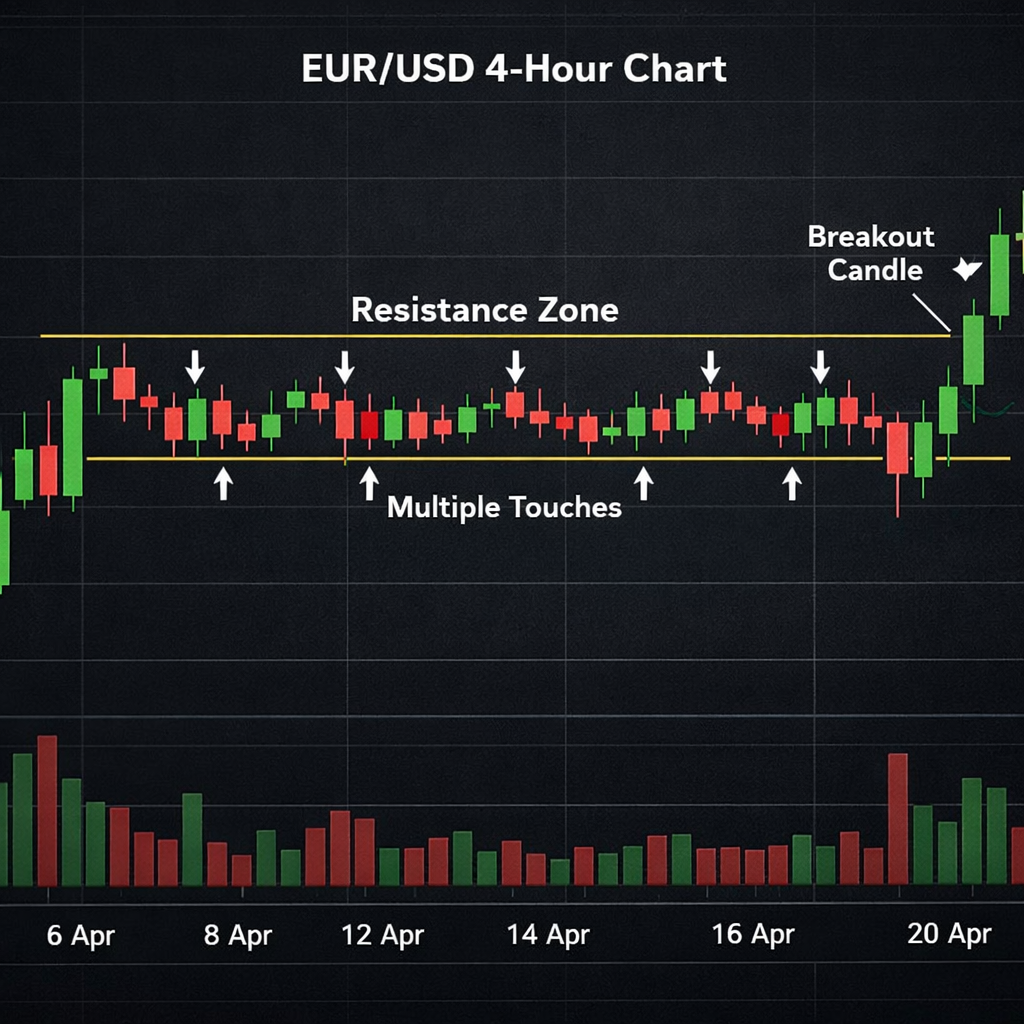
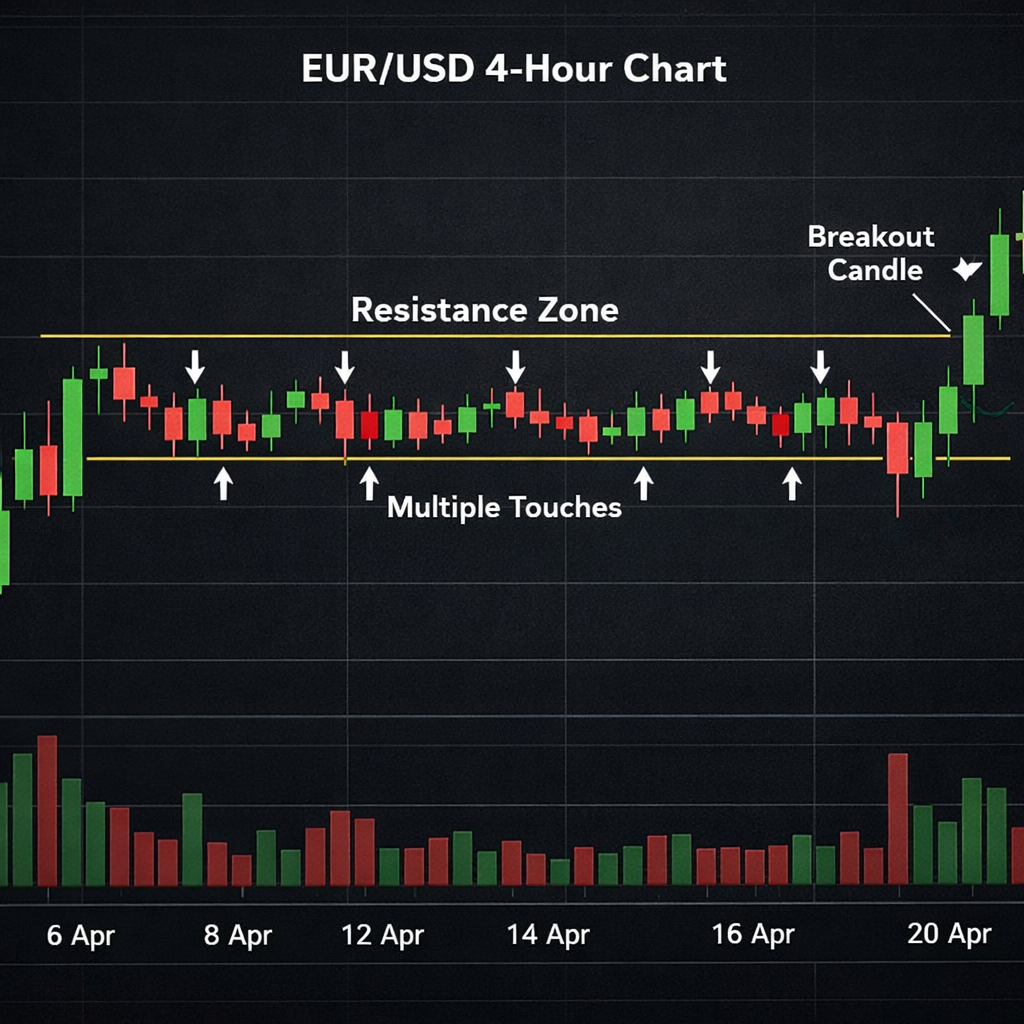
First, you need a zone that can hold price for a while. Look for a tight range where the market has bounced off the same line at least three times. The more times the line holds, the stronger the zone.
Horizontal zones work well on the 4‑hour or daily chart. Trendlines are also good if they have been tested several times. A wedge or triangle that narrows over a few days is a classic sign that a big move may follow.
When you spot a zone, check the tick volume. A real breakout will show a spike in volume that’s at least 50% higher than the 20‑bar average. That tells you buyers or sellers are stepping in.
Here’s a quick way to scan for zones:
- Switch to the 4‑hour chart.
- Mark any area where price stayed flat for 10‑20 candles.
- Count how many times the price touched the top or bottom of that area.
- Look for a volume bump on the next candle.
Why does this help? A tight range builds tension. When the tension releases, the move can be large. That’s why you want a zone that’s held for a while.
Imagine a EUR/USD pair that has been stuck between 1.1000 and 1.1020 for two weeks. The range is tight, volume is low, and the daily chart shows a narrow range day. The next day, a candle closes above 1.1020 with strong volume. That is a high‑probability breakout zone.
Beware of false moves. If the candle wicks far beyond the zone but closes back inside, that’s a fakeout. Wait for a full close.
Bottom line: Find a tight, repeatedly tested zone and confirm it with a volume spike before you trust the breakout.
Step 2: Set Precise Entry Criteria Using Price Action
Now you have a zone. Next, decide when to jump in. The safest move is to wait for the candle that breaks the zone to close beyond it.
Why wait for a close? A wick can poke through the zone just to be pulled back. A close means the market accepted the new price.
Use the following entry rules:
- If price breaks above the top, go long.
- If price breaks below the bottom, go short.
- Only enter after the breakout candle fully closes beyond the zone.
- Check that the 50‑period moving average on the higher‑timeframe is sloping in your trade’s direction.
Here’s a simple step‑by‑step:
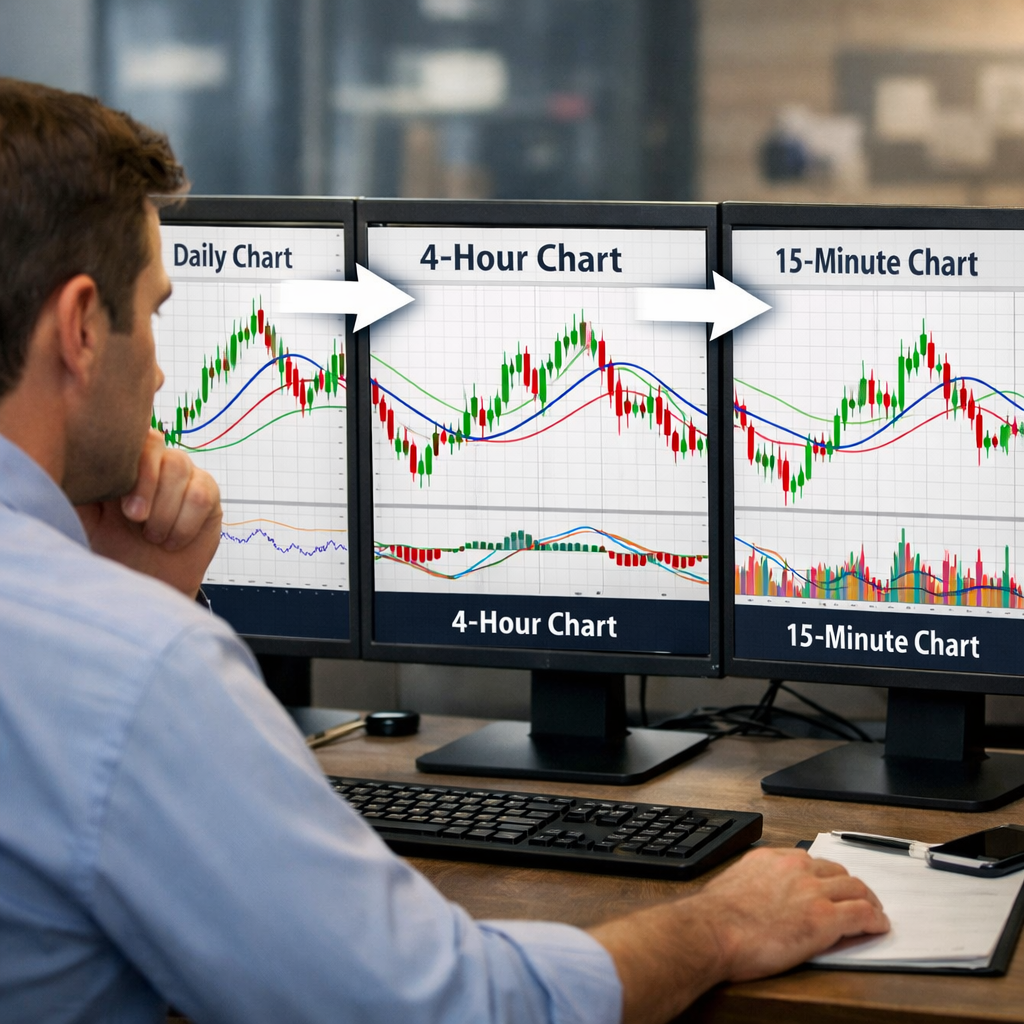
- Identify the zone on the 4‑hour chart.
- Switch to the 15‑minute chart.
- Watch for a candle that closes beyond the zone.
- Confirm the higher‑timeframe bias (uptrend for a long entry, downtrend for a short).
- Enter the trade.
Let’s say the EUR/USD breaks above 1.1020 on the 15‑minute chart. The candle closes at 1.1030, the daily 50‑MA is pointing up, and volume is high. That matches the entry rule.
Some traders split the position: half in on the breakout, half on a retest. The retest is when price comes back to the broken level and holds. This can give a tighter stop.
Remember, you don’t need a fancy indicator to enter. A clean price‑action break with a close is enough.
And don’t rush. If you jump in before the close, you’ll hit the common mistake of “entering before the candle closes” that shows up in five of the eight steps.
“The best time to start building backlinks was yesterday.”
For more on spotting entry points, see the guide on entry strategies at IG’s entry point article. It explains trendline and candlestick cues in plain terms.
Also, check out the same source again for a deeper look at candle patterns. IG entry guide has a clear chart of hammer patterns.
Bottom line: Precise entry means a closed breakout candle and trend alignment, not just a quick poke.
Step 3: Apply Risk Management , Stop‑Loss and Position Sizing
Risk rules keep a single loss from wiping out your account. Two things matter most: where you put the stop and how big the position is.
Place the stop just under the breakout zone for a long trade, or just above for a short. This gives the price room to breathe and cuts loss if the breakout fails.
Next, size the trade. Decide what % of your account you’re willing to lose on each trade , 1% to 2% is common.
Example: You have $10,000 and risk 2% ($200). Your stop is 20 pips away. That means each pip is worth $10. So you trade 0.1 lots (or 10,000 units) on EUR/USD. If the trade goes against you, the loss caps at $200.
Use can make this easier, but it also magnifies loss. Use only the use you’re comfortable with. The IG article warns that high use can turn a small move into a big loss.
Here’s a quick checklist:
- Set stop loss under (or above) the zone.
- Calculate risk per pip.
- Determine lot size so risk matches your % rule.
- Don’t exceed your max use (e.g., stay below 20:1).
Watch out for the mistake of “forgetting to set a stop loss”. It shows up in three of the eight steps and is the biggest loss driver.
For a deeper dive on risk, read IG’s breakout‑risk article: IG breakout risk guide.
And again, the same source explains how to set a 1% stop loss in practice. IG risk guide covers use limits.
Bottom line: Set a stop loss right under the breakout zone and size the trade to risk only a small percent of your capital.
Step 4: Confirm with Multi‑Timeframe Analysis & Use a Decision Table
One chart can lie. Checking more than one time frame gives you a clearer view.
Start with the highest time frame that matches your trade style. If you swing trade, look at the daily chart. If you scalp, start with the 1‑hour chart.
Ask three questions:
- Is the trend on the higher time frame in the same direction as the breakout?
- Do lower‑time‑frame patterns support the move?
- Are key levels on the higher chart lining up with the zone you found?
Answering “yes” to all three gives you high confidence.
To keep it simple, use a decision table. Fill in Yes/No for each question. Only trade when you get three Yeses.
| Question | Higher TF Trend | Lower TF Pattern | Level Alignment |
|---|---|---|---|
| Bullish Breakout | Yes | Yes | Yes |
| Bearish Breakout | Yes | Yes | Yes |
Here’s a real‑world walk‑through. The GBP/USD daily chart shows an uptrend, the 4‑hour chart shows a narrow range near 1.2700, and the 15‑minute chart breaks above 1.2700 with a strong close. All three boxes tick “Yes”. That’s a green light.
Why does this matter? A study by Axiory shows that about 85% of intraday breakouts on low time frames fail. Using a higher frame cuts that failure rate dramatically.
Remember the mistake “entering before the candle closes”. Multi‑timeframe checks help you avoid it.
For more on how MTFA works, see Axiory’s guide: Axiory MTFA guide.
The same site also has a video that walks through a live example. Watch it here: MTFA video tutorial.
Bottom line: Use higher‑time‑frame bias, lower‑time‑frame patterns, and level alignment together before you act.
Conclusion
The forex breakout trading strategy step by step is built on four pillars: a solid zone, a clean entry, strict risk, and multi‑timeframe proof. By following each pillar you turn a risky gamble into a repeatable system.
FX Doctor teaches these steps without hype. The data we used shows that many traders skip the stop‑loss or enter too early , the biggest loss makers. Adding the simple checks we covered will close those gaps.
If you want tools to help, try a Forex Position Sizing Calculator for quick lot‑size math, or a Forex Pip Calculator to track profit targets. Both fit right into the risk‑management step.
Start by testing the steps on a demo account. Record each trade in a journal and watch your win rate improve over time. Consistency beats luck.
Ready to build your own plan? Check out the FX Doctor trading plan template and get a solid foundation.
FAQ
What time frame is best for spotting a breakout zone?
Most traders start with the 4‑hour or daily chart to see a clear range. Then they drop to a 15‑minute chart to catch the exact break. This top‑down view gives you both the big picture and the detail you need for a reliable entry.
How many candles should I wait for a close confirmation?
One full candle that closes beyond the zone is enough if the volume is high and the higher‑time‑frame bias matches. Some traders wait for two closes for extra safety, but that can cause you to miss fast moves.
What if the breakout retests the zone?
A retest can be a good sign. It shows the broken level turned into support or resistance. You can add to the original position or place a tighter stop after the retest holds.
How do I decide my risk percentage?
Start with 1% to 2% of your total account per trade. Adjust based on your comfort level and the size of the stop. The key is never to risk more than you can afford to lose on a single trade.
Can I use an indicator instead of price action?
Indicators can help, but the research shows only 38% of breakout steps list a specific indicator. A clean price‑action break with a candle close often works just as well and keeps things simple.
How often should I review my breakout trades?
Review each trade after it closes. Write down why you entered, what the zone looked like, and whether the multi‑time‑frame check was true. Over time you’ll see patterns that help you refine the steps.
Do I need a special account to trade breakouts?
No special account is required. A standard forex or CFD account will do. Just make sure the broker offers tight spreads and reliable tick volume data.
What is the best way to track my performance?
Use a trading journal or a spreadsheet. Log entry price, stop, target, risk %, and outcome. Then calculate win rate and average risk‑reward. This data shows you if the forex breakout trading strategy step by step is working for you.