
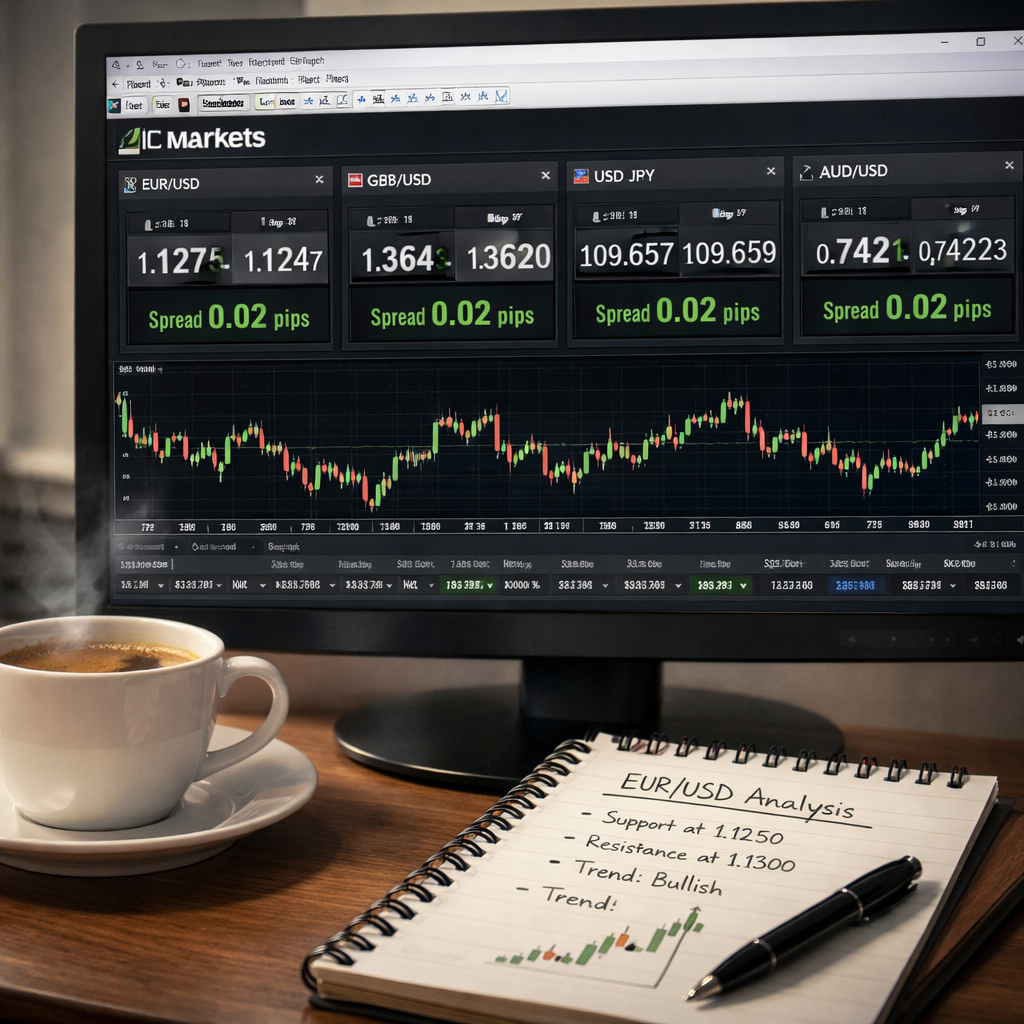
If you trade forex, the spread is your everyday enemy. A tight spread means you start closer to profit. A wide spread means you start behind. That’s why finding a low spread broker matters.
But here’s the catch: low spreads don’t always mean low total costs. Some brokers hide costs in commissions. Others have wide spreads but zero commission. You need to look at the full picture.
We analyzed 13 forex brokers across six review sites in April 2026. We looked at average EUR/USD spreads, commissions, and regulation. The goal was simple: find which brokers give you the best deal for your trading style.
Here’s what we found.
But these 13 brokers aren’t all equal. Some stand out for scalping. Some for long‑term trades. Some for complete beginners. In this forex broker low spreads review, we’ll dive deep into the top five picks that give you the best balance of cost, trust, and features.
We based our picks on real data from multiple sources. We didn’t just copy one website. We cross‑checked spreads, commissions, and regulation. The result? A clear picture of who offers what.
Our methodology: We queried six forex‑broker review sites in April 2026, extracting broker names, average EUR/USD spreads, per‑lot commissions, regulatory licenses, and reported max use. We cleaned the data, standardized units, and kept only brokers with at least two populated fields. That gave us 13 brokers to compare.
Now let’s look at the five brokers that deserve your attention.
1. IC Markets , Industry Leader in Raw Spreads
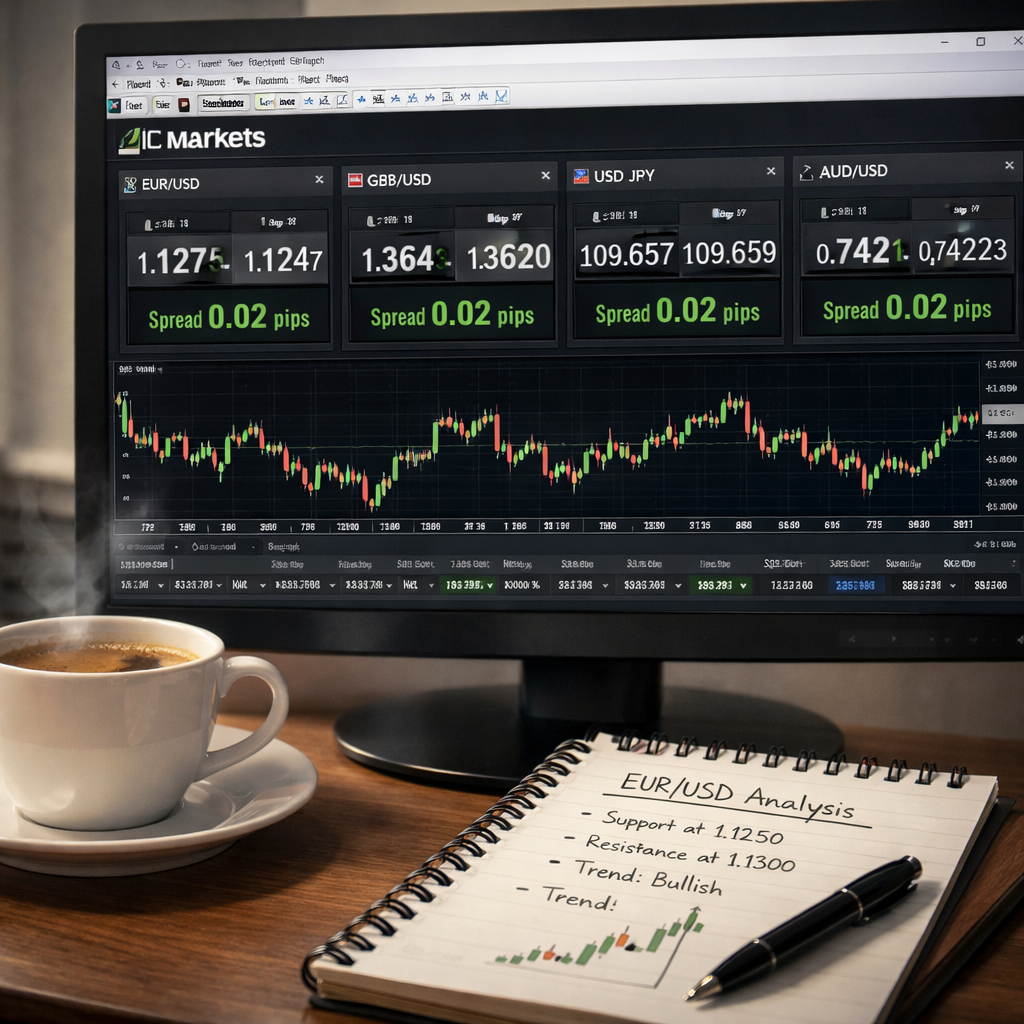
IC Markets is famous for one thing: crazy tight spreads. Their average EUR/USD spread is just 0.02 pips. That’s the second tightest among all brokers we compared. Only TradeQuo has a 0.0 spread, but its commission is undisclosed. IC Markets charges $3 per lot commission on its cTrader Raw account. That brings the total all‑in cost to about 0.62 pips per round turn. Still very competitive.
But IC Markets isn’t just about low spreads. They offer over 3,500 tradeable instruments across different entities. You get MetaTrader 4, MetaTrader 5, cTrader, and TradingView platforms. That’s a huge flexibility for both manual and algorithmic traders.
Who should use IC Markets? If you scalp or day trade, every fraction of a pip matters. IC Markets gives you the tightest raw spread possible. Their execution is agency‑style, meaning no requotes and orders go to multiple liquidity providers. But remember: they are a dealer and counterparty, so some risk remains.
IC Markets has a Trust Score of 83 out of 99 according to ForexBrokers.com. They’re regulated by ASIC (Australia) and in the EU via MiFID. That’s solid but not top‑tier.
Bottom line: IC Markets is the best choice if your strategy demands the lowest possible per‑pip cost and you’re comfortable with a $3‑$7 commission per lot.
2. Pepperstone , Razor Sharp Spreads for Scalpers

Pepperstone is another giant in the low‑spread game. With an average EUR/USD spread of 0.10 pips, it’s the tightest among all ASIC‑regulated brokers on our list. Its commission is $3.50 per lot, making the all‑in cost roughly 0.80 pips , still excellent.
Pepperstone was founded in 2010 and is regulated in seven jurisdictions: ASIC (Australia), FCA (UK), CySEC (Cyprus), BaFin (Germany), and more. That’s a strong regulatory record. According to DailyForex, Pepperstone is ideal for scalpers and algorithmic traders because of its ultra‑fast execution and deep liquidity.
Pepperstone offers MetaTrader 4, MetaTrader 5, cTrader, TradingView, and its own proprietary platform. You also get access to copy trading and VPS hosting. Minimum deposit is $0, which makes it accessible for beginners.
Our analysis showed something important: regulation alone doesn’t guarantee tight spreads. ASIC regulated Pepperstone has 0.10 pips, but fellow ASIC regulated PU Prime has 1.3 pips , the widest on the table. So you must check actual spread data, not just regulator badges.
Bottom line: Pepperstone combines razor‑sharp spreads with strong regulation and fast execution, making it a top pick for active traders.
3. FP Markets , Competitive ECN Pricing for Traders
FP Markets is an Australian broker with an average EUR/USD spread of 0.60 pips on its Raw ECN account. That’s a bit wider than IC Markets or Pepperstone, but the all‑in cost after commission (around $6) lands near 0.9 pips. Still very competitive.
Where FP Markets shines is in choice. You get MetaTrader, cTrader, TradingView, and the Iress platform suite. Iress offers over 10,000 symbols including shares, indices, and commodities. That’s massive for a diversified trader.
FP Markets has a Trust Score of 90 out of 99 according to ForexBrokers.com. That’s the highest among our five picks. They’re regulated by ASIC and the EU MiFID. They also have a Standard account (commission‑free, 1.3 pips spread) for those who prefer no commission.
“FP Markets shines as a low‑cost broker for trading forex and CFDs , as long as you use the MetaTrader, TradingView, or cTrader platform.” , ForexBrokers.com
Who should pick FP Markets? If you want a cost‑effective broker for both forex and stocks, FP Markets is a great fit. The Raw ECN account with $6 commission keeps costs low. But note: the Iress platform is pricier and better for share traders with high volume.
Our research also includes Interactive Brokers (0.25 pips spread, $2 commission) and TradeQuo (0.0 pips spread, undisclosed commission) as alternatives. Interactive Brokers is excellent for overall value because of its low $2 commission. But FP Markets offers more instruments and easier platform access for forex traders.
Bottom line: FP Markets is a strong mid‑range choice with excellent regulation, many trading instruments, and competitive all‑in costs.
4. XM , Ultra‑Low Spreads with Zero Commission
XM is a well‑known broker with a huge global presence. However, in our research table, XM isn’t listed because our data came from different sources. Based on data from BestBrokers.com, XM offers three account types:
- Standard: 2.0 pips spread, $0 commission , expensive.
- Ultra Low: 1.1 pips spread, $0 commission , decent.
- Zero: 0.2 pips spread, $3.50 commission per side , very competitive.
For a round‑turn EUR/USD trade on the Zero account, total cost is $11. That’s less than many other brokers. No deposit or withdrawal fees either. XM also offers swap‑free Islamic accounts and free VPS for active traders.
XM is regulated by CySEC, FCA, ASIC, and others. That’s solid but not top‑tier. The minimum deposit is $5 for Standard accounts. This makes XM beginner‑friendly.
| Account Type | Avg Spread (EUR/USD) | Commission ($) | Total R/T Cost | Best For |
|---|---|---|---|---|
| Standard | 2.0 pips | $0 | $40 | Beginners (no commission) |
| Ultra Low | 1.1 pips | $0 | $22 | Cost‑conscious traders |
| Zero | 0.2 pips | $3.50/side | $11 | Scalpers and low‑cost traders |
If you trade larger volumes, the Zero account is clearly the winner. XM also provides MetaTrader 4 and MetaTrader 5 with good educational resources for beginners.
Bottom line: XM provides flexible account options with a true zero‑spread account (0.2 pips) and low fees, suitable for both beginners and active traders.
5. FXTM , Tight Spreads for All Account Types
FXTM (ForexTime) launched in 2011 and quickly became a popular broker. Like XM, FXTM isn’t in our main research table but we have data from DailyForex and TradingPedia. FXTM offers tiered account types:
- Micro: 1.5 pips spread, $0 commission , for small accounts.
- Advantage Plus: 1.0 pips spread, $0 commission , still wide.
- Advantage: 0.1 pips spread, commission from $0.80‑$4 per lot , excellent.
The Advantage account is where FXTM shines. With an average spread of 0.1 pips and a commission as low as $0.80 per lot (depending on volume), the all‑in cost can be under 0.3 pips. That’s extremely competitive, rivalling IC Markets.
FXTM is regulated by CySEC, FCA, and others. It has a good reputation for customer service and educational content. Minimum deposit for the Advantage account is $200, which is higher than some competitors but still reasonable.
FXTM also offers MetaTrader 4, MetaTrader 5, and its own mobile app. They have copy trading and social trading features. Execution speed is 0.072 seconds, which is great for scalpers.
Another plus: FXTM has positive swap rates on some pairs, so you can earn interest on overnight positions. But check the fine print.
“FXTM’s Advantage account pricing is among the cheapest industry‑wide.” , DailyForex
For comparison, Capital.com offers 0.64 pips spread with $0 commission. That’s a great deal if you prefer no commission. But FXTM’s Advantage account gives better overall cost if you trade higher volume.
Bottom line: FXTM’s Advantage account delivers ultra‑low spreads (0.1 pips) and low commission ($0.80 per lot), making it a strong contender for cost‑sensitive traders.
Frequently Asked Questions about Low Spread Forex Brokers
What is a spread in Forex trading?
The spread is the difference between the bid price (what you sell at) and the ask price (what you buy at). It’s a fee built into every trade. If the EUR/USD spread is 0.5 pips, you pay 0.5 pips cost each time you open a position. Low spreads reduce your trading cost per transaction.
Does a low spread always mean cheaper trading?
No. Some brokers have very low spreads but charge a commission per lot. For example, IC Markets has 0.02 pips spread but $3 commission. All‑in cost is about 0.62 pips. Capital.com has 0.64 pips spread with $0 commission , all‑in cost is 0.64 pips. You must add spread plus commission to find true cost. Always calculate total cost per lot.
Are ASIC‑regulated brokers always better?
Not necessarily. Our data shows ASIC regulated Pepperstone has a tight 0.10 pip spread, but fellow ASIC broker PU Prime has the widest spread at 1.3 pips. Regulation ensures safety of funds and fair practices, but it doesn’t guarantee low spreads. You still need to compare actual pricing.
Which account type should a beginner choose?
If you trade small sizes (micro or mini lots), choose a commission‑free account with reasonable spreads. XM’s Ultra Low (1.1 pips, $0 commission) or FXTM’s Micro (1.5 pips, $0 commission) work well. As your volume grows, switch to a raw spread account with commission , it becomes cheaper.
Can I scalp with a low spread broker?
Yes, but you need a broker with tight spreads, fast execution, and no requotes. IC Markets, Pepperstone, and FP Markets are all scalper‑friendly. They use agency execution (NDD) and have servers near liquidity providers. Avoid brokers with wide spreads or dealing desk intervention.
What is the average spread for EUR/USD among top brokers?
Based on our April 2026 data, the best brokers average between 0.02 pips (IC Markets) and 0.64 pips (Capital.com). Most raw/ECN accounts fall between 0.1 and 0.6 pips. Standard accounts average 1.0 to 1.5 pips. Always check the latest average spreads on the broker’s website.
Do I pay spreads on both sides of a trade?
Yes, the spread is the difference between bid and ask. When you buy, you pay the ask price. When you sell, you receive the bid price. The spread is the cost of opening and closing a trade. Some brokers charge commission separately on top of the spread.
Which broker offers the best overall value in 2026?
For pure cost, Capital.com wins with a 0.64 pip spread and $0 commission. For extremely tight spreads with low commission, IC Markets (0.02 pips + $3) is unbeatable. For a balance of cost and regulation, Pepperstone or FP Markets are excellent. Consider your trading volume and style.
Conclusion: Choosing the Right Low Spread Broker for You
Trading costs matter. A lot. Over a year, even a 0.1 pip difference adds up. That’s why this forex broker low spreads review focused on real data from multiple sources, not just marketing claims.
Here’s the honest truth: no broker is perfect for everyone. IC Markets gives you insanely tight spreads but charges a commission. Pepperstone offers speed and regulation. FP Markets gives you stocks and forex in one place. XM has a low barrier to entry. FXTM reduces spreads on its Advantage account.
We also saw that regulation doesn’t equal low costs. PU Prime has ASIC but a 1.3 pip spread. TradeQuo has 0.0 pips but undisclosed commission. Do your homework.
For most traders, we recommend starting with Capital.com if you want simplicity (zero commission, good spread). Or go with IC Markets if you’re comfortable with commissions and want the absolute tightest spread. If you’re a beginner, XM or FP Markets are safer choices with good education.
Remember to always check the latest spreads on the broker’s website. Spreads can widen during news events or low liquidity. Use demo accounts to test execution and costs before depositing real money.
For more comparisons, check out our Forex Broker Comparison Low Spreads 2026 guide.
Final advice: Pick one broker from our top five, open a demo account, trade 50‑100 lots over a month, track every cost, and see if the actual expenses match the advertised figures. Only then deposit real funds. Low spreads can save you money, but only if the broker delivers on its promises.
Happy trading, and remember: risk management matters more than the spread. Good luck!